11 DU colleges allowed to admit UG students based on Class 12 marks to fill vacant seats
Aug 21, 2026

By Vishu Adhana
New Delhi [India], August 21 : Delhi University has allowed 11 colleges to admit undergraduate students on the basis of Class 12 board examination marks, instead of CUET scores, to fill vacant seats in select programmes, according to a public notice issued by the university's Admission Branch.
In a notice titled "Undergraduate Admissions 2026-27 based on Class XII Marks (Not CUET)", lists Kalindi College, Zakir Husain Delhi College (Evening), Lakshmibai College, Rajdhani College, Shyama Prasad Mukherji College for Women, P.G.D.A.V. (Evening), Sri Guru Gobind Singh College of Commerce, Vivekanand College, Shyam Lal College, Aditi Mahavidyalaya and Bhagini Nivedita College.
The notice said, "Admissions in certain colleges have been started on the basis of merit of CLASS XII marks, subject to meeting the eligibility criteria."
It also put a restriction on students who have already secured admission through the university's regular process.
"No candidate who has an admission in any college of the University shall be eligible to take admission on the basis of merit of Class XII marks," the notice said, advising interested candidates to check the respective college websites for further information.
The move marks a return to board-mark-based admissions in select programmes despite CUET being the established route for undergraduate admissions in DU since 2022. This has drawn a lot of criticism from teachers.
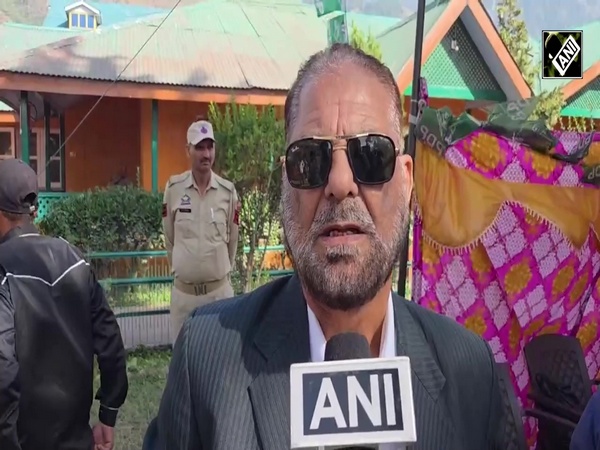
Responding to an ANI query, DU Vice-Chancellor Yogesh Singh defended the decision, saying the measure was intended to fill seats that remained vacant after the CUET-based admission process.
"We were able to admit 66,000 students in various colleges through CUET. We are trying to fill more seats through this process," Singh said.
He said the vacancies were not necessarily a result of CUET, pointing instead to lower demand for certain programmes.
"It is not because of CUET that these seats are vacant. These courses are not that much in demand. Earlier also, seats used to remain vacant in these courses. If we are trying to fill seats, there is no harm in doing so," he said.
This year, around 71,600 undergraduate seats were available across DU's programmes, including more than 100 BA Programme combinations.
The latest notice covers a wide range of programmes. For instance, Kalindi College has opened admissions for BA (Hons) Hindi, BA (Hons) Sanskrit and BSc (Hons) Physics, while Zakir Husain Delhi College (Evening) has listed BA (Hons) Persian, Sanskrit and Urdu as well as several BA Programme combinations involving languages and subjects such as History and Political Science.
Rajdhani College has opened admissions for programmes including BA (Hons) Sanskrit, BSc (Prog) Applied Physical Sciences with Industrial Chemistry, BSc (Prog) Physical Science with Chemistry, BA Programme with Sanskrit and History, and BSc (Hons) Physics and BA (Hons) Hindi.
At Shyam Lal College, admissions have been opened for BSc Physical Science with Chemistry, BSc Physical Science with Electronics and BA (Hons) Hindi.
The decision has, however, drawn criticism from teachers, who have questioned the university's admission policy and the autonomy of individual colleges to introduce a different admission mechanism after the CUET-based process.
Rudrashish Chakraborty, associate professor of English at DU, said the return to board-mark-based admissions after two rounds of CUET admissions reflected "policy paralysis" in handling undergraduate admissions.
"This is the fifth successive year of CUET admission in DU; and without exception, this year has witnessed the same admission chaos," Chakraborty said.
He questioned how individual colleges could alter the centrally determined admission policy midway through the admission process.
"There is a pertinent question which needs to be asked on this matter: do the DU colleges have the autonomy under the University Statutes and Ordinances to take independent policy decisions when it comes to undergraduate admission?" he said.
Chakraborty also criticised the broader functioning of the university, alleging that the admission process had become chaotic and that DU was moving towards greater autonomy for individual colleges without adequate clarity on the institutional framework governing such decisions.
The latest public notice, therefore, expands the board-mark-based admission mechanism beyond the five colleges identified earlier, bringing the total number of colleges officially listed by DU for such admissions to 11.
The development also raises questions about the coexistence of two admission routes in the same academic cycle -- CUET-based admissions for most undergraduate seats and Class 12 merit-based admissions for select vacant seats.
Naveen Gaur, associate professor at Dyal Singh College, said the development reflected a "collective, comprehensive failure" of the CUET and Common Seat Allocation System (CSAS) based admission process.
"We, without even discussing it properly ... made lakhs of students guinea pigs for a large-scale experiment," Gaur said in a post on social media, adding that the latest development was a "proven failure" of one of the major proposals under the National Education Policy.
Gaur also questioned whether DU could make such a major change in its admission policy without taking its statutory bodies into confidence.
"There is also a bigger question of legality: can such a major shift done by DU (without taking AC/EC into confidence) be done?" he said, questioning whether a central university could make such a major change as a "knee-jerk reaction".