Amid political shift, Venezuelan oil revival could keep global prices lower for longer: JP Morgan
Jan 07, 2026
New Delhi [India], January 7 : Venezuela could become one of the biggest sources of new oil supply in the world over the next decade if the country undergoes a political transition, potentially reshaping global energy markets and keeping oil prices lower for longer, said JPMorgan in its latest report.
In its Oil Markets Weekly, JPMorgan said a regime change in Venezuela would represent one of the largest upside risks to global oil supply in 2026 and beyond, an outcome that oil markets are not currently pricing in.
Venezuelan crude production, which stands at roughly 750,000-800,000 barrels per day, could rise to 1.3-1.4 million barrels per day within two years of a political transition and potentially reach 2.5 million barrels per day over the next decade with sustained investment.
Notably, Venezuela remained a massive player in the oil industry in terms of reserves. Reportedly, in the 1990s, the production topped out at 3.5 million barrels per day.
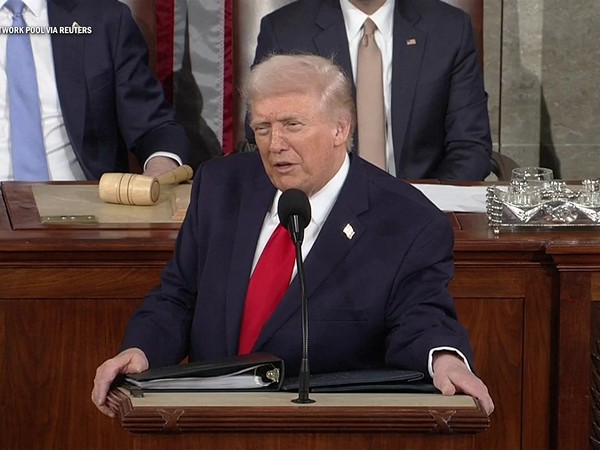
Earlier on Tuesday night, US President Donald Trump announced that the interim authorities in Venezuela would turn between 30 and 50 million barrels of sanctioned oil to the United States and said that while the oil will be sold at its market price, the money will be controlled by US President to ensure it is used to benefit the people of Venezuela and the United States.
In his post on Truth Social, the US President further said that he has asked Energy Secretary Chris Wright to execute the plan immediately and that the oil would be taken by storage ships and brought directly to the unloading docks in the US.
"I am pleased to announce that the Interim Authorities in Venezuela will be turning over between 30 and 50 MILLION Barrels of High Quality, Sanctioned Oil, to the United States of America. This Oil will be sold at its Market Price, and that money will be controlled by me, as President of the United States of America, to ensure it is used to benefit the people of Venezuela and the United States! I have asked Energy Secretary Chris Wright to execute this plan, immediately. It will be taken by storage ships, and brought directly to unloading docks in the United States." posted Trump.
The report said that renewed US engagement with Venezuela's oil sector could play a decisive role. Senior US officials have been tasked with encouraging American energy companies to return to Venezuela and invest in its aging infrastructure, following years of sanctions and underinvestment that hollowed out the country's production capacity.
JPMorgan said US oil majors, including Chevron, ExxonMobil and ConocoPhillips, could seek to re-enter Venezuela if political stability improves and contractual frameworks are reset. European firms such as Spain's Repsol and Italy's Eni, along with companies from India and neighbouring Latin American countries, could also return if payment disputes and sanctions hurdles are resolved.
In the short term, however, the report warns that a political transition could trigger disruptions. Drawing on historical precedent, JPMorgan said Venezuelan output could temporarily fall by as much as 50% during a change in government due to labour dislocation, operational shutdowns, or uncertainty within the state oil company PDVSA. Any initial shock, the bank said, would likely be brief, with production rebounding rapidly once investment and operations stabilize.
Beyond supply volumes, JPMorgan highlighted the broader geopolitical implications of a Venezuelan recovery. Venezuela holds the world's largest proven oil reserves, estimated at more than 300 billion barrels. Combined with growing output from Guyana and existing US reserves, the Western Hemisphere could account for roughly 30% of global oil reserves under US influence, significantly altering the balance of power in energy markets.
Such a shift could give Washington greater leverage over global oil prices and enhance US energy security, said the report, potentially keeping prices within historically lower ranges over the medium to long term. The bank added that these dynamics are not reflected in the back end of the oil futures curve, suggesting markets may be underestimating the scale of potential supply growth.
JPMorgan maintains a broadly bearish outlook for oil prices over the next several years, with Brent crude forecast to average around the low $60s per barrel in 2026, citing rising non-OPEC supply and the risk of additional barrels from Venezuela entering the market.