APSEZ's Colombo terminal handles one million containers in first year of operation
Mar 18, 2026
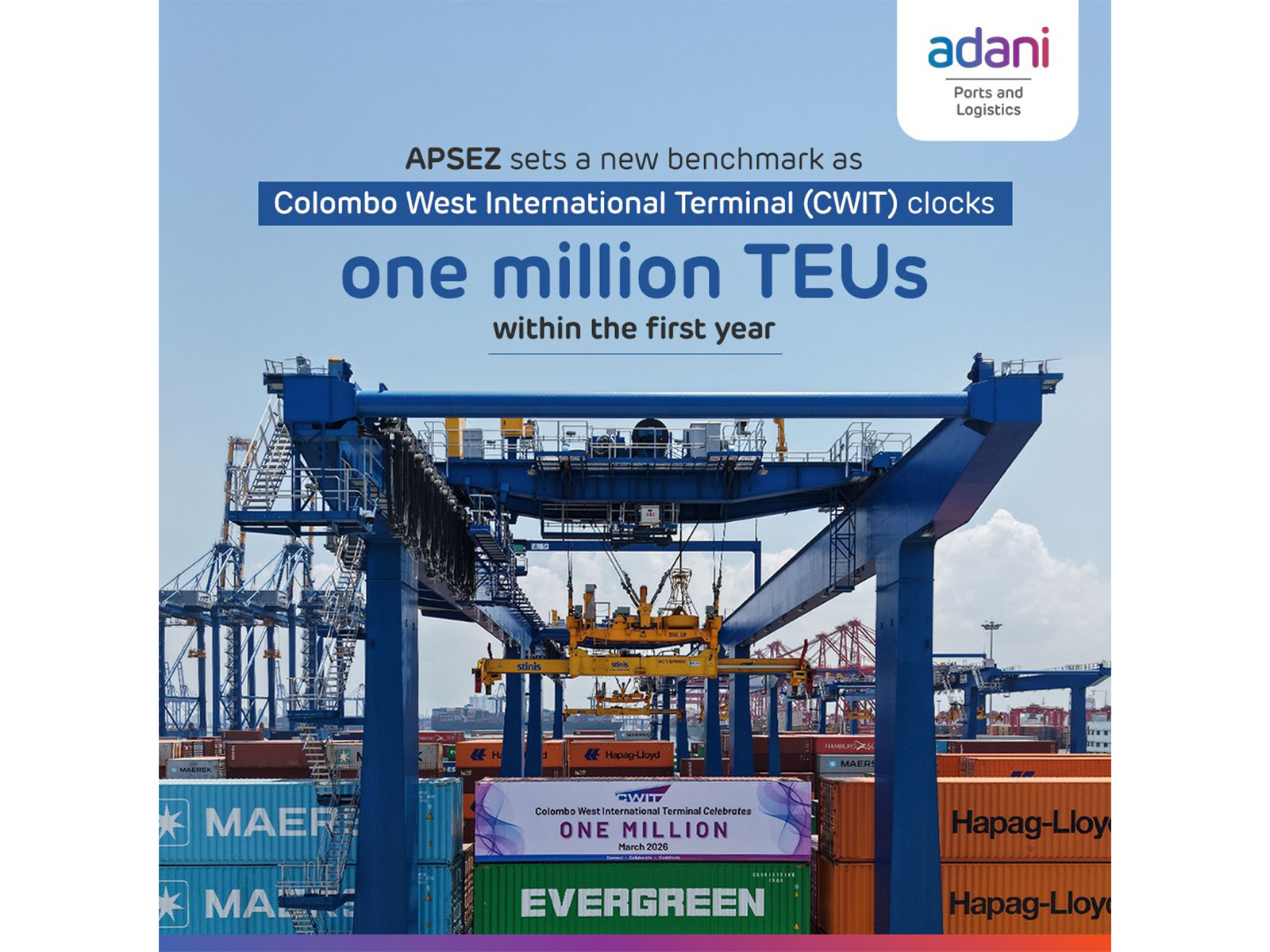
New Delhi [India], March 18 : The Colombo West International Terminal (CWIT) in Sri Lanka handled one million twenty-foot equivalent units (TEUs) in its first year of operation, according to Adani Ports and Special Economic Zone Ltd (APSEZ). The facility, which commenced operations in April 2025, reached this volume faster than any other terminal recorded at the Port of Colombo. This performance placed the terminal among a select group of global facilities to achieve such scale within an inaugural year.
The terminal operated as a partnership between APSEZ, John Keells Holdings PLC, and the Sri Lanka Ports Authority. APSEZ, which currently handles nearly 45 per cent of India's container cargo, viewed the project as a significant step in expanding its international footprint. The project involved an investment of approximately USD 800 million, representing one of the most substantial port infrastructure commitments in Sri Lanka in recent years.
The rapid ramp-up at the terminal reflected strong early alignment with shipping lines and efficient berth productivity. While container terminals typically required several years to stabilize operations and build throughput, CWIT benefited from its location within an established transshipment ecosystem.
The company noted that even newer automated terminals in Europe and East Asia historically took longer to reach comparable utilization levels. The terminal's proximity to the world's major east-west shipping route maintained its status as a preferred stop for mainline vessels and feeder networks.
As the first fully automated deep-water terminal at the Port of Colombo, the facility handled the latest generation of ultra-large container vessels. It featured a 1,400-metre quay and a water depth of around 20 metres, which allowed it to berth some of the largest ships operating on the Asia-Europe trade route. With an annual capacity of about 3.2 million TEUs, the terminal significantly expanded the handling capability of the region.
The facility utilized digitally integrated systems, modern cranes, and electrified yard equipment to reduce turnaround times. These systems improved operational efficiency while managing environmental impact, aligning with broader global trends in port automation. A significant share of the terminal's volumes continued to be transshipment cargo, with much of it linked to India.
This connectivity remained critical to sustaining growth as the terminal linked cargo flows across Asia, the Middle East, and Europe. For APSEZ, which operated a portfolio of 15 ports in India and four overseas, the achievement reinforced its position as a major player in the Indian Ocean Region.