Assam marks National Road Safety month by adopting SaveLIFE Foundation's science-backed zero-fatality solutions
Jan 07, 2026
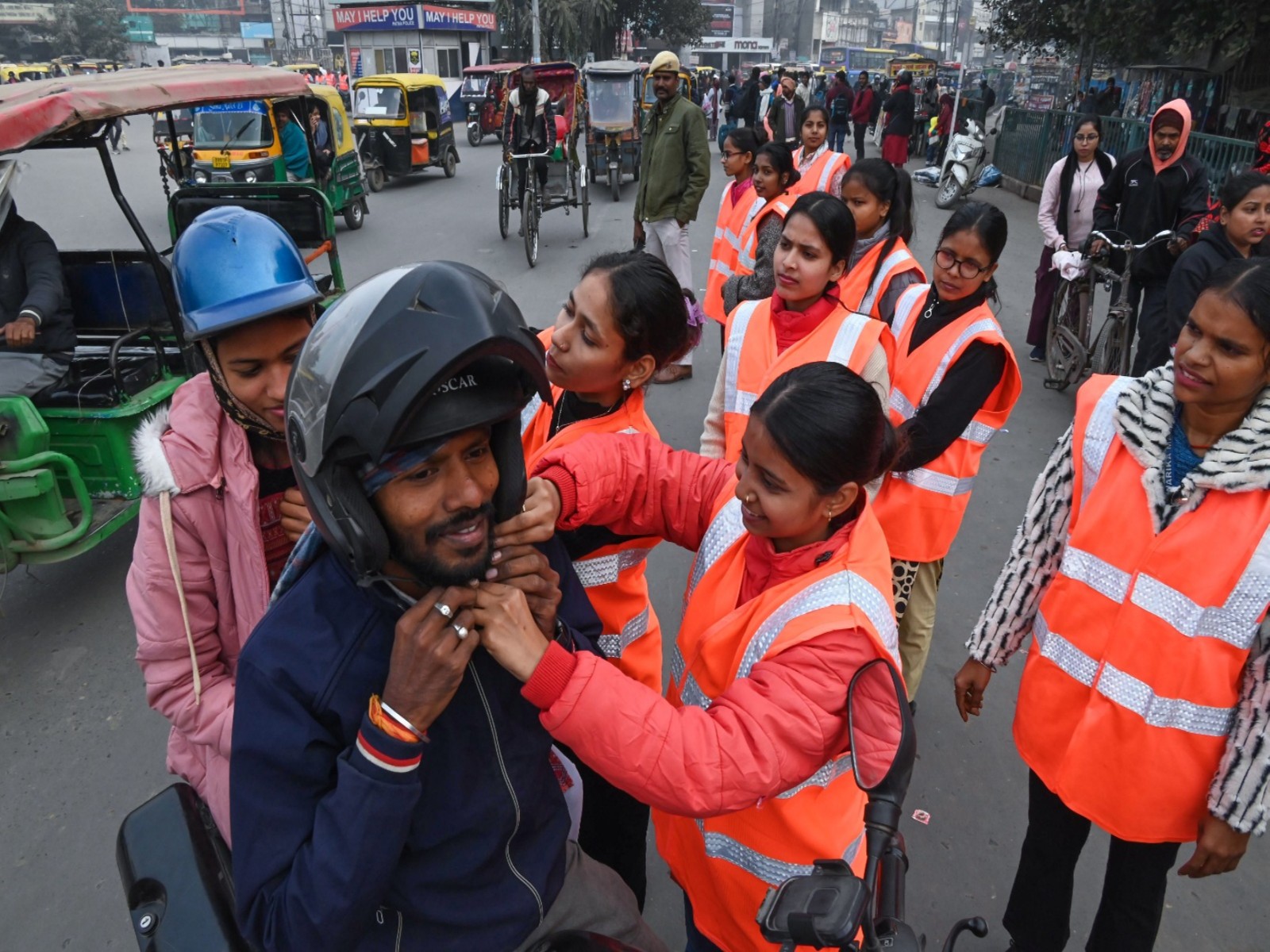
Guwahati (Assam) [India], January 7 : With January being observed as the National Road Safety Month, and the theme of 'Zero-Fatality Month' underscoring the importance of achieving a measurable improvement in road safety, the Government of Assam, as per the directive of the Ministry of Road Transport and Highways (MoRTH), is enlisting SLF's technical support for effective implementation of scientific road safety solutions.
The grim figure of over 1.7 lakh annual road crash fatalities translates to more than 450 deaths every day, pointing to a nationwide road crash crisis that is exacting a heavy toll on India's economy, said a release.
The solution to this public health challenge lies in institutionalising science-backed improvements in the road infrastructure, trauma care framework, and policy ecosystem, pillars that anchor SaveLIFE Foundation's (SLF) zero-fatality solutions that are being implemented across 100 national highways (Zero Fatality Corridor or ZFC Programme) and 100 districts (Zero Fatality District or ZFD Programme), with the target stretches showing marked improvements vis-a-vis year-on-year reductions in road crashes, fatal crashes and road crash fatalities.
As part of the 'Zero-Fatality Month' framework, SLF has also outlined a week-wise, district-led action plan for state governments that prioritises measurable outcomes.
The approach begins with data-led risk identification, requiring districts to identify their top three critical road corridors and top ten high-fatality locations, alongside analysis of temporal crash patterns, vulnerable road users, and crash configurations.
This is followed by multi-pillar interventions spanning - Engineering (speed calming, improved signage and markings, pedestrian infrastructure, illumination, and safer junction design), Enforcement (zero tolerance for drunk driving, speeding, wrong-side driving, and helmet and seat belt violations), Emergency response (strategic ambulance placement near crash hotspots and strengthened trauma care readiness), Community engagement through targeted awareness campaigns for high-risk groups.
The framework also mandates weekly monitoring and mid-term reviews, with district task forces submitting standardised reports to state leadership and a mid-January state-level review to enable course correction and rapid scaling of successful interventions.
Speaking about the initiative, Piyush Tewari, Founder-CEO, SaveLIFE Foundation, said, "India's road crash crisis is not unsolvable. With stronger systems and coordinated action, many road crash fatalities can be prevented. Losing over 450 lives every day on our roads is the equivalent of a major air crash unfolding daily, yet it rarely triggers the urgency it deserves."
"What our work across highways and districts has consistently shown is that when science-backed road design, strict enforcement, robust trauma care, and district-level accountability come together, fatalities fall-- often by 30 to 60 percent. As such, this National Road Safety Month, we must move beyond intent and awareness to measurable action on the ground. Zero fatalities are not an aspiration; it is an achievable outcome when governance owns road safety as a public health priority. We are delighted to be supporting MoRTH and the administrations of various states and union territories for this initiative.", he added.
SLF's Zero-Fatality solutions are tailored to local contexts, often designed in collaboration with communities.
This approach emphasises cultural empathy and the need for strategies beyond standard Western practices, offering a more inclusive path to safer roads.
The model uses a six-step approach, which includes partnerships with local stakeholders, data analytics to pinpoint problems, comprehensive on-site audits, tailored solutions, rigorous impact measurement, and analysis for replication and scaling.
While the Zero Fatality Corridor Programme began in 2015, the Zero Fatality District Programme was initiated in 2021.
Together, both programmes have achieved a 30-60% reduction in road crash fatalities on some of India's most crash-prone stretches.
The most notable improvements include: Mumbai-Pune Expressway: 58% reduction in road crash fatalities; NH-48: 51% fatality reduction on the Mumbai-Pune stretch, with positive results extending to the Pune-Satara and Satara-Kagal sections; and Yamuna Expressway: nearly 40% reduction in road crash fatalities.
Several Indian states, including Assam, have already begun implementing MoRTH's directions for National Road Safety Month by mobilising various departments, including transport, police, health, education, urban and rural local bodies, and district administrations, all of which are expected to proactively participate in the effort to ensure its successful implementation.
SLF's Zero-Fatality model aims to take road safety governance to the grassroots administrative units in India, with a view to seamlessly integrating these scientific solutions within local governance systems. On-ground implementation is key to ensuring tangible improvements in the country's road safety landscape. For this, the mandate rests with district administrations to implement comprehensive measures grounded in the 4 E's of road safety: engineering, enforcement, emergency care, and education.
By embedding our strategies into the core of governance, we move beyond collaboration towards true government ownership. This helps foster proactive development and scaling of safety measures, ultimately making zero fatalities a reality in India and globally.