BSB signs MoUs with leading skill councils, Swami Ramdev calls for employment-oriented training
Aug 02, 2026
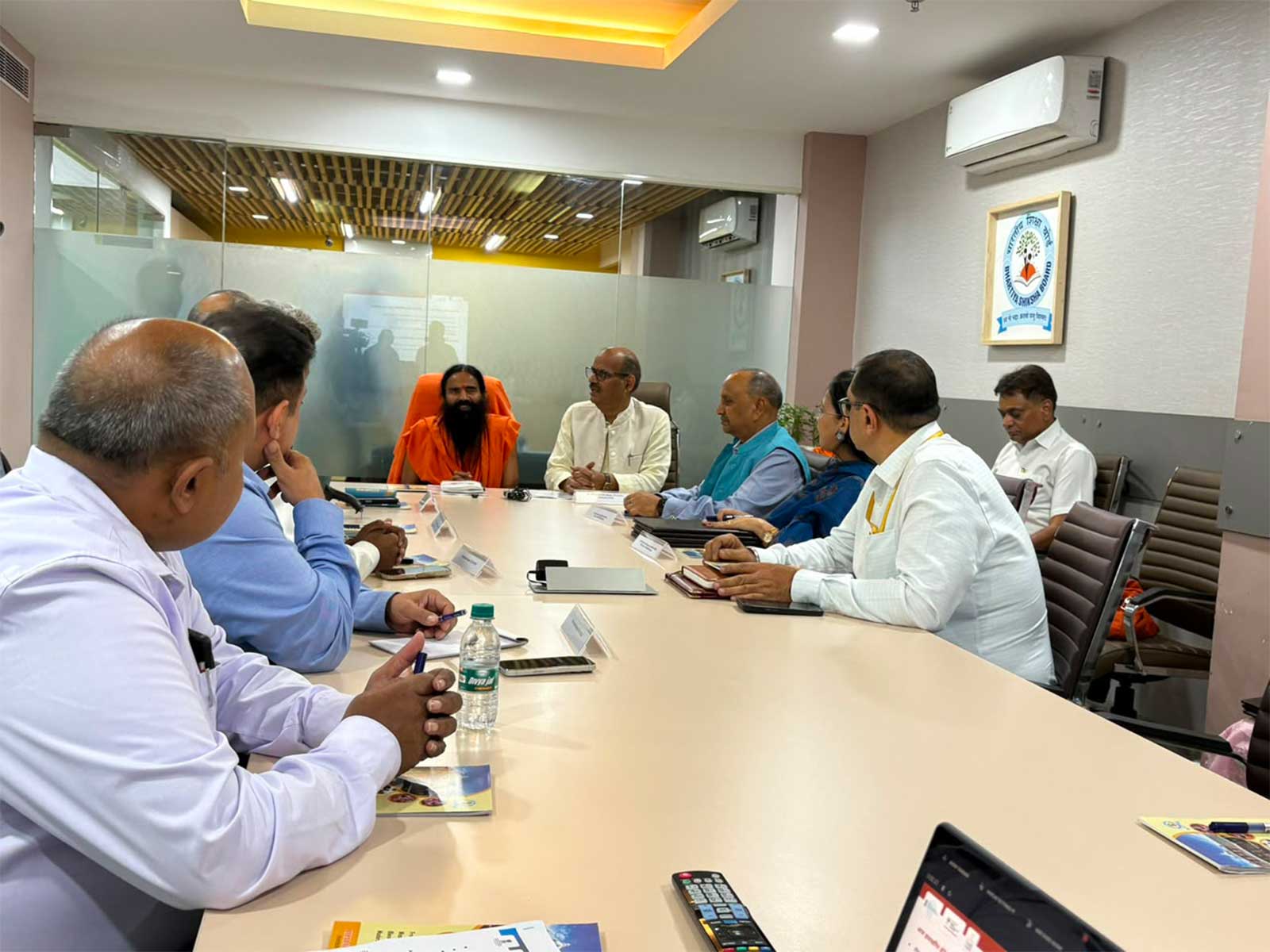
Noida (Uttar Pradesh) [India], August 2 : The Bharatiya Shiksha Board (BSB) on Saturday hosted an MoU exchange and honouring ceremony at its head office in Noida, where it formally signed and exchanged Memoranda of Understanding (MoUs) with three major Sector Skill Councils to strengthen vocational education and skill development.
The MoUs were signed with the Tourism and Hospitality Sector Skill Council (THSC), the Skill Council for Green Jobs (SCGJ), and the Handicrafts and Carpet Sector Skill Council (HCSSC). BSB has a partnership with the National Institute of Electronics and Information Technology (NIELIT).
The MoU with NIELIT had been signed on December 15, 2023, under which IT and digital skills courses adapted to BSB's school curriculum and ecosystem are already being conducted in schools affiliated with the Board.
The ceremony was presided over by BSB Founder Chairman Swami Ramdev. In his remarks, Swami Ramdev said there is a need of employment-oriented skills.
"We need skills that our youth can learn so they can start a job or become self-employed as quickly as possible. Keeping this objective in mind, we are partnering with the country's leading Skill Councils. Today, our youth need to be skilled and proficient."
Executive Chairman NP Singh said that in line with the National Education Policy (NEP) 2020 and the National Curriculum Framework (NCF) 2023, BSB has taken a decisive step towards integrating National Skills Qualification Framework (NSQF)-aligned, job-role-based vocational courses into mainstream school education."
He said BSB has been continuously working to make vocational education and skill development more affordable, accessible and meaningful so that quality skill-based education reaches every student regardless of geography or background.
According to Singh, the aim is not only to prepare students for higher education but also to develop them into skilled professionals, innovators and entrepreneurs capable of making a meaningful contribution to the economy of the future.
He further said that under the NSQF, every vocational course is standardised on a scale of 1 to 10, enabling students and employers to understand how a course relates to further study and specific job roles, thereby providing an industry-recognised pathway from classroom education to employment or entrepreneurship.
Singh said courses from Level 1 to Level 4 for Classes 9 to 12 have been prepared and customised under the framework. He added that these courses have been developed by NIELIT and the Sector Skill Councils (SSCs), while some were originally developed by the Pandit Sundarlal Sharma Central Institute of Vocational Education (PSSCIVE), Bhopal.