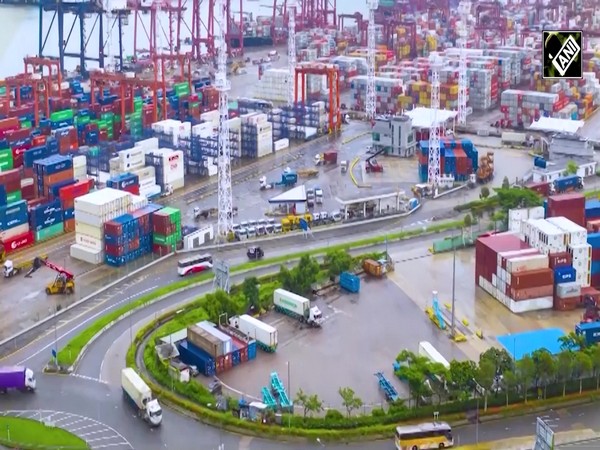
Centre details Indo-Dutch push to finalise DPR for Gujarat's Kalpasar Project
Jul 27, 2026
New Delhi [India], July 27 : The Detailed Project Report (DPR) for Gujarat's ambitious Kalpasar Project is at an advanced stage of finalisation, with ongoing Indo-Dutch technical cooperation expected to strengthen the report through global best practices in coastal engineering, hydraulic modelling, salinity management, climate resilience and water management, the Centre informed the Rajya Sabha on Monday.
Minister of State for Jal Shakti Raj Bhushan Choudhary, in a written reply in the Upper House, said the proposed Gulf of Khambhat (Kalpasar) Project aims to create one of the world's largest coastal freshwater reservoirs by constructing a dam across the Gulf of Khambhat.
According to the government, the project is expected to significantly augment freshwater availability and help mitigate water scarcity in Gujarat's Saurashtra region by providing a dependable source of water for irrigation and other identified uses.
The proposed project also includes a highway-cum-rail corridor over the dam. As per the current layout, the corridor is expected to reduce the travel distance between Bhavnagar and Surat by around 179 kilometres--from about 356 kilometres through the existing land route to nearly 177 kilometres via the proposed dyke corridor--thereby improving regional connectivity and reducing travel time.
The minister said the Indo-Dutch collaboration is intended to enhance the technical robustness of the project and facilitate informed decision-making during its implementation by incorporating international expertise in key engineering and water management areas.
The Kalpasar Project also envisages the development of approximately 2,470 MW of hybrid renewable energy capacity on reclaimed land that remains submerged during high tide. The renewable energy generated is proposed to be used, among other purposes, for pumping freshwater to meet irrigation requirements in the coastal regions of Saurashtra.
The government further said the DPR incorporates appropriate engineering measures, hydraulic studies and salinity management strategies to address the issue of salinity ingress.