Centre relaxes DSIR norms, exempts 3-year eligibility condition for deep-tech startups
Jan 06, 2026
New Delhi [India], January 6 : The Central government has announced a major relaxation for deep-tech startups by exempting the mandatory three-year existence condition for recognition under DSIR's Industrial Research and Development Promotion Programme.
Union Minister of State (Independent Charge) for Science and Technology, Earth Sciences, PMO, Department of Space and Department of Atomic Energy, Jitendra Singh, said the move would provide a huge relief and early support to budding innovators and entrepreneurs in the deep-tech space.
The Minister said the relaxation is aimed at accelerating India's startup ecosystem and providing early momentum to beginners and early-stage deep-tech projects.
He noted that while the Rs 1 lakh crore Research, Development and Innovation (RDI) Fund has generated unprecedented enthusiasm across the country, it is designed to support startups that have achieved a certain level of technological maturity.
"For early-stage innovators or startups, a wide basket of schemes already exists across departments such as DST, CSIR, TDB and others. The removal of the three-year existence requirement is a significant incentive to help deep-tech startups scale faster, even before they are fully on their own," the Minister said.
The minister also explained that CSIR had been extending financial assistance to startups earlier as well, including loans of varying amounts, in some cases up to Rs 1 crore, but these were linked to a mandatory condition of demonstrating sustainability through a minimum three-year existence.
"That requirement has now been done away with," he said, adding that appropriate evaluation standards linked to technological maturity will continue.
Congratulating the DSIR family on the Foundation Day, the Minister described the relationship between DSIR and CSIR as an "intergenerational symbiosis" that strengthens India's innovation ecosystem.
He also said India has moved beyond the goal of Atmanirbhar Bharat and is now entering a phase where other nations are increasingly dependent on Indian capabilities.
Highlighting DSIR's four pillars, science, industry, R&D and technology transfer, the Minister underlined the importance of industry participation in meaningful research.
He also noted strong women participation, with over 10,000 women beneficiaries availing DSIR schemes, including more than 55 women-led self-help groups.
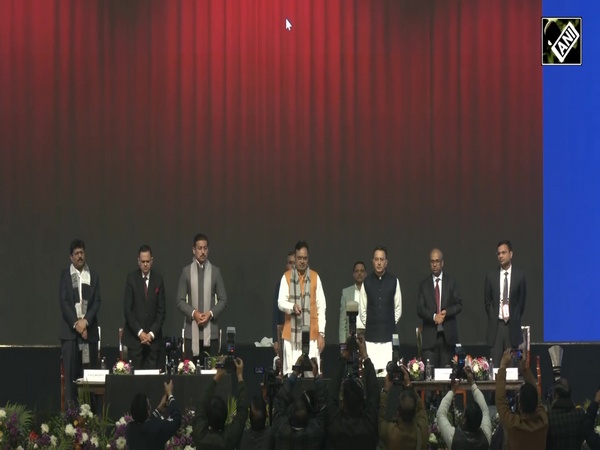
During the event, the Minister launched four key initiatives, including revised DSIR guidelines for recognition of in-house R&D centres of deep-tech startups, PRISM Network Platform - TOCIC Innovator Pulse, Creative India 2025 under the PRISM scheme, and the DSIR Disaster Management Plan.
Several MoUs and technology transfer agreements were also exchanged in the presence of senior officials and dignitaries from the science and innovation ecosystem.