Committee on demographic changes to visit stats, UTs to collect report; HM asks for 'earliest' recommendation
Jul 01, 2026
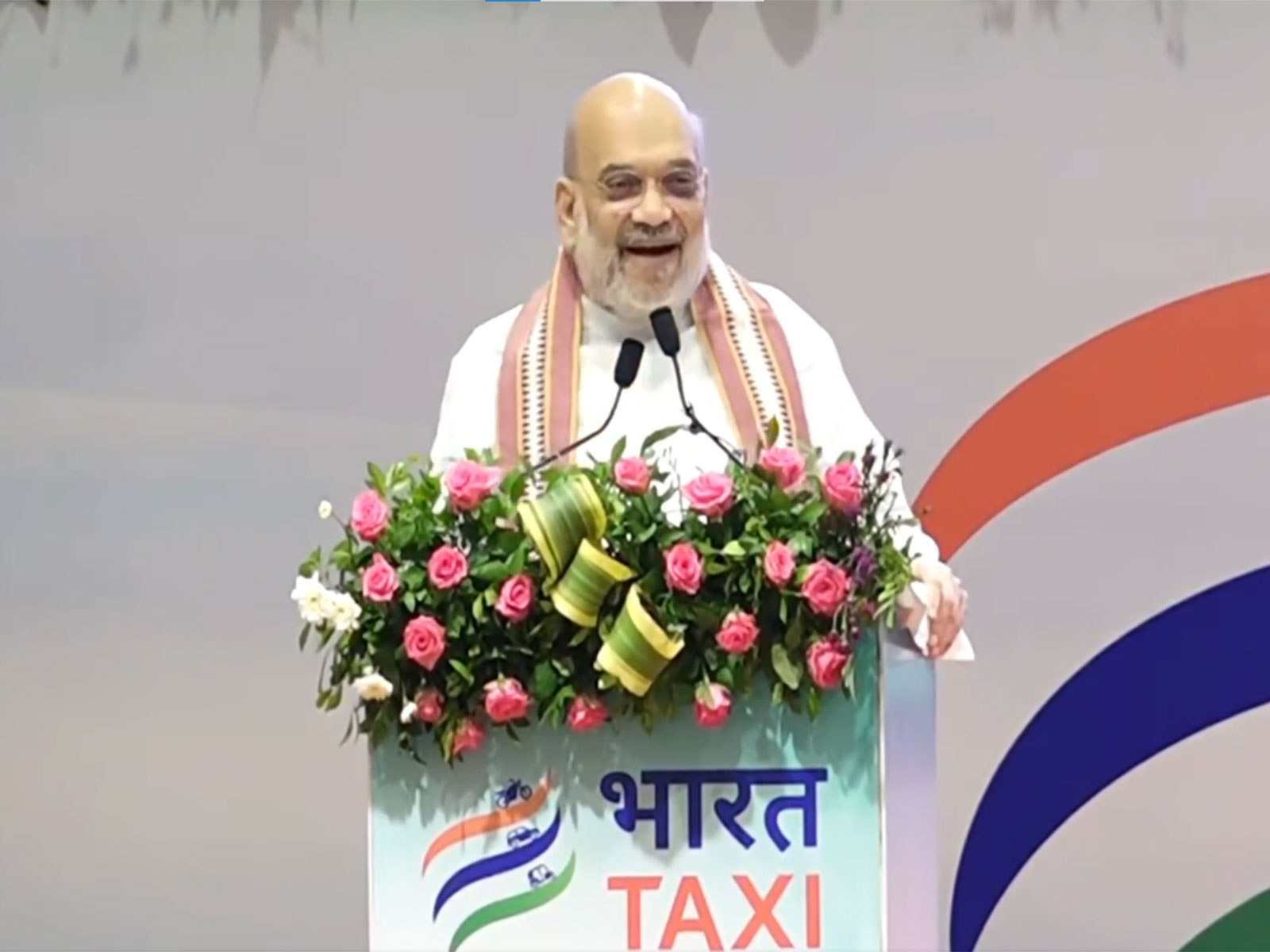
New Delhi [India], July 1 : Union Home Minister Amit Shah on Wednesday suggested the High Level Committee on Demographic Changes to provide its recommendation at the "earliest" as the body informed him to visit states and Union Territories (UTs) to get first-hand ground-level details.
Shah's suggestion comes after the committee led by its chairman, retired Justice Prakash Prabhakar Naolekar, met him at his residence earlier in the day and informed that it would collect details from the state governments and UT administrations during its visit and interact with various ministries of the Central government to receive feedback on subjects related to demographic changes.
In the courtesy meeting, the committee also informed the Home Minister that a detailed questionnaire has been prepared to receive relevant information from states and UTs in advance to make visits to states and UTs more meaningful and interactive.
While appreciating the strategy formed by the committee, Shah directed Union Home Secretary Govind Mohan to provide all possible assistance to the committee in its day-to-day working and also during its visits.
"The Home Minister suggested that the High Level Committee provide its recommendation at the earliest," a Ministry of Home Affairs (MHA) statement mentions.
As announced by Prime Minister Narendra Modi from the Red Fort on August 15, 2025, the Committee was formally constituted on May 26 this year to study the demographic changes arising from illegal immigration and other abnormal reasons, and to suggest measures to deal with these demographic changes.
Besides Naolekar, the six-member committee include MHA Joint Secretary (Foreigners-I) as Member Secretary. Other members include the Census Commissioner, retired Indian Administrative Service officer Durga Shankar Mishra, retired Indian Police Service officer Balaji Srivastava, and economist Shamika Ravi.
This High-Level Committee will scientifically assess the demographic changes occurring in various parts of the country due to illegal immigration and other abnormal reasons, analyse their causes, and recommend appropriate policy, legislative, and administrative measures.
On June 13, the Home Minister had also chaired a meeting of MHA officials to ensure proper facilitation of the Committee on Demographic Changes. He then directed the commission to study demographic changes in border districts. He also directed the Commission to visit border areas, metro cities, and industrial towns for assessment. Earlier, the first meeting of the committee was convened, and the agenda was formulated.
After constituting the committee on May 26, the MHA had also issued a 'resolution' to constitute the High-Level Committee on Demographic Changes.
As per the resolution, "extensive challenges have emerged due to demographic changes, including those linked to illegal immigration."
These changes, it says, observed in certain regions, are not attributable to normal fertility or mortality trends but are instead caused by external abnormal factors such as illegal immigration, irregular population mobility, and administrative laxity.
The resolution notes that although such changes are most visible in border districts, their impact has extended to urban centres, industrial corridors, tribal regions, and other socially and economically sensitive areas.
"These shifts have significantly affected public service delivery, local governance, resource distribution, and social cohesion," reads the resolution.
It also highlights that the existing institutional framework is not adequately equipped to undertake coordinated, evidence-based, and time-bound evaluation and response.
Constituted under the MHA, the Committee is to conduct a scientific study of the nature, causes, and consequences of demographic changes across the country and to recommend appropriate policy, administrative, and legal measures.
The resolution added that the committee may also nominate other experts or agencies as needed and consult stakeholders, including local governments, security agencies, social organisations, and academic institutions.
As per its terms of reference, the committee will examine challenges arising from demographic changes, including those due to illegal immigration, and study possible causes such as variations in fertility, cross-border movement, economic opportunities, and socio-environmental factors. It will identify underlying factors, including abnormal settlement patterns and planned migration, and analyse structural population changes at the level of religious or social communities, especially those diverging from uniform trends.
The committee will also recommend a permanent and well-organised system for the legal, fair, and time-bound identification, detention, and deportation of illegal immigrants residing in the country. It will propose mechanisms to strengthen border management, population stabilisation, and identification systems for sustained monitoring and suggest a comprehensive policy framework to enhance coordination between Central and state governments.
Additionally, the committee has the authority to requisition information, records, or documents from any ministry, department, state government, public authority, or individual. It will determine its own procedures for inquiry, consultation, analysis, and submission of its report, and may form sub-committees or working groups with prior approval of the MHA.
The MHA will provide all necessary administrative and logistical support to the committee. Its headquarters will be located in New Delhi, and it is required to submit its final report within one year.
Announcing the committee on May 27, the Home Minister had said that the constitution of the high-level committee aimed at examining the issue of demographic change in India, describing it as a critical challenge with far-reaching implications for national security, sovereignty and social stability.
Framing the move as a follow-up to Prime Minister Narendra Modi's announcement on Independence Day 2025, Shah had announced his post on X, pointing out that the government has now operationalised the "High-Level Committee on Demographic Change" to address concerns arising from illegal immigration and other "unnatural" factors influencing population patterns.
"Infiltration and other reasons causing unnatural demographic change pose a very significant challenge to the present and future of any nation," Shah had mentioned in the post.
"To address this very challenge, on August 15, 2025, Prime Minister Narendra Modi had announced the formation of this committee. I am delighted to inform you that the government has now constituted it," Shah then added.
Highlighting the scope of the panel's work, Shah had also said the demographic change is a "serious issue linked not only to our sovereignty but also to national security, law and order, profound changes in social structure, and the preservation of tribal society."
The Home Minister then pointed out that the committee is tasked with conducting a comprehensive assessment of demographic shifts across the country.
"It will examine changes occurring due to illegal immigration and other unnatural causes, analyse patterns of abnormal population shifts at the levels of religious and social communities, and present a planned and time-bound solution," he then said.
Reiterating the government's commitment, Shah had also said the initiative points to a proactive approach to safeguarding national interests.