Data-driven governance and research critical for resilient securities markets: SEBI Chairman
Feb 12, 2026
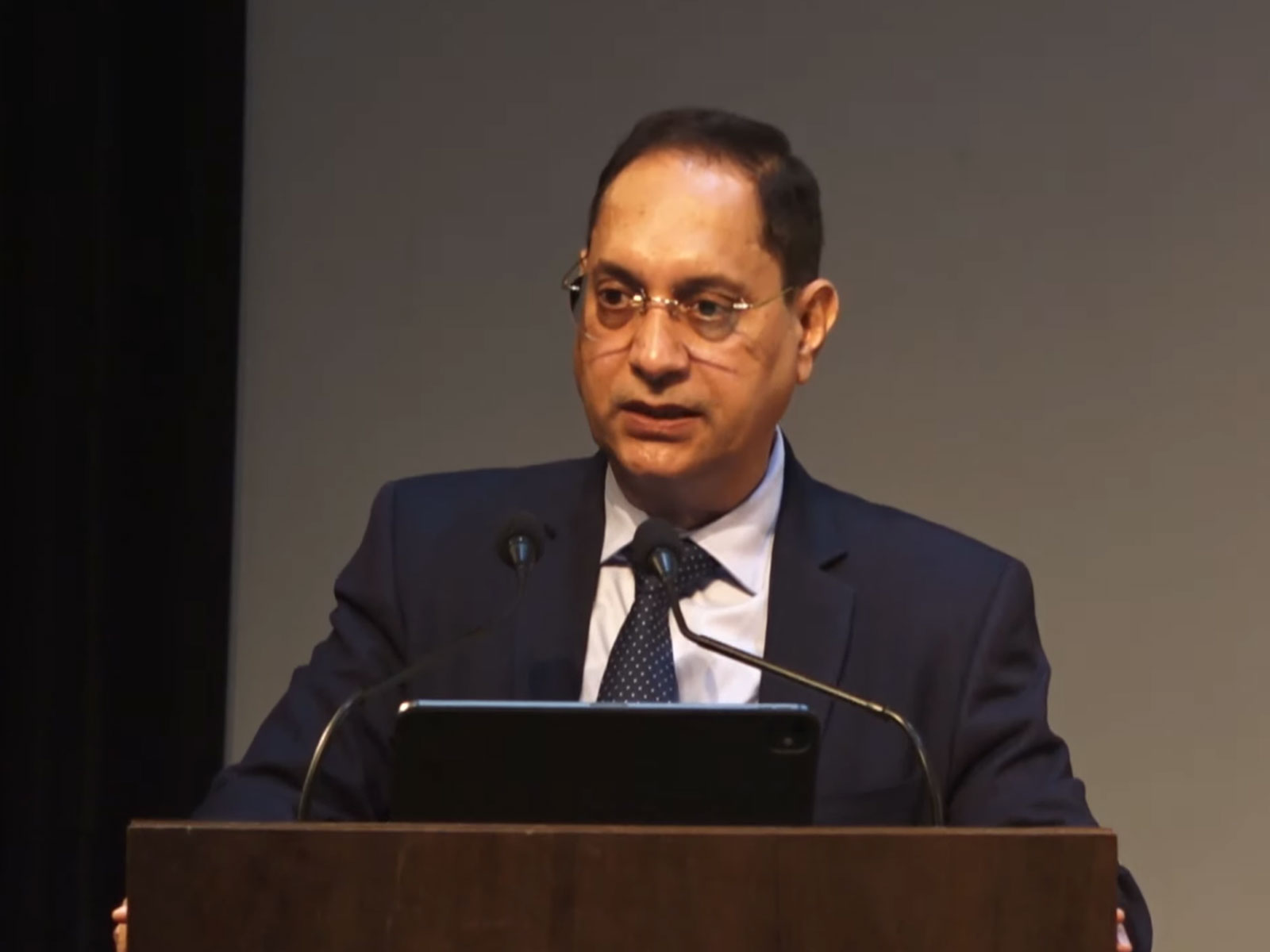
Patalganga (Maharashtra) [India], February 12 : When governed well and responsibly shared, data can support policy design, supervision, as well as risk assessment, said SEBI Chairman Tuhin Kanta Pandey. He stated that the objective of improving data accessibility is to boost high-quality research across the securities market ecosystem.
Speaking at the Sixth Annual International Research Conference on Securities Market (2025-26), organised by SEBI and the National Institute of Securities Markets (NISM) in collaboration with IIM Mumbai, Maharashtra National Law University, Mumbai, and NSE, Pandey emphasised that the regulator increasingly views market data as a public good.
The Indian securities market has undergone a structural shift over the last decade, transitioning from scale to sophistication. He noted that market capitalisation has surged from approximately Rs 100 trillion in FY15 to over Rs 470 trillion today. This growth is mirrored in the mutual fund industry, where assets under management rose from Rs 12 trillion in FY16 to Rs 81 trillion as of January 2026.
"The signals are a maturing ecosystem where long-term financing is increasingly market driven," Pandey noted, adding that unique investors have grown to 140 million from 38 million in 2019.
Technology now serves as the core architecture of these modern markets, with digital systems handling trading, clearing, and settlement. However, this advancement introduces new complexities and risks.
"Innovation must be accompanied by understanding. Otherwise, speed can outpace safety," Pandey cautioned. He highlighted that while artificial intelligence and advanced analytics can strengthen surveillance and detect fraud, algorithmic markets can create feedback loops, and AI models can introduce opacity. To address these "real and growing" concerns, he called for rigorous research on market microstructure and technology-driven risks.
To support this research-driven approach, SEBI has mandated that stock exchanges and clearing corporations implement data-sharing policies. The regulator recently conducted a scientific investor survey of 90,000 households, placing the underlying data in the public domain for researchers.
Pandey invited "researchers and practitioners to engage" with this data to uncover insights that may not be immediately visible. He also highlighted the establishment of the NISM Center for Regulatory Studies, which is intended to serve as a global knowledge hub for advanced research and provide critical inputs to regulators.
SEBI is further sharpening its focus on policy-oriented research through the introduction of regulatory impact analysis. A new vertical has been created under the Department of Economic Policy and Analysis to evaluate policy outcomes with evidence. This initiative is being guided by a committee chaired by the Chief Economic Advisor.
Pandey emphasised that the future research agenda must include India-specific behavioural finance and interdisciplinary studies. "Innovation must be guided by deep research, understanding, and evidence," he said, stressing the importance of bridging the gap between academic study and market practice.