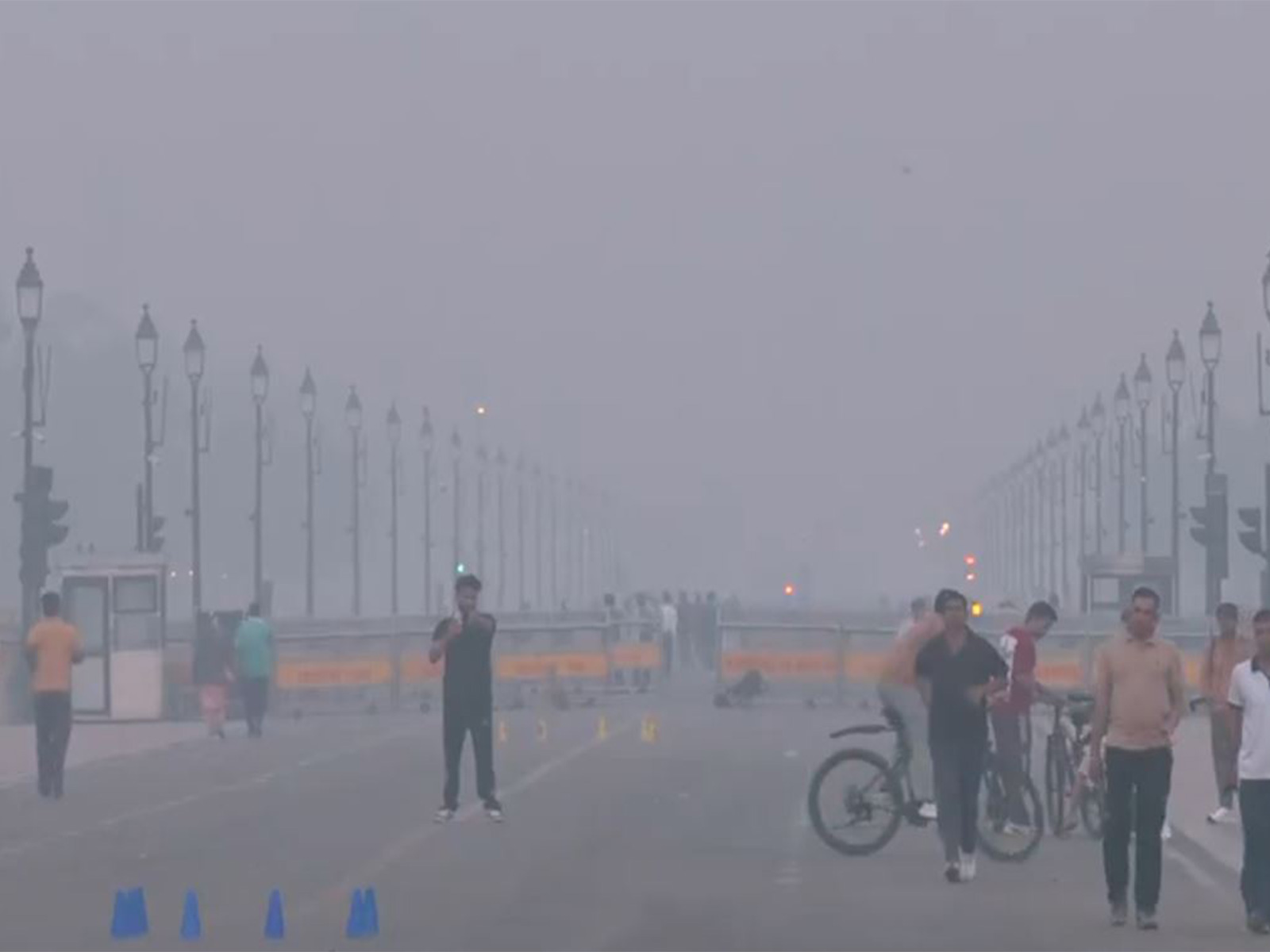
Delhi wakes up to toxic smog as AQI hits 333, remains in 'very poor' category
Dec 06, 2025
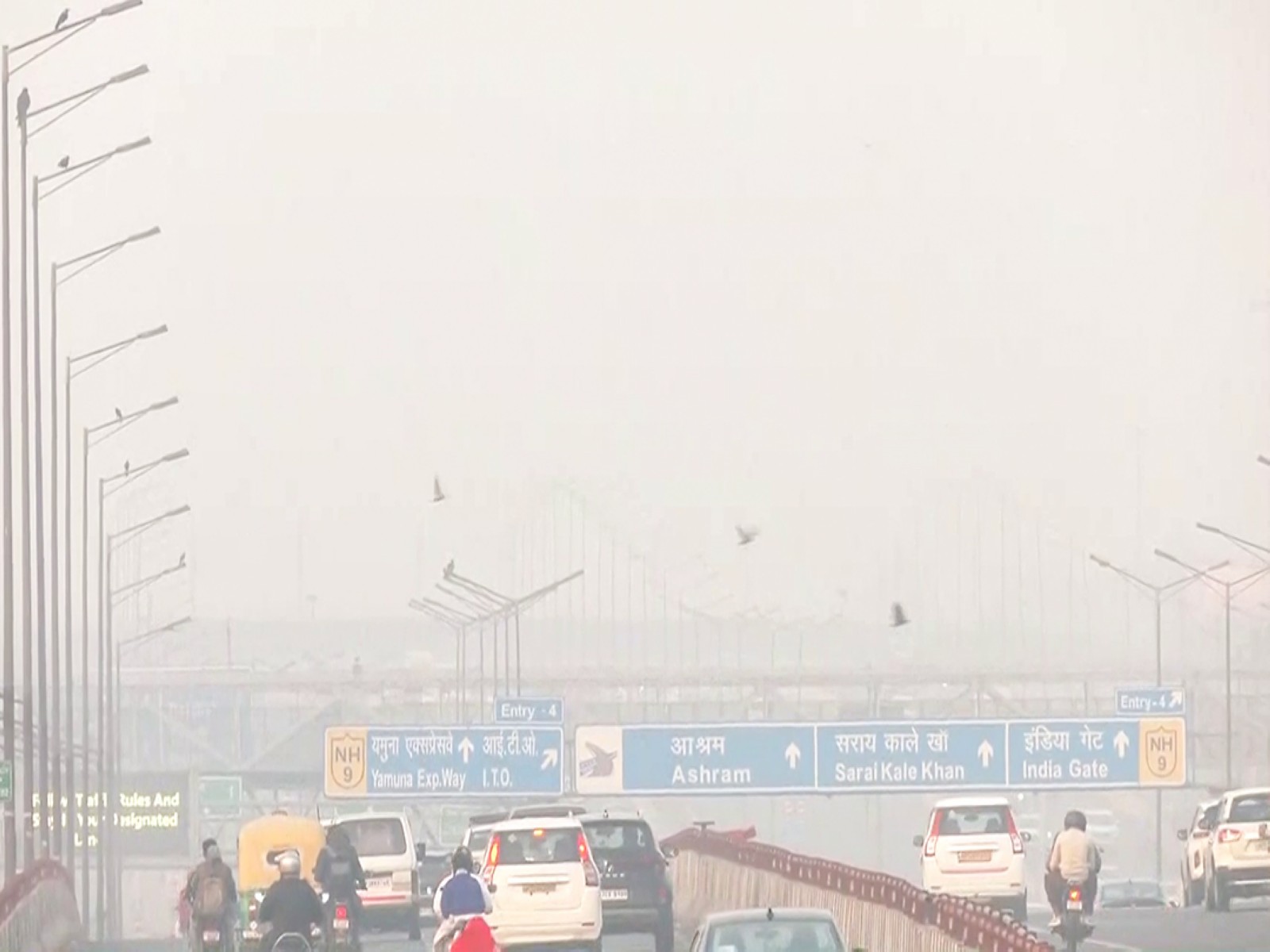
New Delhi [India], December 6 : The national capital woke up to a blanket of toxic smog on Saturday morning, with the average Air Quality Index (AQI) hitting 333 at 7 am in the "very poor" category, according to the Central Pollution Control Board (CPCB). Despite a slight improvement from the recent weeks, several parts of the city remained shrouded in a dense layer of toxic smog.
Many areas, including Ghazipur Mandi, Anand Vihar, and Wazirpur, reported thick haze early this morning, with visibility remaining significantly reduced. According to CPCB, many regions of the National Capital fell into the 'very poor' category.
The area around Anand Vihar was blanketed in a dense layer of toxic smog, with an AQI of 366 in the 'very poor' category. According to CPCB data, Sonia Vihar recorded an AQI of 352, Wazirpur measured 359, while Ghazipur Mandi recorded 366.
Bawana recorded the highest AQI of 375 at 7 am, placing it in the 'very poor' category. In contrast, NSIT Dwarka recorded an AQI of 260, which falls under the 'poor' category, according to data from the Central Pollution Control Board (CPCB).
The India Gate and Kartavya Path area is blanketed by a layer of toxic smog that covers the city. The AQI (Air Quality Index) in the area is 311, categorised as 'Very Poor'.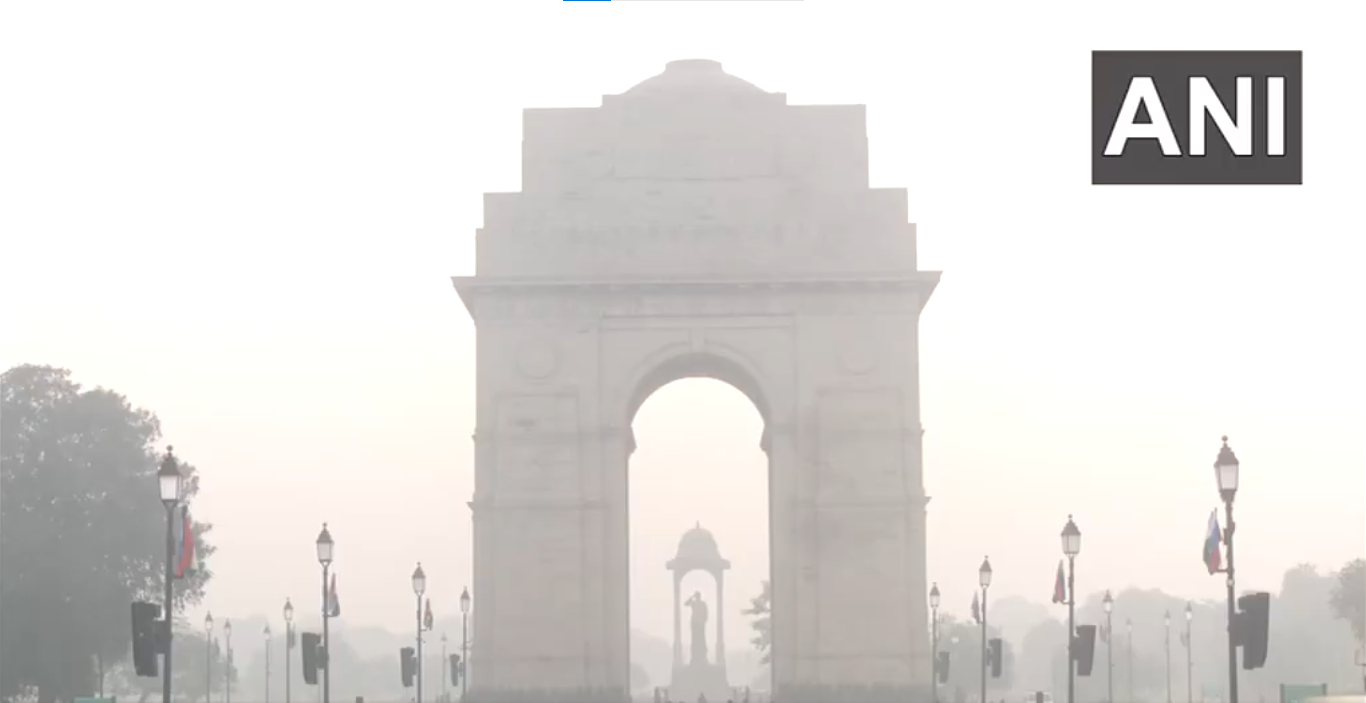
According to AQI categorisation, 0-50 is 'good', 51-100 'satisfactory', 101-200 'moderate', 201-300 'poor', 301-400 'very poor', and 401-500 'severe'.
Further to combat the continuously detoriating air quality in the national capital and its adjoining areas, the Ministry of Environment, Forest and Climate Change, Government of India, has released a statement regarding the alarming levels of pollution in Delhi.
The statement issued on Friday in response to a question raised by MP Dr. Laxmikant Bajpayee in the Rajya Sabha, asking whether it is a fact that "one in every seven deaths in Delhi can be attributed to the city's toxic air as claimed by several studies and reported in the media".
The Minister of State in the Ministry of Environment, Forest and Climate Change, Kirti Vardhan Singh, responded by saying various studies have been conducted by academic and research institutes on the impact of air pollution. During the year 2025, not a single day the AQI has reached the severe plus level in Delhi.
The government continues to take measures to address the issue in Delhi-NCR.
The government has established the Commission for Air Quality Management (CAQM) under the Commission for Air Quality Management in NCR and Adjoining Areas Act, 2021, to oversee air quality management in Delhi-NCR and adjoining areas. The Commission has been addressing the issue of air pollution in Delhi-NCR in a collective, collaborative, and participative mode involving all major stakeholders.
The Commission has issued 95 Statutory Directions to guide and direct various actions toward the abatement of air pollution in the region and has prepared a Graded Response Action Plan (GRAP) to tackle pollution during peak winter months. The government has also implemented stricter emission norms for polluting activities in NCR and conducts regular review meetings to monitor progress.