Dharmendra Pradhan defends new higher education Bill, says sovereign authority always with government
Dec 16, 2025

New Delhi [India], December 16 : Amid criticism that the proposed Viksit Bharat Shiksha Adhishthan Bill, 2025, centralises power by vesting final authority with the government, Union Education Minister Dharmendra Pradhan on Monday said that sovereign authority under all laws has always rested with the government.
His remarks came in response to criticism of Section 15(3)(g) of the Viksit Bharat Shiksha Adhishthan Bill, 2025, which provides that the proposed higher education commission "shall be bound" by policy directions issued by the Central government and that in the event of any disagreement, "the Government's decision shall be final".
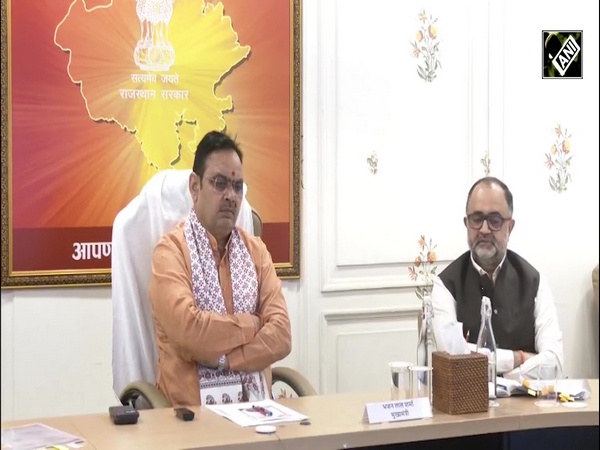
Speaking at a press conference a day after he introduced the Bill in the Lok Sabha, Pradhan said the provision does not represent a shift in the existing legal framework. "This has been the position earlier as well. Sovereign authority is vested in the government in every law. This was the case with UGC as well. We have referred the bill to the joint parliamentary committee," he said.
The Lok Sabha adopted a resolution to refer a Bill to a joint committee of Parliament. According to Tuesday's resolution, the joint committee will comprise 21 members of the Lok Sabha and 10 from the Rajya Sabha. The proposed committee will submit its report by the last day of the first part of the Budget Session, 2026.
The Viksit Bharat Shiksha Adhishthan Bill, 2025--formerly the Higher Education Commission of India (HECI) Bill--aims to replace the University Grants Commission (UGC), the All India Council for Technical Education (AICTE), and the National Council for Teacher Education (NCTE).
The new Act also brings Institutes of National Importance (INIs) under the regulatory framework for the first time, whereas until now they functioned largely outside such oversight.
The Minister said Institutions of National Importance (INIs), including IITs and IIMs, will continue to enjoy autonomy under the proposed framework. "The core autonomy of these institutions will remain," he said, adding that they will be required to place certain institutional data within the regulatory system. This, he said, would help in "setting higher benchmarks for quality and standards" in higher education.
On the Council of Architecture (CoA), Pradhan said the body currently exercises regulatory, standard-setting and licensing functions. Under the proposed framework, its regulatory role will be subsumed, while it will continue to function as a professional standard-setting body with responsibility for licensing and academic standards in architecture education.