Earthquake of magnitude 4.5 strikes Myanmar
Mar 15, 2026
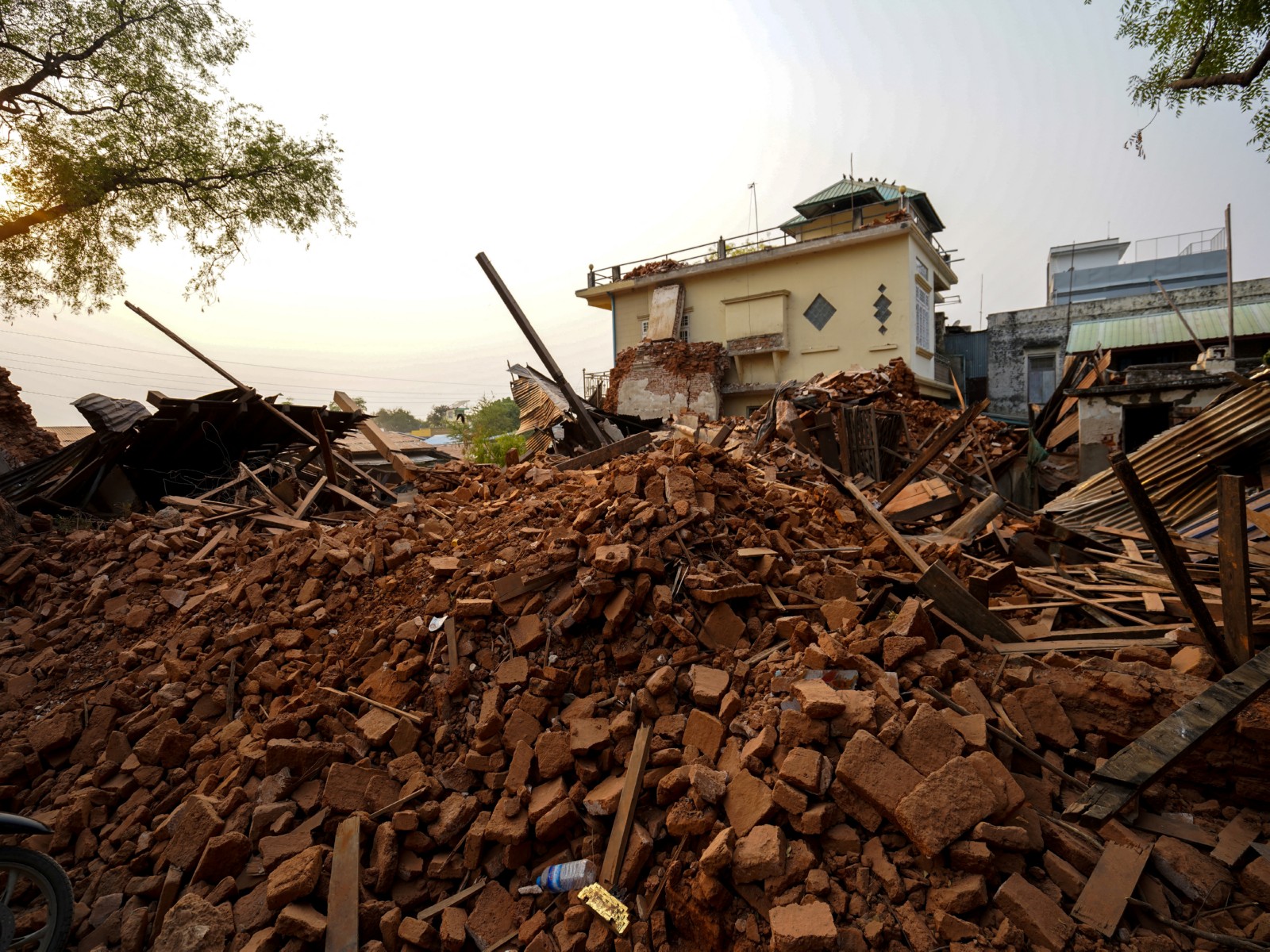
Naypyidaw [Myanmar], March 15 : An earthquake of magnitude 4.5 struck Myanmar on Sunday, a statement by the National Center for Seismology (NCS) said.
The earthquake occurred at a depth of 107km.
In a post on X, the NCS said, "EQ of M: 4.5, On: 15/03/2026 16:33:04 IST, Lat: 24.50 N, Long: 95.01 E, Depth: 107 Km, Location: Myanmar."
https://x.com/NCS_Earthquake/status/2033138852026872269?s=20
Earlier on Saturday, another earthquake of magnitude 4.4 struck the region at a depth of 90km.
In a post on X, NCS said, "EQ of M: 4.4, On: 14/03/2026 09:28:24 IST, Lat: 23.37 N, Long: 97.52 E, Depth: 90 Km, Location: Myanmar."
https://x.com/NCS_Earthquake/status/2032670031528735159?s=20
Earthquakes can occur anywhere between the Earth's surface and about 700 kilometres below the surface. For scientific purposes, this earthquake depth range of 0 - 700 km is divided into three zones: shallow, intermediate, and deep, as per USGS data.
Shallow earthquakes are between 0 and 70 km deep; intermediate earthquakes, 70 - 300 km deep; and deep earthquakes, 300 - 700 km deep. In general, the term "deep-focus earthquakes" is applied to earthquakes deeper than 70 km, the USGS states.
Myanmar is vulnerable to hazards from moderate and large magnitude earthquakes and tsunamis along its long coastline. Myanmar is wedged between four tectonic plates (the Indian, Eurasian, Sunda, and Burma plates) that interact in active geological processes.
A 1400-kilometre transform fault runs through Myanmar and connects the Andaman spreading centre to a collision zone in the north called the Sagaing Fault.
The Sagaing Fault increases the seismic hazard for Sagaing, Mandalay, Bago, and Yangon, which together represent 46 per cent of Myanmar's population.
Although Yangon is relatively far from the fault trace, it still suffers from significant risk due to its dense population. For instance, in 1903, a magnitude 7.0 earthquake in Bago also struck Yangon.