"Government supports armed forces with all its capacity": Iranian President Pezeshkian
May 21, 2026
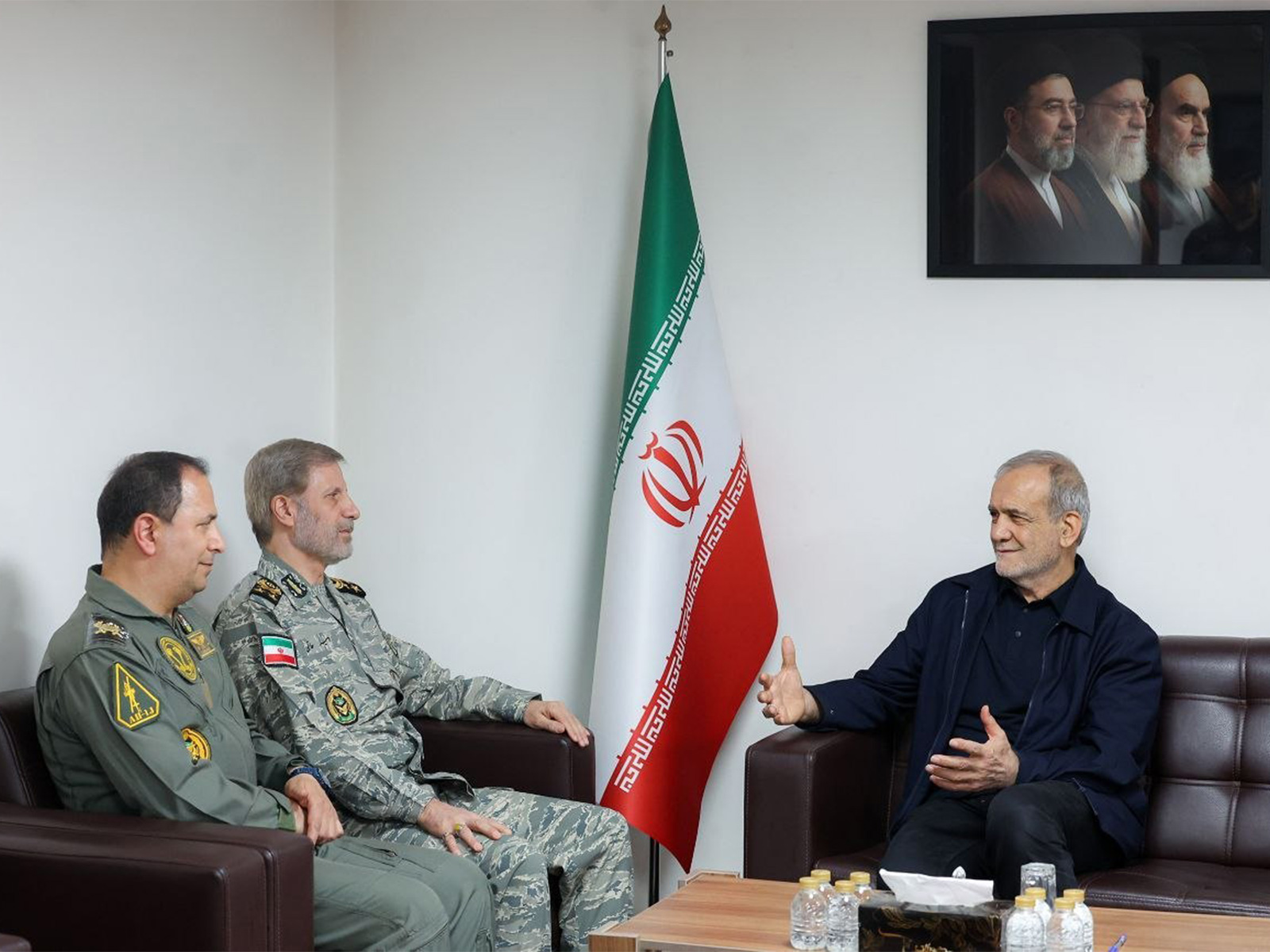
Tehran [Iran], May 21 : Iranian President Masoud Pezeshkian has reaffirmed his administration's absolute commitment to the nation's military readiness, stating that the government supports the strengthening of the armed forces with all its capacity, Iran's semi-official Fars News Agency reported.
The president made the remarks during a high-level security meeting with Major General Amir Hatami, Commander-in-Chief of the Iranian Army.
According to the report, the discussions focused heavily on national defence policy, operational readiness, and the strategic reinforcement of the state's military infrastructure.
Underscoring the foundational pillars of the Islamic Republic's defence doctrine, the Iranian President emphasised that internal cohesion and military capability are entirely codependent when safeguarding the nation from external challenges.
"National unity and the authority of the armed forces are the most important backing for the country's security," President Pezeshkian stated during the meeting.
He further assured the military leadership that state resources would remain aligned with strategic defence requirements, reiterating that "the government supports the strengthening of the armed forces with all its capacity."
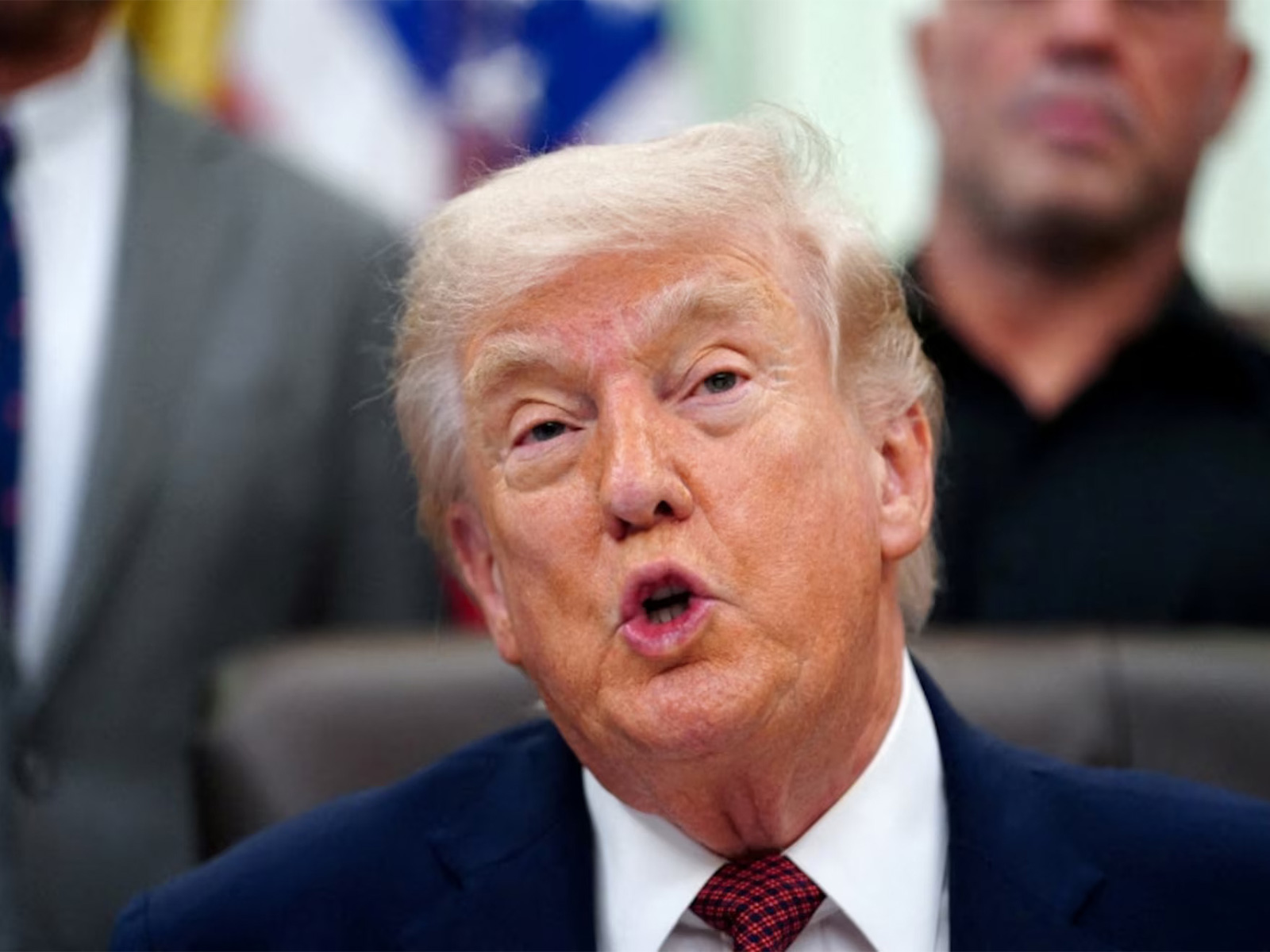
This internal emphasis on reinforcing domestic military capabilities coincides with critical developments on the geopolitical front. Amid highly volatile and fragile diplomatic engagements between Tehran and Washington, Iran's Supreme Leader Ayatollah Mojtaba Khamenei has ordered that the stockpile of enriched uranium "should not leave the country", rejecting US President Donald Trump's key demand in ongoing peace talks, Reuters reported, quoting two Iranian sources.
President Trump had previously provided assurances to Israel that Iran's inventory of highly enriched uranium, the essential component required for the assembly of a nuclear weapon, would be completely extracted from the Islamic Republic, according to Israeli officials who spoke to Reuters.
Concurrently, Israeli Prime Minister Benjamin Netanyahu has maintained a rigid stance, asserting that he will not contemplate an end to hostilities until the enriched uranium is entirely removed from Iranian custody, Tehran completely terminates its financial and material sponsorship of regional proxy militias, and the country's ballistic missile infrastructure is entirely dismantled.
However, this position has run into a wall of resistance in Tehran. Describing the internal consensus within Iran's highest decision-making bodies, one of two Iranian sources who spoke on the condition of anonymity due to the highly sensitive nature of the geopolitical situation stated, "The Supreme Leader's directive, and the consensus within the establishment, is that the stockpile of enriched uranium should not leave the country."
The same insiders revealed that Iran's top administrative and military echelons are convinced that relinquishing control of the material and sending it overseas would drastically undermine domestic security, leaving the country far more vulnerable to future military incursions by Washington and Tel Aviv. Under Iran's constitutional framework, the Supreme Leader maintains ultimate authority over all critical state policies, Reuters reported.
The current diplomatic gridlock unfolds against the backdrop of a precarious cessation of hostilities since April 8. This fragile truce followed a wave of US-Israeli military strikes directed at Iran on February 28. In the immediate aftermath of those attacks, Tehran launched retaliatory strikes against Gulf nations hosting American military detachments, while intense cross-border combat simultaneously erupted between Israeli forces and Iran-backed Hezbollah units in Lebanon.
Despite the current pause in active fighting, negotiators have failed to achieve a significant diplomatic breakthrough. The bargaining table remains heavily complicated by a stringent US naval blockade choking Iranian shipping hubs, balanced against Tehran's strategic leverage over the Strait of Hormuz, an indispensable choke point for the global energy supply. These high-stakes talks are currently being facilitated through Pakistani mediation.
According to the two senior Iranian sources, there is widespread scepticism within Tehran's political establishment, where many view the temporary lull in active warfare as a tactical deception by Washington, engineered to induce a false sense of security before the US inevitably recommences its aerial bombardment.
Lending weight to these internal anxieties, Iran's chief peace negotiator, Mohammad Baqer Qalibaf, remarked on Wednesday that "obvious and hidden moves by the enemy" clearly demonstrated that the American military was actively laying the groundwork for fresh offensives.
Compounding the pressure, President Trump announced on Wednesday that the United States stood completely prepared to launch subsequent military strikes against Tehran if the Iranian administration refused to sign on to a comprehensive peace treaty. However, the American leader hinted that Washington might grant a brief window of a few days to "get the right answers".
While the sources acknowledged that the adversarial nations have recently begun to bridge minor differences, profound ideological and strategic rifts persist regarding the ultimate trajectory of Tehran's atomic programme. This includes deep disagreements over the final disposition of the highly enriched uranium inventories and Tehran's unyielding demand for international validation regarding its sovereign right to enrichment.
Iranian administrative figures have consistently maintained that their primary objective is to hammer out a legally binding, permanent cessation of the war, backed by ironclad, credible guarantees that neither the United States nor Israel will initiate subsequent military operations. The officials specified that Tehran would only be amenable to entering into granular, sophisticated discussions regarding the technical aspects of its nuclear architecture once these comprehensive security assurances were firmly established. Throughout the decades-long standoff, Tehran has steadfastly denied any underlying intent to manufacture an atomic bomb.
Prior to the outbreak of full-scale hostilities, Tehran had subtly indicated a conditional willingness to export approximately half of its inventory of uranium enriched to the 60 per cent threshold, a level of refinement that vastly exceeds what is required for standard civilian or commercial applications. However, insiders familiar with the matter revealed that this diplomatic flexibility evaporated following repeated public threats from Trump to launch devastating strikes against the Iranian mainland.
According to information provided to Reuters by Israeli officials, it remains highly ambiguous whether Trump will ultimately decide to order another military offensive or if he intends to grant Israel the necessary authorisation to independently restart its operational campaigns. In response to the lingering threat, Tehran has promised retaliatory action of immense proportions if its territory is breached.
Nevertheless, one of the confidential sources implied that diplomatic avenues still exist, noting that there were "feasible formulas" capable of unlocking the current stalemate. Elaborating on potential compromises, one of the Iranian sources remarked, "There are solutions like diluting the stockpile under the supervision of the International Atomic Energy Agency."
According to official audits compiled by the International Atomic Energy Agency (IAEA), Iran was in possession of an estimated 440.9 kg of uranium enriched to 60 per cent at the precise moment Israel and the US launched targeted strikes against Iranian atomic infrastructure in June 2025. The exact volume of that material that managed to weather the bombardment remains undetermined.
Providing further clarity on the status of the remaining material, IAEA Director General Rafael Grossi noted in March that the surviving portion of that specific stock was "mainly" being secured within a fortified, subterranean tunnel network located at the Isfahan atomic facility. Grossi added that inspectors from his watchdog agency estimated slightly more than 200 kg of it was currently positioned at that site. Furthermore, the IAEA maintains that an additional portion of the inventory is being held at the extensive Natanz nuclear production centre, where Iran previously operated two distinct enrichment installations.
Defending its refinement activities, the Iranian administration maintains that specific quantities of highly enriched uranium remain vital to sustain domestic medical manufacturing and to fuel a specialised research reactor located in Tehran, which operates on relatively modest allocations of uranium refined to approximately the 20 per cent mark.