"Govt has 'inferiority complex' about Opposition speaking": Karti Chidambaram slams Centre over Parliament dysfunction
Feb 15, 2026
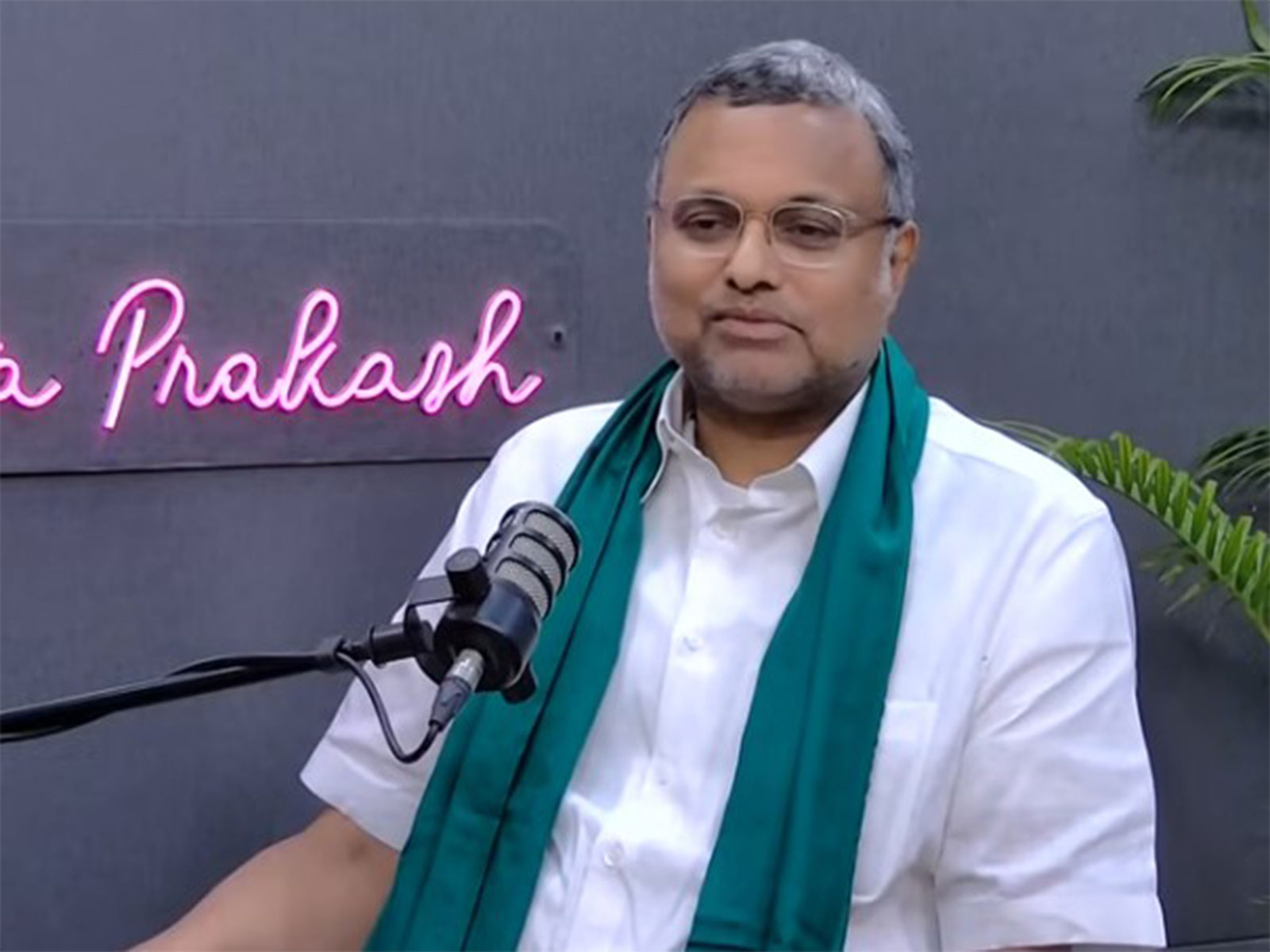
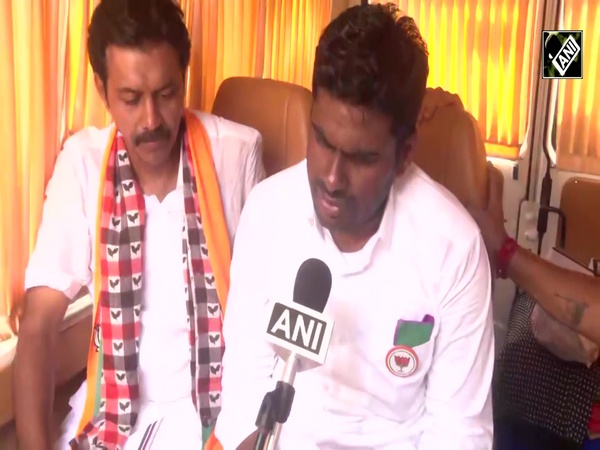
New Delhi [India], February 15 : Congress MP Karti Chidambaram on Sunday criticised the Central government for the ongoing dysfunction in Parliament, accusing it of having an "inferiority complex" regarding the Opposition's voice.
Speaking to ANI, he said that the Houses have "by and large become dysfunctional" and are gradually losing their relevance as deliberative institutions. The Sivaganga MP expressed concern about Parliament's functioning and placed substantial blame on the government for not allowing the Opposition adequate time to speak.
Chidambaram said, "It's very unfortunate and very disappointing that Parliament has, by and large, become dysfunctional and is slowly losing its relevance as well because it's not serving the purpose it was intended to serve."
The first leg of India's Budget Session 2026 concluded on Friday, February 13, 2026, after weeks of persistent disruptions and a significant political deadlock. The session is now in a three-week recess, with Parliament scheduled to reconvene on March 9, 2026.
He added that the responsibility lies primarily with the government, which enjoys a majority in the House. "And I would lay blame greatly on the government because the government, which has a majority, some of the other seems to have this great inferiority complex of allowing the opposition to speak. And in parliamentary parlance, it's understood that the opposition should have its say, and the government can have its way. That's why they are the government," he said.
The Congress leader noted that since the government holds a significant majority, it should not hesitate to allow the Opposition to voice its views. "So it really doesn't matter if they allow the opposition to say what it wants to say and then counter it. And if it has to go to a vote, it will go to a vote. And naturally, the government will win. But this government is, I don't know what, holds them back by allowing the opposition to have its say," he said.
Responding to a question about visuals of women members from his party standing around the Prime Minister's chair, Karti clarified, "The Prime Minister wasn't there. Let's first clarify that. He was about to come, right? I don't know whether the house was adjourned or if this happened before it was. So I don't know."
On allegations of a "diabolical plot" linked to the incident, he said, "And this diabolical plot which... which seems to be going around. I have not heard anything about it. And if there was a diabolical plot, you must have a full-fledged investigation because it endangers the life of the Prime Minister, who is protected by the SPG."
When asked about alleged heated exchanges in the Speaker's chamber involving members of his party, Karti said he was not present. "I'm not aware of that myself because I wasn't there, but if there were heated exchanges, there were heated exchanges. But, as I said, the speaker should allow us, us in the sense, the opposition, to have their say."
He further asserted that the government and the Chair cannot decide the content or tenor of the Opposition's speech.
"We have absolute liberty to say what we want to say. And if it's unparliamentary, expunge it. Other than that, you can't be. You're not a CBFC. To be, for us to give you a script beforehand, which you will approve. And then for the opposition to speak. And that seems to be the style in which they're functioning. And that I think is unacceptable," he said.
Karti added that Parliament risks turning into "a stamping house". A stamping house of executive order. And getting executive orders through without any kind of discussion or debate. And that's unfortunate."
On whether there could be a thaw in the ongoing impasse, especially as important Budget issues remain undiscussed, he said the collapse of informal communication channels has "worsened the situation".
"See, I think one of the problems is that the back channels have collapsed, or rather, there are no back channels," he said, adding that in the past, informal communication between the government and the opposition helped ease tensions. "That, I think, has collapsed since 2014. That back-channelling has collapsed because, perhaps, the style in which this government functions, there is nobody authorised to be a back-channel on their end and there are no trust-building measures with anybody here."
He also pointed to the absence of spaces like the Central Hall for informal interactions. "You see, the fact that the Central Hall is gone has also... led to a collapse of this kind, which could have led to some sort of bonhomie. Now there is no central hall. We don't even see anybody from the Raj Sabha. And there is no place where all members sort of congregate, except for the canteen, to sort of congregate otherwise. See, it's a failing on both sides, I would say, for not having back channels. But the onus is always on the government to form these kinds of."
On whether intermediaries could engage in back-channel talks, Karti said, "I don't think there is any. I think nobody's been authorised on the government side. Unless somebody from the government side initiates it. This is not something the opposition can initiate. The government must initiate it."
Drawing a comparison with the period when the BJP was in Opposition, he said, "To be frank, when the BJP was in opposition under the Advani time, say from 2000... 4 to 14. There was a lot of back-channelling. That's not there right now. There's hardly any interaction. There is hardly even a getting-to-know-you kind of thing now."
Responding to a remark that several senior leaders from both sides have offices in close proximity, he alleged that decision-making is being centralised in the present dispensation.
"See, you accept it or not, this is a one and a half person government. There are only one and a half people who make decisions in this government. Everything has to be kicked up there. No one can say they are speaking, are authorised to speak, or are making a decision. Everything is kicked upstairs. So it is so centralised. It is so centralised in any form or shape. Even the Speaker, informally, when you ask him something, he says that I have to consult and come back," he said.
Meanwhile, the first part of the Budget session concluded on February 13, marked by political debates over the India-US interim trade deal and the memoir of former Army Chief MM Naravane, whose publishing status remained a matter of controversy even outside the Parliament.
The row comes in the backdrop of a stalemate in the Lok Sabha over Leader of Opposition Rahul Gandhi's address during the Motion of Thanks to the President's Address, where he attempted to cite former Army Chief General MM Naravane's memoir on the 2020 standoff against China.
The Parliament budget session, which began on January 28 with the President's address to a joint sitting of the two Houses, comprises 30 sittings over 65 days and is scheduled to conclude on April 2. The recess will allow Standing Committees to examine the Demands for Grants of various ministries and departments.
The Lok Sabha will reconvene on March 9 after a three-week recess. The Rajya Sabha was also adjourned and is scheduled to meet again on March 9 after a three-week recess.