Govt should cut GST on lithium-ion batteries by 5% to boost local manufacturing: Kushmanda Power CFO
Jan 05, 2026
By Kaushal Verma
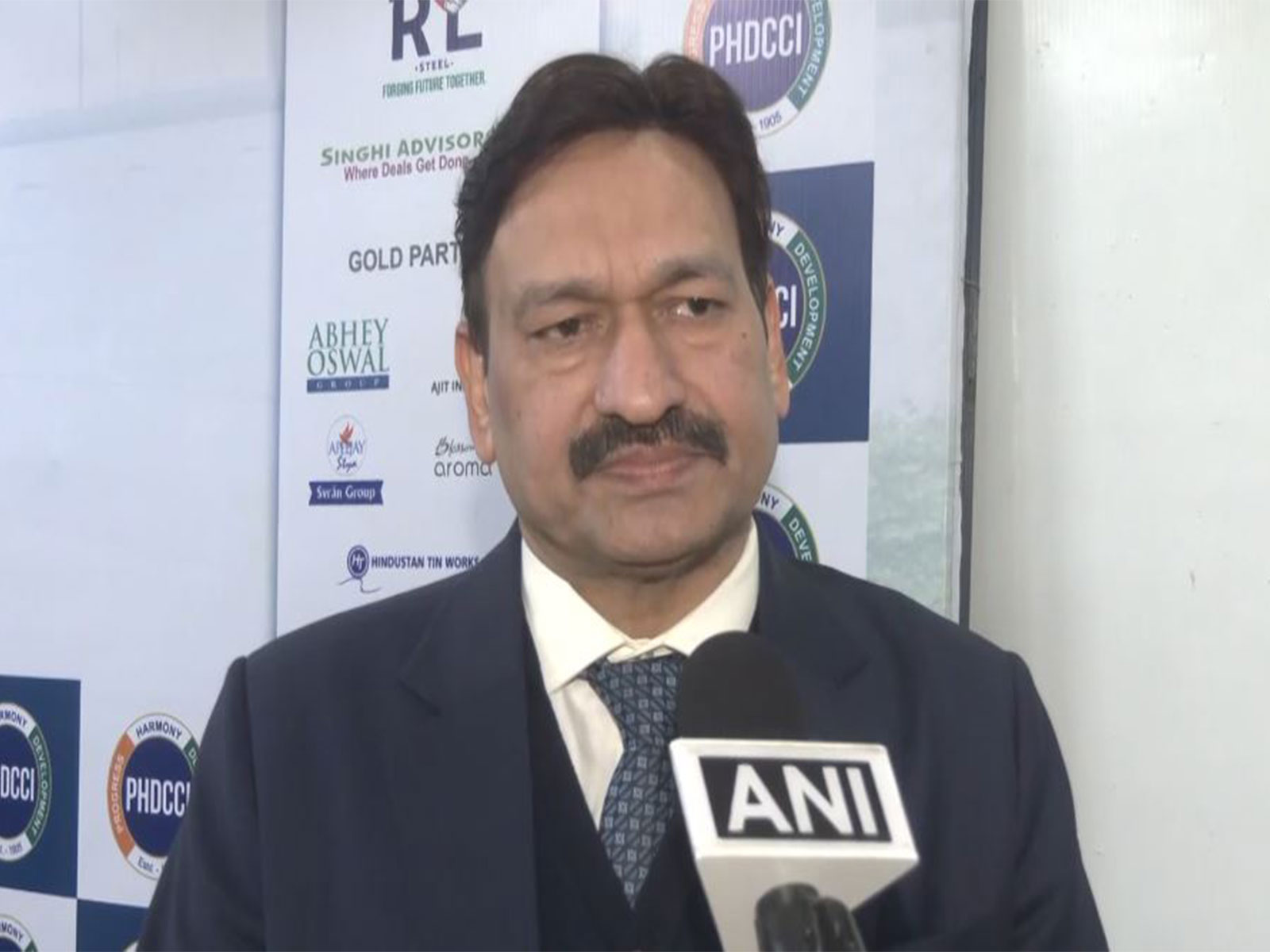
New Delhi [India], January 5 : India should lower the goods and services tax (GST) on lithium-ion batteries to support domestic manufacturing and reduce dependence on imports, R K Jaain, Chief Financial Officer (CFO) of Kushmanda Power Ltd said on Monday.
"Lithium batteries currently attract 18% GST. If it is brought down to 5%, it will directly support local manufacturing and make Indian products more competitive," Jaain said.
While speaking with ANI, on the sidelines of seminar on 'Energy Storage System: Key to Green Energy Transition' at the PHD House in New Delhi, he said, "There is a shortage of lithium globally, prices are increasing, and most of the material is being sourced from China. Because of this, we need to focus on indigenous materials and localisation."
"That is the strategy India should adopt, and the government should support it through duty exemptions and lower GST," he added.
Jaain said rising global lithium prices and China's dominance in exports were putting pressure on Indian manufacturers.
He said that battery cells imported into India currently attract around 5.5% duty under concessional schemes, but warned that making imports too cheap could discourage domestic cell manufacturing. "If cells are made zero-duty, then cell manufacturing in India will not be viable," he said.
He also called on the government to streamline regulations, particularly around fire safety norms. "Safety is critical, but the certification process is very lengthy. There is a need to simplify procedures and improve supply chain management," Jaain said.
Notably, the government has already laid out a strong vision for energy storage, with demand rising rapidly alongside renewable energy expansion, he added. However, Jaain said incentives should not be limited to cell makers alone.
"Production-linked incentives are available for cell manufacturing, but ESS manufacturers should also be covered," he said. "The government has to play a vital role by fixing targets, improving regulations and extending incentives across the value chain."
India is aiming to scale up energy storage capacity to support its clean energy transition and electric mobility push.
Kushmanda Power manufactures lithium batteries in India for electric vehicles, energy storage systems (ESS) and battery storage systems (BSS).
During the same event, J P Gupta, Chairman and Managing Director and Chair of the Environment and Climate Change Committee at the PHD Chamber of Commerce and Industry told ANI that India is steadily advancing its battery energy storage capabilities to support the expansion of renewable energy, with the government targeting 500 gigawatts of energy storage capacity by 2030.
On battery energy storage, Gupta said research and innovation are addressing early challenges faced by the sector. "When solar power started, there were many challenges, but the human brain always offers solutions," he said, adding that lithium-ion battery storage is now being scaled up through sustained R&D.
Gupta said India is also working on sodium-ion battery technology, which could be more suitable for local conditions. "Sodium-ion may not replace lithium, but it can supplement it in the future," he said.
He downplayed concerns over limited domestic lithium availability, noting that no country is self-sufficient in all resources. "We can source materials from other countries," Gupta said.
He added that government support has helped India reach nearly 50% renewable power generation, underlining strong momentum in the clean energy transition.