Handloom Hackathon 2.0 concludes at IIT Delhi, showcasing technology-led innovations for India's handloom sector
Aug 02, 2026
New Delhi [India], August 2 : The second edition of Handloom Hackathon 2.0: "Weaving Innovations" concluded successfully at the Foundation for Innovation and Technology Transfer (FITT), IIT Delhi. Organised in collaboration with the Ministry of Textiles.
According to the Ministry of Textiles, the Hackathon attracted over 2,500 participants, with 280 participants representing the top 100 shortlisted teams from across the country to develop technology-driven solutions for India's handloom sector.
The Hackathon provided a national platform for innovators, researchers, faculty members and handloom experts to address challenges relating to loom modernisation, design innovation, sustainability, market access and weaver livelihoods through technological interventions. The shortlisted teams showcased innovative solutions across diverse themes aimed at improving productivity, preserving traditional craftsmanship and enhancing the competitiveness of the handloom sector.
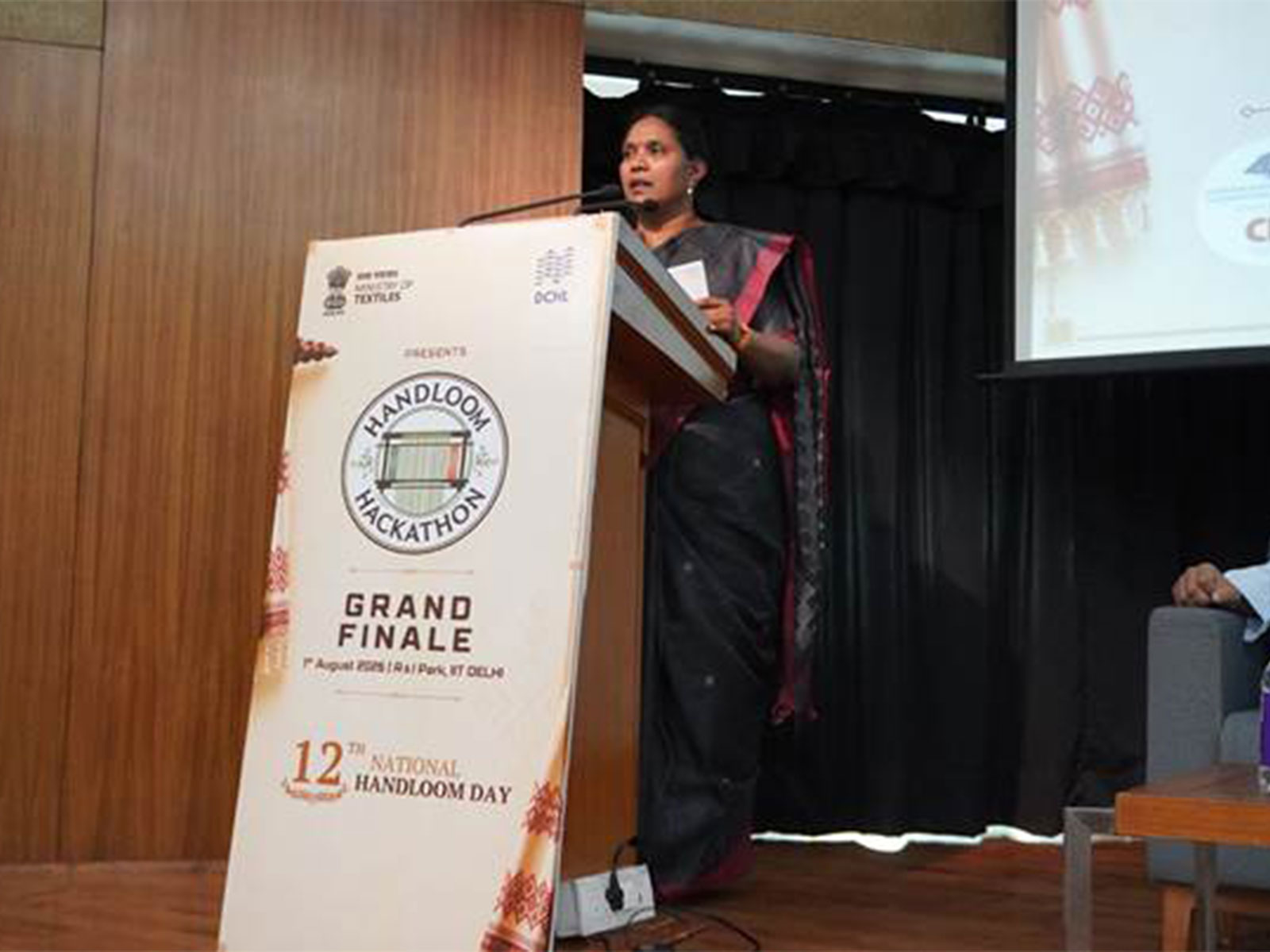
Addressing the participants, M. Beena, IAS, Development Commissioner (Handlooms), Ministry of Textiles, highlighted the complementary relationship between India's rich handloom heritage and modern technology.
"Handloom represents our rich heritage, whereas technology represents the future. Through the Handloom Hackathon, we are combining these two realms to uplift our weaver community," she said.
She stated that handloom inherently promotes sustainability and circularity and emphasised the need for innovation across loom processes, design development and modern marketing. She highlighted key initiatives of the Office of the Development Commissioner (Handlooms), including the Indian Handmade Portal, an e-commerce platform that enables weavers to showcase and sell their products globally without third-party intermediaries.
Beena further underlined the importance of institutional partnerships with premier institutions such as IITs and NIFTs to develop technological solutions that reduce manual effort, integrate scientific precision into traditional weaving processes and enhance the livelihoods of weavers.
The event was graced by Deepti Gupta, Head, Department of Textile and Fibre Engineering, IIT Delhi; Pankaj Kapadia, Secretary, IIT Delhi Alumni Association; and Sanjeeva Shivesh, Co-founder, ThinkStartup, reflecting the collaborative efforts of government, academia and industry in advancing innovation for the handloom sector.
Speaking on the occasion, Pankaj Kapadia highlighted the role of technology in revitalising the handloom sector and welcomed the collaboration between traditional craftsmanship and innovation.
Deepti Gupta stated that the forthcoming Centre of Excellence for Handloom Technology at IIT Delhi would strengthen the integration of technology with handloom, enabling greater standardisation and productivity while preserving the uniqueness of handcrafted textiles. The Centre is proposed to be inaugurated next week in collaboration with the Ministry of Textiles.
Sanjeeva Shivesh congratulated the finalist teams and encouraged them to continue developing innovative solutions for the handloom sector, describing their selection among the finalists as an important milestone towards creating meaningful social and economic impact.
The Hackathon reaffirmed the Ministry of Textiles' commitment to fostering innovation, collaborative research and technology-led interventions for strengthening India's handloom ecosystem. By encouraging young innovators to develop practical solutions for the sector, the initiative aims to improve productivity, sustainability and market competitiveness while preserving the country's rich handloom heritage.
The winners of Handloom Hackathon 2.0 were recognised across four thematic categories: Weaver Livelihoods & Financial Inclusion, Market Access & Digital Integration, Sustainability & Environmental Impact, and Innovation in Design & Operations. The winning solutions included AI-enabled platforms for weaver livelihoods, digital market access tools, eco-friendly dyeing and monitoring systems, and technology-driven innovations for loom modernisation and design.
The winning teams represented various colleges such as KCG College of Technology, IIHT Salem, IIT Madras, Banaras Hindu University, Sri Eshwar College of Engineering, Kumaraguru College of Technology, KLB IIHT Hyderabad, and the startup Savinya Studio.
The successful conclusion of Handloom Hackathon 2.0 marks another important step in the Ministry of Textiles' efforts to promote innovation, strengthen academia-industry collaboration and build a technology-enabled, sustainable and globally competitive handloom ecosystem that supports the long-term growth and prosperity of India's weavers.