Himachal showcases AI-ready urban resilience platform at BRICS disaster risk meet
Jun 03, 2026

Shimla (Himachal Pradesh) [India], June 3 : Himachal Pradesh showcased its Geographic Information System (GIS)- driven Urban Resilience Platform at the Second BRICS Technical Meeting on Disaster Risk Reduction in Puri, positioning the hill state as a frontrunner in leveraging geospatial technologies for disaster preparedness and urban governance.
The international meeting brought together policymakers, disaster management experts and senior officials from BRICS nations, including Brazil, Russia, India, China, South Africa, Egypt, Ethiopia, Indonesia, Iran and the United Arab Emirates, to discuss strategies for strengthening resilience against natural and climate-induced disasters.
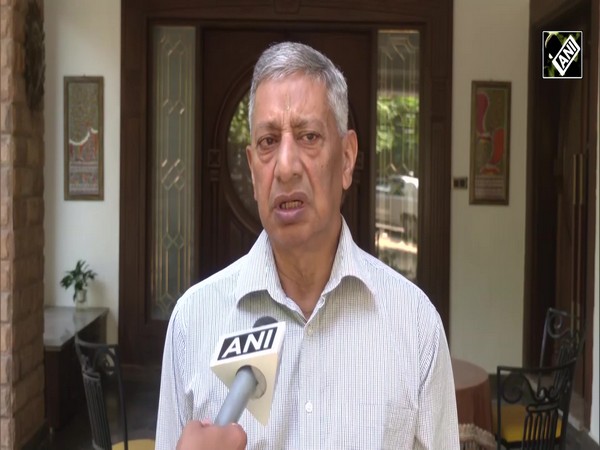
Representing Himachal Pradesh, Special Secretary (Disaster Management) Dr. Pushpendra Rana highlighted the state's innovative approach to building disaster-resilient urban centres through technology-driven planning and decision-making.
Addressing the gathering, Dr. Rana said cities should be viewed as interconnected "living systems" where infrastructure, public services, institutions and communities function as an integrated network. He stressed that disasters must be treated not merely as isolated incidents but as disruptions affecting multiple urban systems simultaneously.
"Effective disaster response depends on quickly identifying affected populations, locating missing persons, assessing damage to critical infrastructure and generating real-time situational awareness for relief and recovery operations," he said.
To address these challenges, Himachal Pradesh has developed a Geographic Information System (GIS)-based Decision Support System that combines high-resolution drone imagery, extensive door-to-door surveys and advanced geospatial analytics.
Officials said that over 15,000 properties across 16 Urban Local Bodies (ULBs) have already been mapped under the initiative, creating a comprehensive urban resilience database to support emergency planning and response.
The platform enables rapid post-disaster impact assessments, identification of affected households, monitoring of disrupted civic services and generation of real-time alerts for decision-makers.
According to officials, the expanding geospatial database will also provide a foundation for integrating Artificial Intelligence (AI) and Machine Learning (ML) technologies, enabling predictive risk assessment, advanced early warning systems and data-driven urban governance.
The presentation drew attention to Himachal Pradesh's efforts to harness emerging technologies for creating climate-resilient, disaster-ready hill towns and strengthening urban resilience in vulnerable mountain regions.