"India contributed to maritime burden sharing in Indian Ocean and Pacific," says Dhruva Jaishankar
Dec 11, 2025
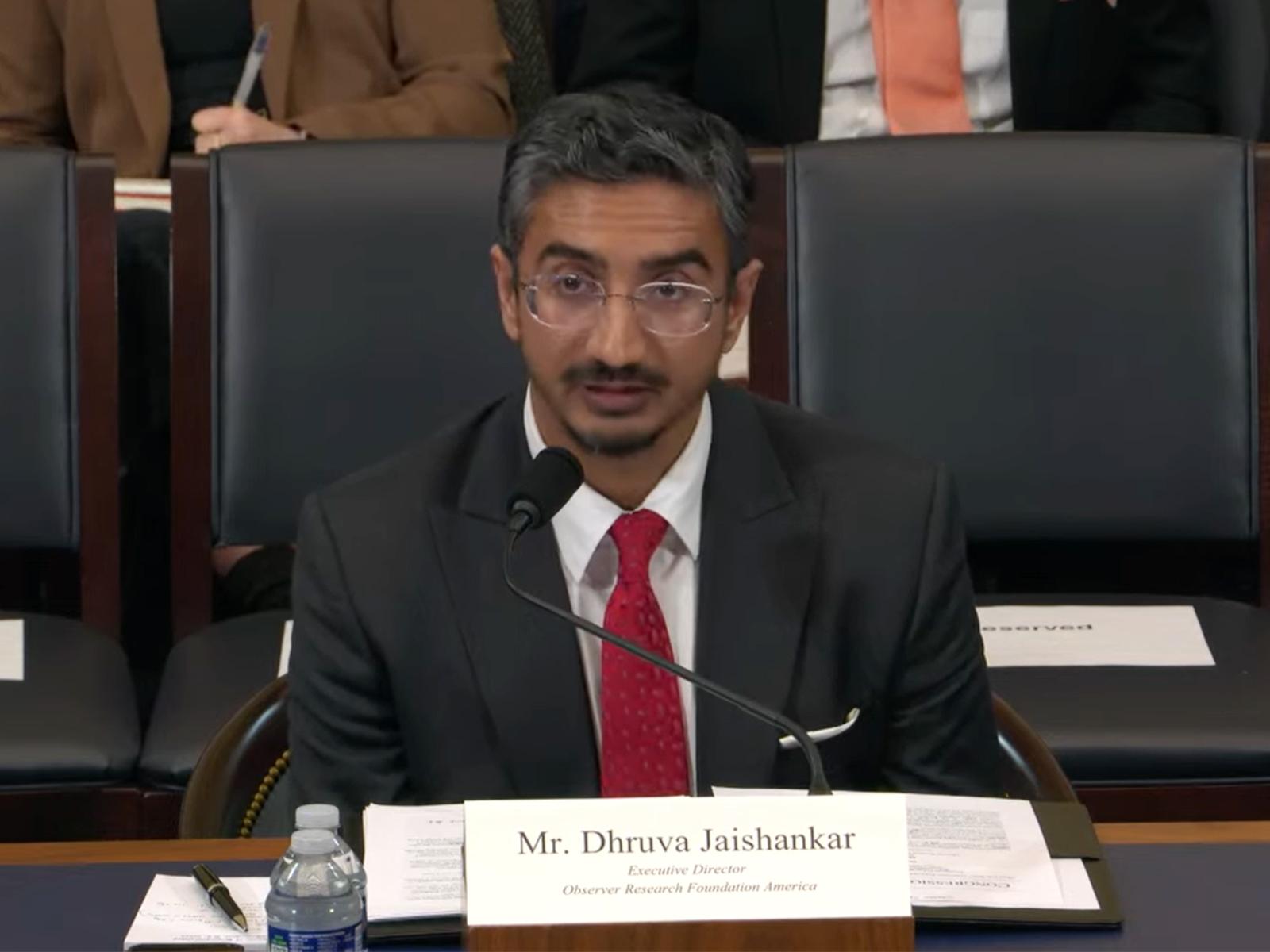
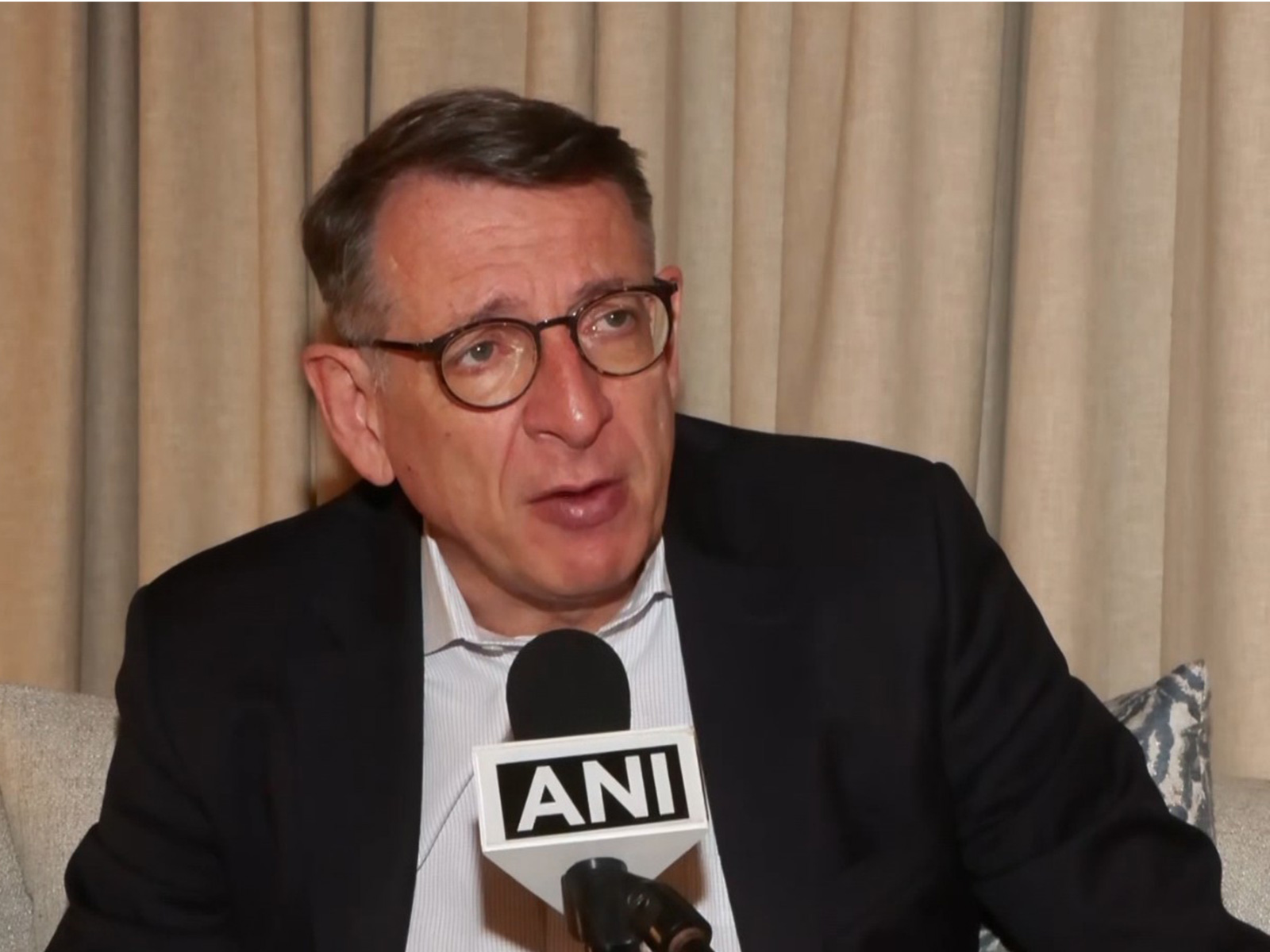
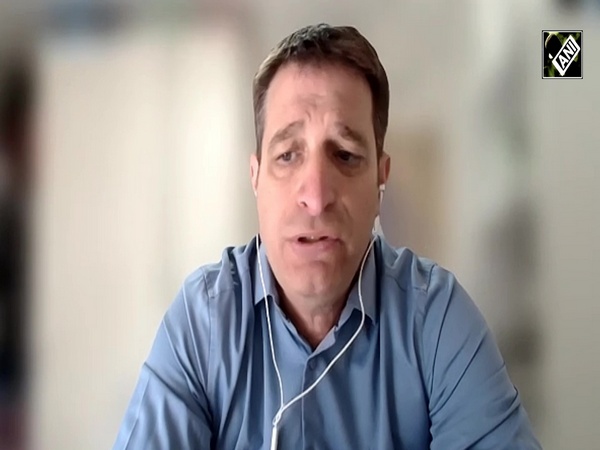
Washington DC [US], December 11 : Speaking at the House Foreign Affairs South and Central Asia Subcommittee's hearing titled, 'The US-India Strategic Partnership: Securing a Free and Open Indo-Pacific', Executive Director of the Observer Research Foundation America, Dhruva Jaishankar said that India-US cooperation is seen when Indian Navy stepped up patrols and contributed to maritime burden sharing in the Indian Ocean and Pacific.
He said, "In recent years, China has expanded and modernised its nuclear arsenal, undertaken one of the largest naval buildups in its history, and unveiled new unmanned and cyber systems."
Dhruva recalled that in 2020, Chinese escalations resulted in the deaths of 20 Indian military forces.
"In 2020, a major mobilisation by the PLA resulted in clashes in which 20 Indian military personnel lost their lives. China has also developed a network of potentially dual-use ports across the Indo-Pacific and beyond that might be used to secure critical choke points. The Indian Navy, as a result, has stepped up patrols and contributed to maritime burden sharing in the Indian Ocean and Pacific," he said.
"Both the United States and India also have enormous trade deficits with China... China's rare earth export restrictions have reinforced concerns about supply chain concentration as a source of leverage over competitors. Another area of strategic convergence between the United States and India has involved stabilising the Middle East," he added.
External Senior Advisor, Special Competitive Studies Project Senior Fellow, Indo-Pacific Program, German Marshall Fund of the United States, Sameer Lalwani, said that for India and China, fears of a diplomatic thaw is far stretched.
He said, "Every relationship has its challenges, but some run deeper than others. On the India-China relationship, fears of a recent diplomatic thaw are overstated. Border disputes, strategic rivalry, and Beijing's coercive economic behaviour will ensure that the relationship stays adversarial."
Lalwani said that India's dependence on Russia is shrinking.
"India's legacy dependence on Russia for defence equipment and energy is real, but also steadily shrinking. Russia, unlike the United States, plays little role in India's technologies of the future, like AI, quantum, and biotech. Recent trade frictions with the United States and tariff escalations have catalysed some concerns in India and risk eroding some trust. While a major trade agreement can unlock significant gains, we still need to rebuild that confidence in US reliability. But perhaps the biggest challenge we face right now is a say-do gap. Implementation has not always matched ambition. Slow progress on major initiatives, such as the Jet Engine Co-production agreement, can dilute strategic benefits and weaken deterrence. Closing this gap requires investment of sustained resources, focus, and leadership," he said.