India-EU FTA could increase bilateral trade by up to 65 per cent: Report
Jan 28, 2026
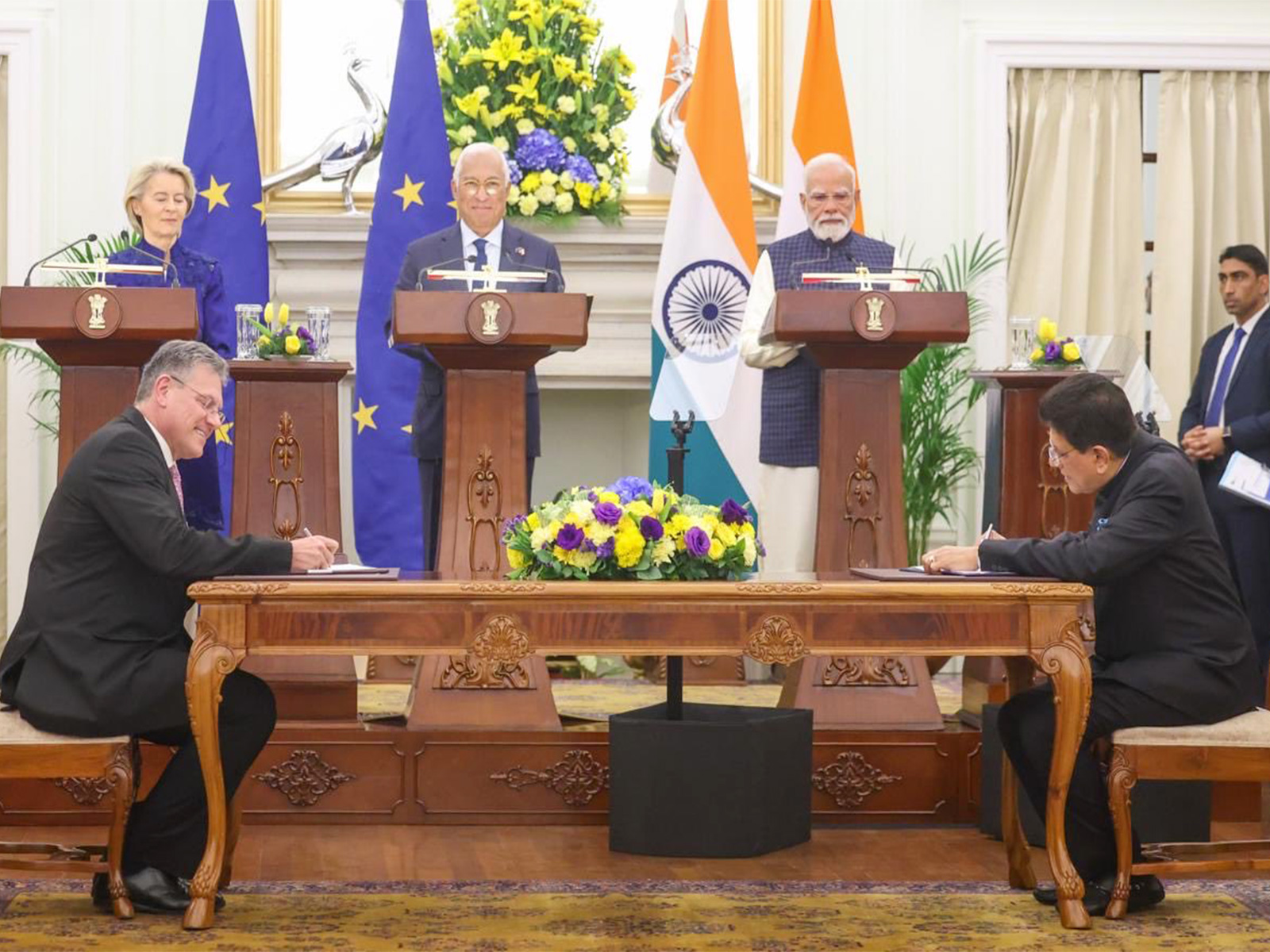
New Delhi [India], January 28 : A new analysis by the Kiel Institute for World Economy shows that "deeper EU-India integration could boost bilateral trade by 41 to 65 per cent," significantly expand economic ties between the European Union and India at a time of rising global trade fragmentation.
Together, these regions account for 21.1 per cent of global GDP and 23.4 per cent of the world's population. The analysis by the Institute shows that this deeper integration could not only boost bilateral trade but also expected to raise real incomes by 0.12 to 0.13 per cent of GDP on both sides while limiting dependence on riskier markets.
Trade between the EU and India has grown by almost 90 per cent over the last ten years. In 2024, EU exports reached 48.8 billion euros. However, high Indian tariffs, some as high as 150 per cent. have continued to make it difficult for European companies to enter the market. Currently, about 6,000 EU firms already operate in India.
"India is one of the fastest-growing major markets in the world, but it remains highly protected," says Julian Hinz, Research Director at the Kiel Institute for the World Economy. "A comprehensive EU-India trade agreement would open substantial parts of the economy, strengthen supply chains, and reduce vulnerability to geopolitical shocks."
Model simulations suggest the deal could increase Indian exports to the EU by 41 per cent and EU exports to India by 65 per cent. This would create income gains of about 22 billion Euros (26.3 billion USD) every year for the EU and 4.2 billion Euros (4.73 billion USD) for India. The biggest benefits are expected in sectors like IT services, textiles, chemicals, machinery, and food processing.
The timing of the deal is important because India is currently facing high US tariffs of up to 50 per cent, which were introduced in 2025. These US measures have caused trade volumes to drop. Experts believe the new EU-India agreement will help provide stability during this time of global trade tension.
"Against this backdrop, the EU-India agreement would act as a stabilizer," says Vasundhara Thakur, researcher at the Kiel Institute. "It provides an insurance mechanism against global trade turmoil and sends a strong signal that rules-based trade cooperation still works."