India not only protecting its own, but supporting world in AIDS control: Union Health Minister Nadda
Dec 01, 2025
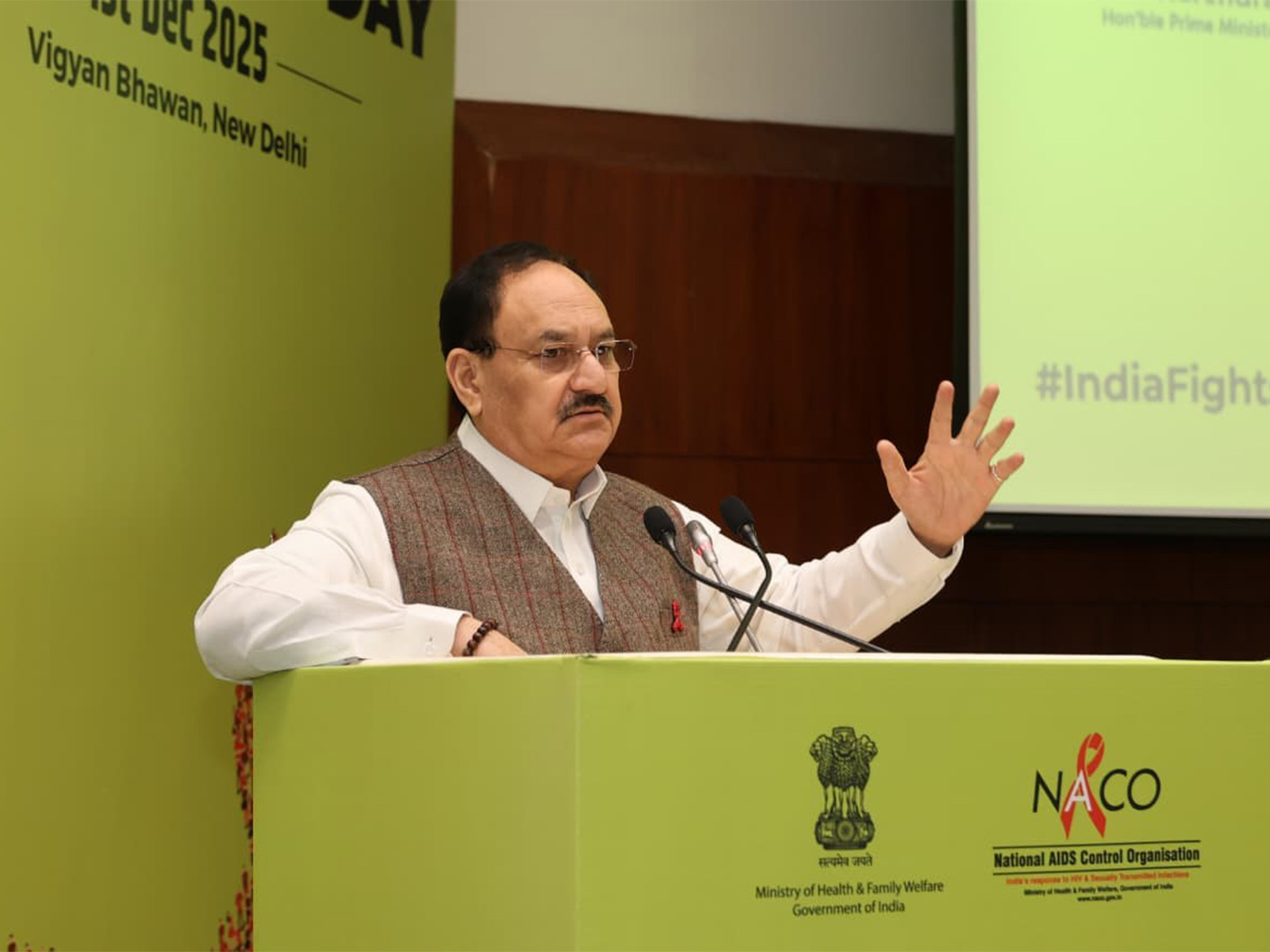
New Delhi [India], December 1 : Marking the occasion of World AIDS Day, Union Minister of Health & Family Welfare, Jagat Prakash Nadda, inaugurated the national observance of World AIDS Day 2025 at Vigyan Bhawan on Monday, reaffirming India's commitment to accelerating progress toward ending AIDS as a public health threat.
In his keynote address, the Union Health Minister noted that the day serves as an important moment to reaffirm India's commitment, reflect on past lessons, and adopt effective strategies for the present and future. He highlighted India's sustained progress under the National AIDS and STD Control Programme and reiterated the government's dedication to a rights-based, stigma-free, and inclusive HIV response.
Nadda also emphasized that under NACP-V, access to prevention, testing, and treatment services has continued to expand, demonstrating strong and sustained momentum across key programme areas.
He highlighted that India's HIV and STD programme continues to deliver strong results, demonstrated by substantial reductions in new infections and mortality, along with expanded access to essential services. "Between 2010 and 2024, new HIV infections declined by 48.7%, AIDS-related deaths by 81.4%, and mother-to-child transmission by 74.6%. Testing coverage increased from 4.13 crore in 2020-21 to 6.62 crore in 2024-25, while the number of people on treatment rose from 14.94 lakh to 18.60 lakh. Viral load testing also expanded significantly--from 8.90 lakh to 15.98 lakh tests," Nadda said as per an official release.
JP Nadda noted that these achievements surpass global averages for the same period and reflect strong political commitment, sustained domestic investment, evidence-based programme strategies, and consistent community engagement.
Sharing India's latest progress indicators, the Union Minister underlined that the country has achieved a 35% reduction in new HIV infections (compared to the global 32%) and a 69% decline in HIV-related deaths, far exceeding the global reduction of 37%.
"Awareness of HIV status has reached 85%, against a national goal of 95%. Treatment coverage now stands at 88%, and viral load suppression remains exceptionally high at 97%," he highlighted.
Lauding the efforts of Indian Pharma industry, he asserted that India leads the fight against AIDS globally, upholding responsibility towards all humanity. He added, India not only protects its own, but also supports the world in AIDS Control by supplying affordable and quality medicines across the globe.
The Union Health Minister extended his appreciation to NACO and all State AIDS Control Societies for their consistent efforts and dedication in strengthening HIV services across the country. He noted that every sub-division within each district now has access to ART Centres, ensuring improved treatment reach, early initiation of therapy, and continuity of care.
Nadda emphasised that India is firmly on track to achieving the global 95-95-95 targets by 2030. Reflecting on co-infections, the Minister underlined that a significant number of TB patients are also living with HIV, and stressed that poor adherence - such as not taking ART tablets regularly or failing to visit ART centres - remains a challenge that requires intensified counselling, follow-up, and community support.
He emphasised that with the current pace of progress, India is poised to achieve its 2030 goals, but more and more people must be made aware, and community participation must continue to rise. He highlighted the landmark HIV/AIDS (Prevention and Control) Act, 2014, implemented in 2017, which provides a legally protected, discrimination-free environment and strengthens the rights and dignity of people living with HIV.
As part of the observance, the Minister also launched a national multimedia campaign series aligned to three themes: youth awareness; elimination of vertical transmission of HIV and syphilis; and ending stigma and discrimination.
JP Nadda felicitated three eminent senior technical experts for their distinguished service and longstanding contributions to the National AIDS Control Programme. In addition, he also honoured two persons living with HIV who shared their personal journeys, showcasing the significant progress they have made in their fight against the disease. Their stories emphasized the crucial role of access to treatment, support, and awareness, which have been key to their resilience and empowerment.
Speaking on the occasion, Punya Salila Srivastava, Union Health Secretary highlighted that India's HIV response "began as a modest initiative which has grown into one of the nation's most comprehensive and impactful public health programs, an enduring testament to our collective commitment and determination".
Dr. Sunita Sharma, Director General of Health Services; V Hekali Zhimomi, Additional Secretary, Ministry of Health and Family Welfare; and the National AIDS Control Organisation (NACO), alongside representatives from development agencies, community organisations, youth networks and frontline programme teams also graced the occasion.