Indian Army gets indigenous FPV kamikaze drones, UAV-launched precision munitions
May 11, 2026
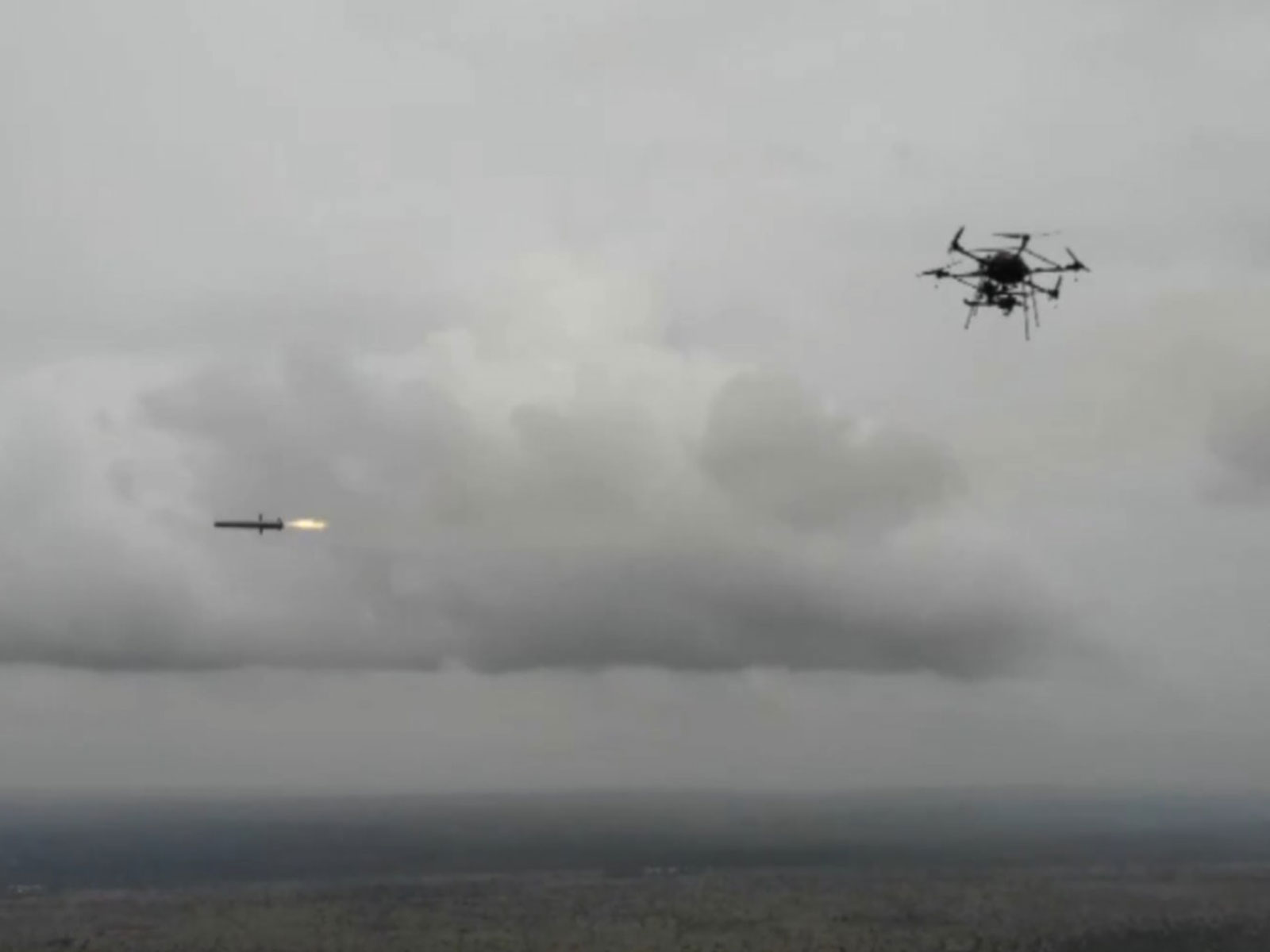
New Delhi [India], May 11 : The Indian Army has received two new indigenous combat systems under Emergency Procurement (EP-6), including the UAV-Launched Precision Guided Munition (ULPGM) and the AGNIKAA VTOL-1 First-Person View (FPV) Kamikaze Drone.
Defence sources said that the systems were handed over in Hyderabad in the presence of officials from the Army's Western Command following successful high-altitude, electronic warfare (EW) and precision-guided munition firing trials.
The two systems, ULPGM and AGNIKAA VTOL-1, have been designed, developed and manufactured indigenously.
The ULPGM, co-developed by the Defence Research and Development Organisation (DRDO) and Adani Defence & Aerospace, is India's first indigenous loitering munition in its category. The system is equipped with an Imaging Infrared (IIR) seeker and can be launched from UAVs to target both stationary and moving targets.
The UAV has an operational range of up to 20 kilometres, while the munition itself has a strike range of 2.5 kilometres.
The system is designed to operate in all weather conditions, during both day and night. It is also capable of functioning in GPS-denied and communication-jammed environments due to its anti-jamming and anti-spoofing capabilities.
The ULPGM carries a two-kg warhead capable of neutralising both soft and hard targets and has an accuracy of one metre CEP (Circular Error Probable).
The missile has also been integrated with retractable UAV platforms, providing greater operational flexibility in contested electronic warfare environments.
The second system, AGNIKAA VTOL-1, has been described as India's first FPV (First-Person View) kamikaze drone in its class.
The drone has been developed as an anti-personnel precision-strike platform designed for urban warfare, confined spaces and open battlefield operations. It is capable of operating in GPS-denied and electronic warfare environments.
The AGNIKAA VTOL-1 has also undergone successful high-altitude and EW trials, validating its readiness for deployment in difficult operational terrains, sources added.
The drone has a range of up to five kilometres, an endurance of 30 minutes and a top speed of 60 kmph.
The system has a lethality radius of five metres against human targets and soft-skinned vehicles. It is also equipped with a three-layered trigger mechanism and a four-layer trigger safety system aimed at ensuring operator safety and mission reliability.
Defence sources further said that the system is highly agile, can be rapidly deployed and remains resilient in GPS-denied electronic warfare environments.