India's dependence on foreign vessels a strategic weakness; govt plans expansion of domestic maritime capabilities: Sanjeev Sanyal
Feb 25, 2026
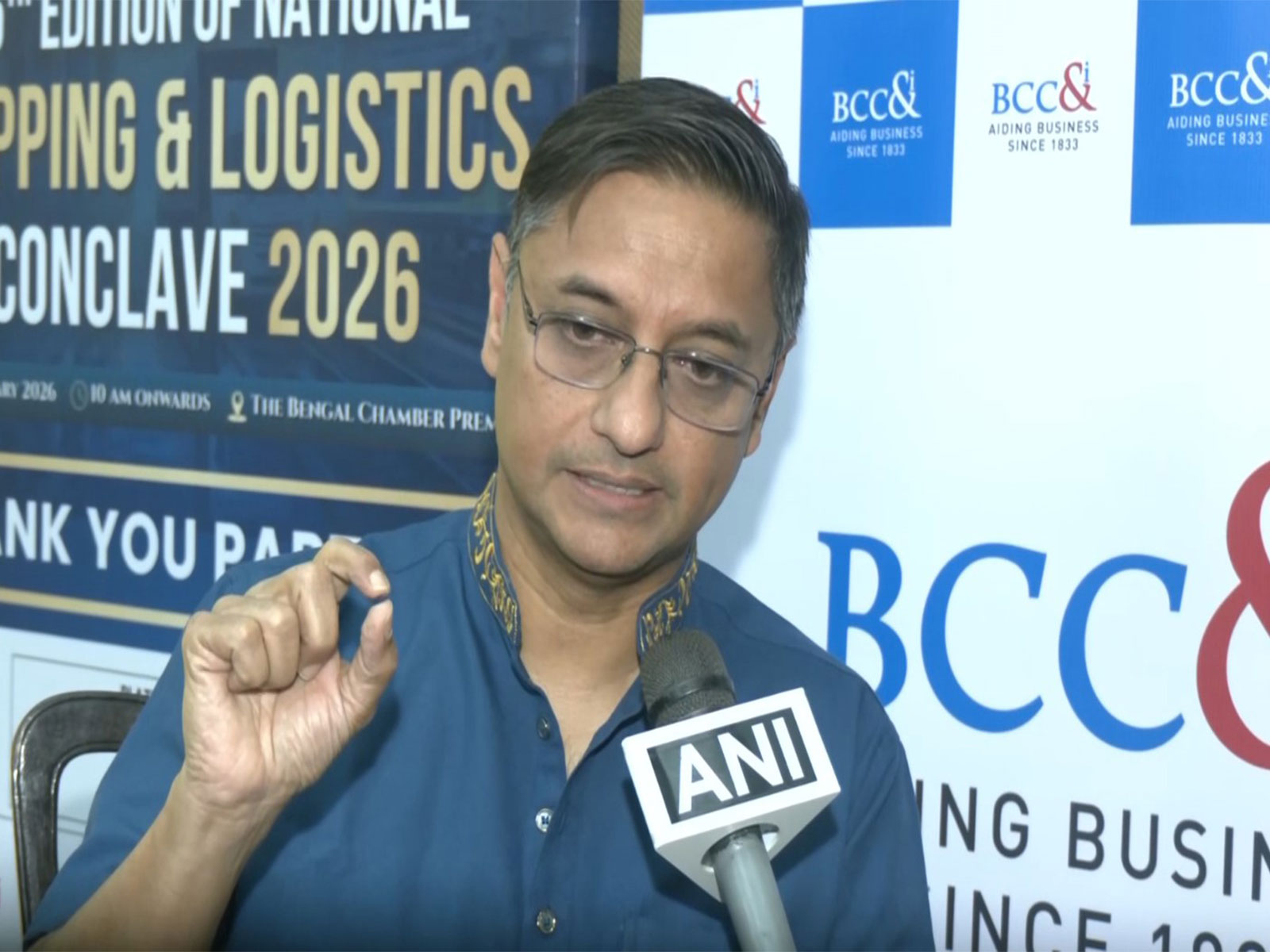
Kolkata (West Bengal) [India], February 25 : India's reliance on foreign ships for over 90 per cent of its imports and exports represents a significant strategic weakness that the government is moving to address through a massive expansion of domestic maritime capabilities says Sanjeev Sanyal, Member of the Economic Advisory Council to the Prime Minister. While speaking to ANI, Sanyal stated that the current lack of a large-scale merchant fleet limits the country's economic security.
He explained that while a strong military presence is vital, it must be matched by commercial ownership to ensure stability during global disruptions. "I have argued many times before that ships and this maritime capability is one of our biggest strategic weaknesses," Sanyal noted, adding that a merchant fleet is essential to "provide support to the economy in good times and bad."
The central government is responding to this challenge by prioritising shipbuilding, port development, and ship flagging as critical thrust areas. Recent legislative changes have already granted infrastructure status to ships and updated laws relating to ownership to attract investment. Sanyal highlighted that the effort is not just about the vessels themselves but about creating a self-sustaining industrial base. "Until we own our own ships, build our own ships, it's not enough to only have a navy," he said. He further emphasised that this transition is supported by a Rs 77,000 crore package designed to build a national fleet and enhance India's standing as a maritime power.
This push for a domestic shipping industry is expected to serve as a major engine for job creation and industrial growth. Shipbuilding is a labour-intensive sector that triggers demand for engineering, heavy machinery, and raw materials like steel. Sanyal described the industry as an "ecosystem of jobs" that benefits various technical trades. "It requires basically a large amount of welding. There is all the engineering that goes into it, the steel that comes from it," he remarked. He noted that the ripple effects extend to the broader logistics sector, including ports and the movement of goods, creating a comprehensive network of economic activity.
West Bengal is positioned to be a primary beneficiary of these maritime initiatives due to its deep-rooted history in sea trade and existing infrastructure. Sanyal pointed to ancient ports like Chandraketugarh and Tamralipti, as well as modern hubs in Kolkata and Haldia, as evidence of the region's potential. He suggested that the state's current facilities, including Garden Reach Shipbuilders, are well-placed to leverage the new central policies. "I'm sure this big effort that the central government is doing in terms of building out the shipbuilding and shipping industry has many paybacks to places like Bengal," he stated, referencing the historical and geographical advantages of the eastern coast.
As India expands its international trade, particularly through free trade agreements with partners like the US, the necessity for domestic shipping links becomes even more urgent. While service exports are significant, the physical transport of goods remains the backbone of trade growth. Sanyal concluded that achieving maritime independence is a prerequisite for a successful long-term trade strategy. "As trade grows, the shipping industry will be a very important part of that trade," he said. He emphasised that maintaining strong maritime links and a robust merchant navy is "absolutely critical" to supporting the nation's future economic ambitions.