Industry leaders urge collaboration to leverage India's semiconductor and IP initiatives
Dec 04, 2025

New Delhi [India], December 4 : Indian industry leaders have highlighted the need to collaborate to take advantage of the country's initiatives in semiconductors and Intellectual Property (IP).
In a panel discussion of an event called 'From Chips to Circuits: Powering India's Electronics Revolution' in the national capital, industry leaders' discussion highlighted India's growing focus on semiconductors and the challenges ahead in achieving global competitiveness.
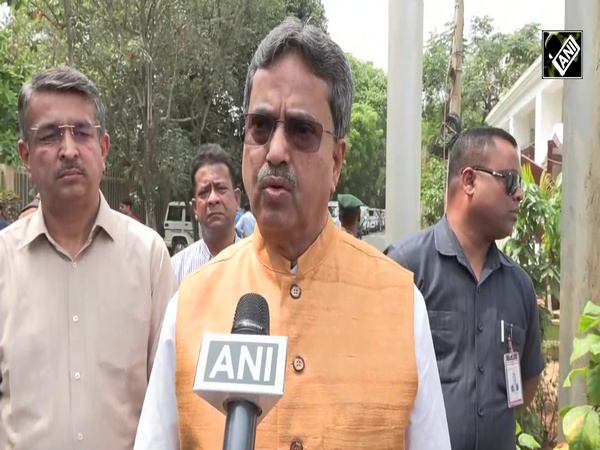
Jasbir Singh Gujral, Managing Director of Syrma SGS Technologies Limited, stressed the need for industry collaboration.
He said, "It's high time that the industry starts collaborating. If you don't unite and R&D, we all will die in line with old TV industry. Learn from that industry and should prevent the same from happening. Some companies are not deep-pocketed to invest in R&D."
He also said that companies like Microsoft are not built in India but by Indians. It shows the calibre of Indian minds.
"We were simply harvesting the low hanging fruits. We have supply chain disrupts and geopolitical things. Government has done enough now industry has to introspect and identify the gaps to plug them. Current time is exciting but also difficult," he added.
Sanjay Gupta, India Country Head & Chief Development Officer, L&T Semiconductor Technologies, said, "Semiconductors content is growing among all the products we are using in daily life nowadays... We are working on energy transmission, generation or distribution. Pretty much everywhere.
On semiconductors, he said, " you have had 100% of semiconductors imported. Right from the processing of technology. We are talking about single transistor chips.....There is a monopoly of few Japanese companies like Hitachi and Fuji also other companies like GE and Siemens. So India has no control so we are importing multi dollars for just one transmission line and 20% of which are semiconductors."
He added, "We are having tremendous gap in IP. We need chip designed IP. India does not own a single IP. To design it, it will take 5-6 years. Good news is india is starting the fabs and the bad news is it's still 5-6 years away. We still rely on global fabs and where we are competing with China fabs."
As China fabs have 50 per cent lower price, the country is again competing with finance and product level, he added.
Gupta further highlighted the support for research, saying that we have one lakh crore RDI fund but not have framework to compete with China. "We have a will to catch up. We inked a joint development on security chip with C-DAC. Journey is started but it's a long road ahead. Young India has required right projects. Once we do that it's magical future waiting for us."
Gupta said, "We have tremendous opportunities to create local semiconductors, which is as high in quality and content and helps the customers in solving their problems. Today, L&T Semiconductors is one of the first major companies that has taken this stride forward for building indigenous semiconductor products right from scratch in automotive, industrial and
and energy sector. "
Sandeep Wadhwa, Executive Director, noted the progress in design capabilities, stating, "There are at least 50 Chip designs IP in India. They have tools and they are very expensive. They are training children and producing chip designed. Lots of IPs are generating in India. We are here to compete globally. People have heard the TSMC story and the largest manufacturer is Samsung."
Wadhwa emphasized the need for skilled talent, saying, "For a plant in the US, Korea sent the nitric acid but they realised they don't have adequate talent to run. We have to look all things happening around us and work accordingly. We have national semiconductors mission of 70,000 cr focus on design and talent. Around 16,000 engineers are being trained to design chips in India."
"There is a strong push and we have a very good market in electronics and defence. Entire end to end ecosystem is being prepared and amalgamating better. This is progress is not theoretical," he added.
He also pointed out India's growing capabilities, adding "We are now building our own GPU and CPU which were being imported earlier. In interim, we designed processor called OM."
The discussion highlighted that while India's semiconductor journey has begun with strong government backing and emerging talent, significant challenges remain in IP development, R&D investment, and creating a globally competitive manufacturing ecosystem.
Semiconductors are fundamental to today's digital economy, powering everything from smartphones and automobiles to defense and medical devices. India has made remarkable progress in strengthening its semiconductor ecosystem, driven by the vision of Aatmanirbhar.
With the launch of the India Semiconductor Mission and an outlay of Rs 76,000 crore, several fabrication and design facilities have been established, propelling the country towards technological leadership and reduced import dependence.
Recent government approvals and investments signify India's emergence as a global hub for electronics and semiconductor manufacturing, underscoring its commitment to self-reliance and innovation.
India's Semiconductor Mission has approved a total of 10 fab plants. This includes six projects that were approved earlier, plus four new semiconductor manufacturing projects approved in August 2025.