Journey from fear to change: Chhattisgarh CM Sai's rural bus service accelerates development in forest region
Feb 12, 2026
Sukma (Chhattisgarh) [India], February 12 : The forest region of Sukma, which remained isolated from the national mainstream for decades due to Naxal violence and blocked roads, is now writing a new story of change.
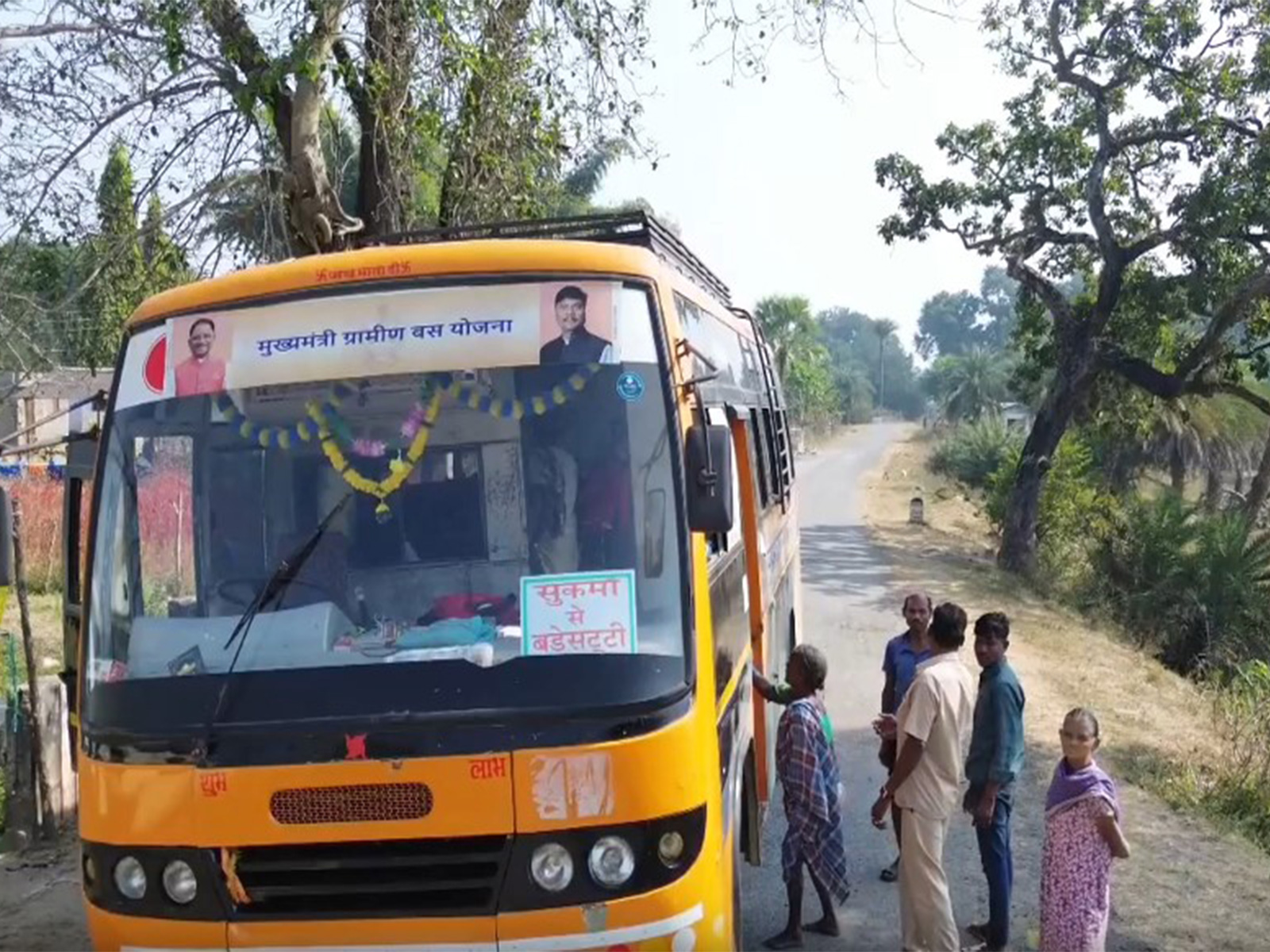
Roads that once smelled of gunpowder and were shadowed by guns are now filled with buses running under the "Chief Minister's Rural Bus Scheme."
The joint efforts of Prime Minister Narendra Modi and Chief Minister Vishnu Deo Sai, including robust security deployments, the establishment of camps, and the rapid construction of roads and culverts, have laid a new foundation for connectivity in Naxal-affected areas.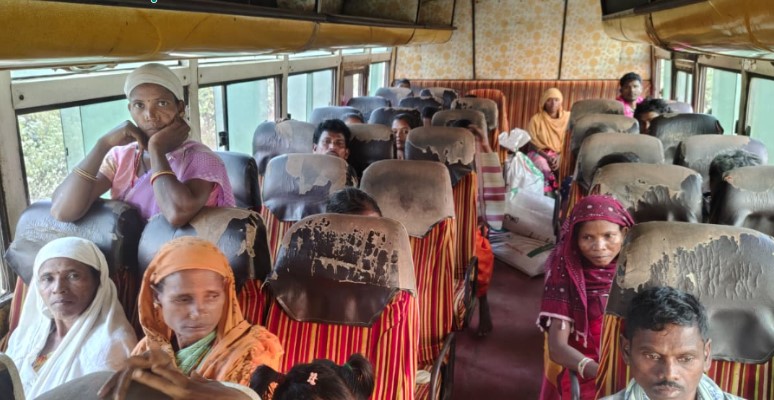
This initiative to connect the forest and border villages of Bastar Division with the district and divisional headquarters is not just a transportation facility, but a new heartbeat of development. Access to health, education, employment, and essential services is now becoming easier. The operation of bus services in once-inaccessible areas such as Sukma, Kistaram, Gollapalli, and Jagargunda demonstrates that when security and development go hand in hand, the pace of change accelerates.
Speaking with ANI, IG Bastar P. Sundarraj said, "Connectivity is being given top priority to connect the people of the forest and border areas of Bastar Division with the mainstream. To this end, road and culvert construction work is being continuously carried out, many of which have been completed, and some are in progress."
"Under the Chief Minister's Rural Bus Scheme, bus services have been launched to connect remote areas with district and division headquarters, ensuring access to health, education, and other essential services. This initiative has received a positive response. In the future, continued efforts will be made to further strengthen connectivity in these areas, accelerate economic development, and improve the economic condition of the villagers," Bastar IG P. Sundarraj added.
Sukma Superintendent of Police Kiran Chauhan emphasised how the connectivity was disrupted by the Naxals, and now those hurdles have been cleared with the efforts of security forces.
"Due to Naxalite activities in Sukma district, the interior areas remained cut off from main roads for many years. Due to Naxalite blockades, bus and other services were disrupted. After the establishment of security camps, several important areas, including Kistaram, Gollapally, Todnapal, Jagargunda, Poorti, Badesatti, and Chinnar, have been connected by road. Bus services have now been resumed in all these areas," Chauhan said.
"The resumption of the bus service has brought significant relief to the villagers. They can now easily travel for their essential needs and have easy access to basic amenities," he added.
Bus drivers and passengers noted the convenience that the operational bus service has provided. They also stated that they can now travel without fear.
Speaking with ANI, bus driver Kishore Kumar Sethia said, "I am a resident of Dantewada. After the camp was established, driving the bus in the Naxal-affected areas feels much safer. Previously, there was no road. People would walk from Gollapalli and Kistaram and stay in Dornapal for two days. After finishing their work, they would have to return on foot or by pickup. The bus could not run because there was no road."
"Now the road has been built, and the bus service has resumed. Under the Chief Minister's Bus Facility, a bus service operates continuously between Sukma and Gollapalli. Previously, people faced significant challenges with Aadhaar card applications and other important tasks. The bus service was not running, so they had to travel on foot or by pickup and wait for two days. The bus service has provided significant convenience to the public. We thank the Chief Minister very much for this," he added.
Bus driver Puran Singh said, "The government is running a rural bus scheme for the villagers. I operate a bus service between Sukma and Badesetti. The road is much better than before. However, there are broken culverts in some areas that are currently being repaired. Once the road is improved, driving will be easier. This scheme is proving to be a great benefit for the villagers."
Passenger Fujja Vetti told ANI, "Earlier, there were a lot of problems. Now that the bus is running, it's much more convenient. People from nearby villages wait for the bus. This is a huge relief, especially for the disabled and the sick. The government is doing a good job for us. Previously, the road was in poor condition, and we were concerned. If a vehicle came, we had to think twice before getting in it. The Chief Minister is now sending buses to our village and having the road constructed. I thank him very much for this."
Another passenger Vetti Ganga, said, "Earlier, there was no road access, which caused a lot of problems. A camp has been established, and a road has been built, which has made things much easier. Previously, to travel to Bhadrachalam or Sukma, one had to wait a day; the journey took two days. Now, with the improved road, it's possible to travel in a single day
"Previously, women faced a lot of difficulty commuting because there was no vehicle. The situation in the area was also quite dangerous. Now, thanks to government initiatives, the situation has improved, and facilities have increased. We thank the Chief Minister," she added.
In these areas, once isolated by Naxalite violence and poor roads, the sound of buses is now a new sign of development. Joint efforts by the central and state governments have strengthened security and infrastructure.