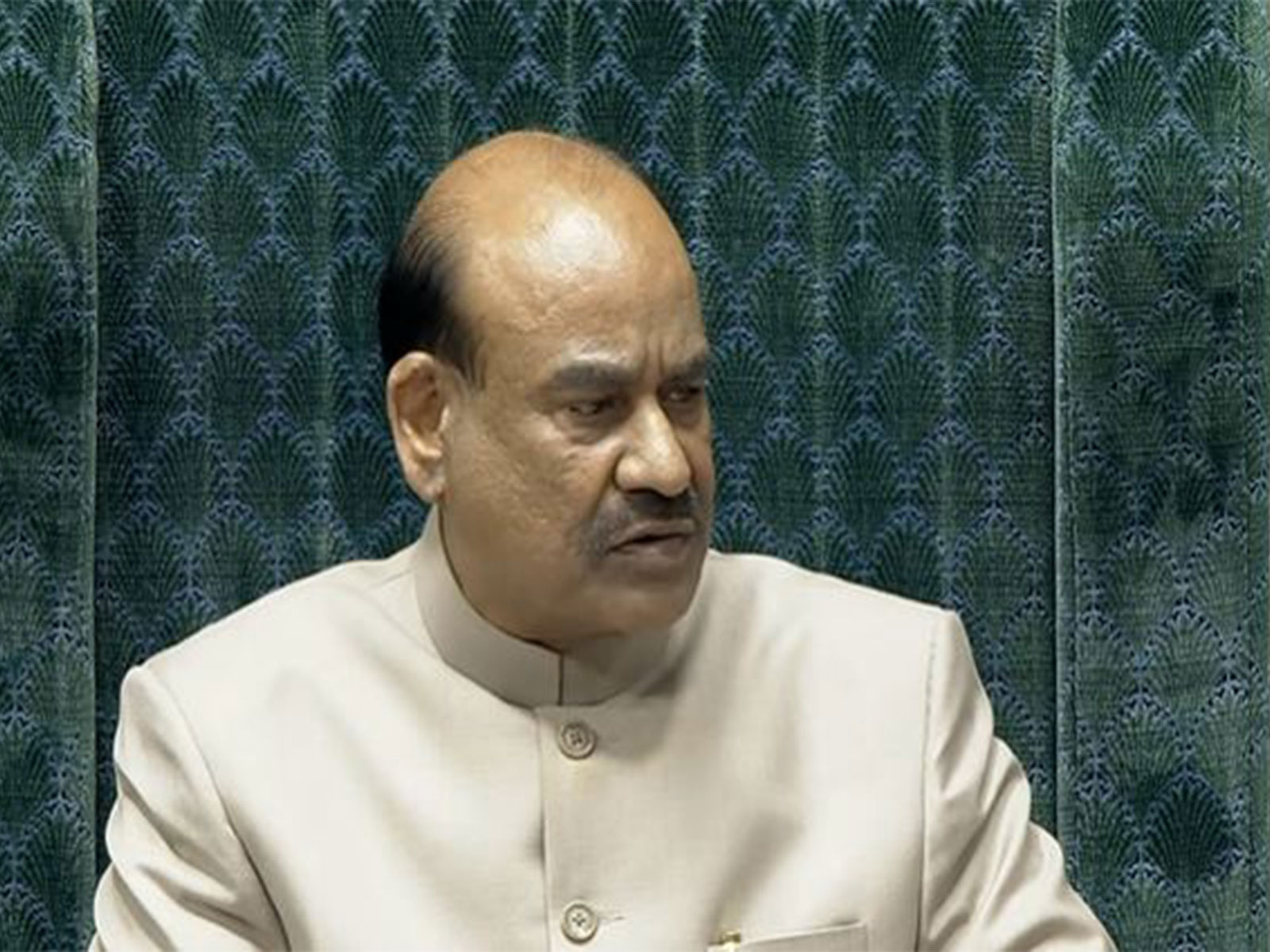
Kharge launches attack in Rajya Sabha over VB-GRAMG Bill, warns of nationwide protests
Dec 18, 2025
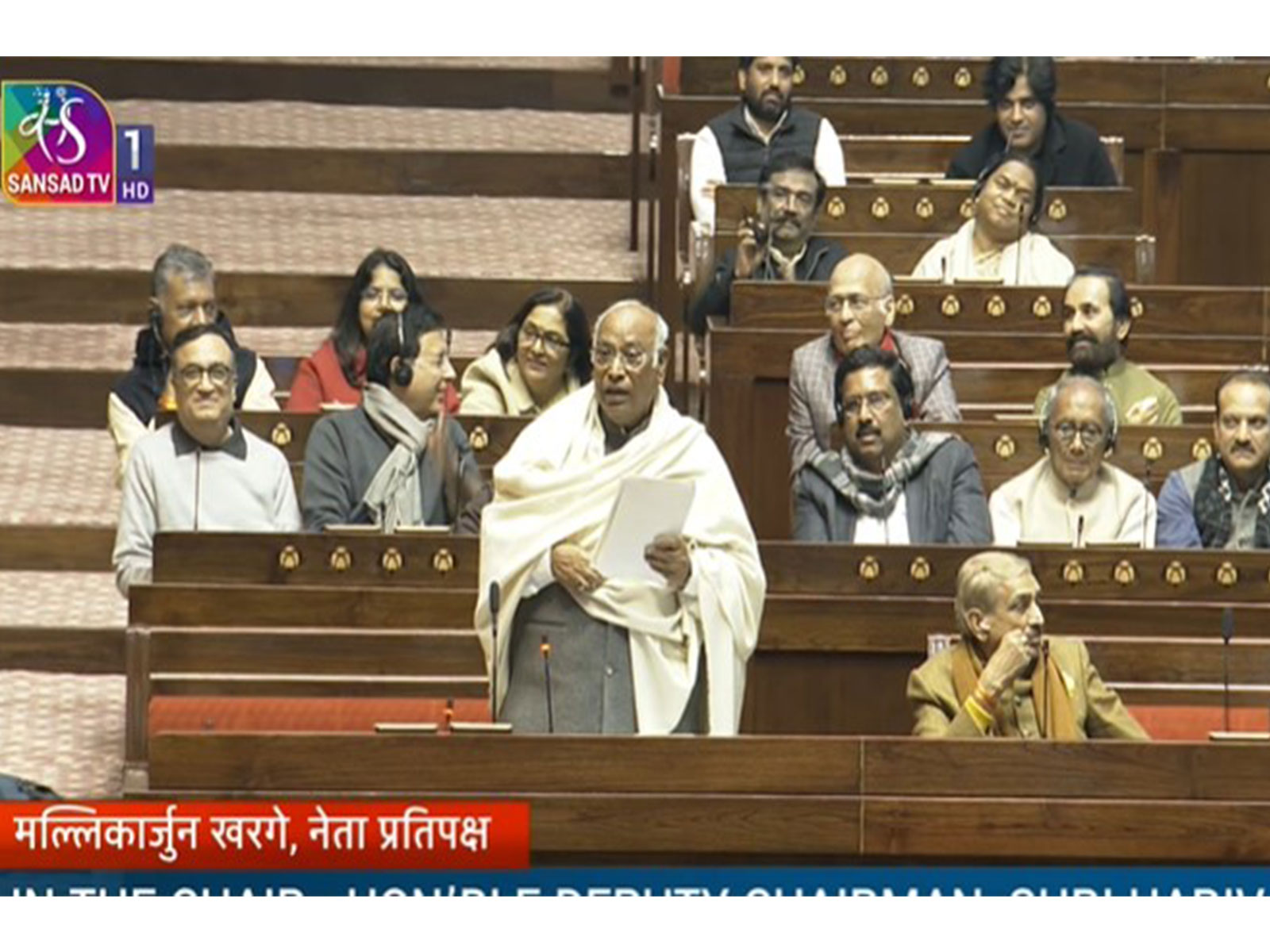
New Delhi [India], December 19 : Leader of Opposition in the Rajya Sabha, Mallikarjun Kharge, on Thursday delivered a blistering speech in the Upper House, strongly opposing changes to the Mahatma Gandhi National Rural Employment Act (MGNREGA).
Describing the bill as an attempt to "dismantle the Right to Work," Kharge warned that the move would push the poorest sections of society back into hunger, unemployment, and distress, and asserted that the opposition would fight it both inside and outside Parliament.
Speaking at length during the debate, Kharge said the bill was "not merely about changing the name or structure of MGNREGA" but about weakening and ultimately killing the world's most extensive employment guarantee programme. He accused the Modi government of systematically undermining people-centric laws enacted between 2004 and 2014, including the RTI (Right to Information) Act, RTE (Right to Education) Act, Forest Rights Act, National Food Security Act, Land Acquisition Act, and MGNREGA.
Kharge invoked Article 41 of the Directive Principles of State Policy, which mandates that the state secure the rights to work, education, and public assistance, during the debate. He argued that MGNREGA gave statutory form to this constitutional promise and symbolised the spirit of social justice embedded in the Constitution.
"The government has failed to bring even one comparable law in the last 11 years," Kharge said, adding that instead of empowering the people, it was now "dismantling the last safety net of the rural people."
In a sharp political attack, Kharge likened the proposed changes to demonetisation of the Covid-19 pandemic. Lockdown, and the three farm laws, which were eventually repealed after prolonged protests. He warned that this bill, too, would face widespread resistance.
"There will be nationwide protests against this law, and you will be forced to withdraw it," he said, asserting that the poorest citizens were already rejecting "lofty promises without livelihoods."
Kharge reminded the House of Prime Minister Narendra Modi's 2015 remark that called MGNREGA a "living monument" to Congress failures. He alleged that the government's current actions contradicted its own admissions.
In a December 16, 2025, reply in the Lok Sabha, Kharge said the government had acknowledged MGNERGA's success. He cited a "NITI Aayog Study" that highlighted the scheme's role in creating durable assets, improving water security, conserving soil, enhancing land productivity, and securing rural livelihoods.
He also recalled how MGNREGA became a lifeline for migrant workers during the COVID-19 crisis, when millions returned to their villages after losing urban employment.
Tracing the origins of MGNREGA, Kharge noted that the law was passed in 2005 after extensive deliberations and enjoyed all-party consensus, including oversight by BJP leaders in parliamentary committees. He emphasised that renaming the scheme in 2009 after Mahatma Gandhi gave it a powerful national identity rooted in Gandhian ideals of dignity of labour, rural self-reliance, and Gram Swaraj.
"By dismantling the Right to Work, you are destroying Gandhiji's vision of wiping every tear from every eye," Kharge said.
A significant portion of Kharge's speech focused on budgetary allocations. He pointed out that for several years, the government's "Revised Estimates far exceeded Budget Estimates", indicating deliberate under-allocation despite rising demand for work.
He presented data showing that less than 10 per cent of families received 100 days of work. Persons to days for SCs fell from 23 per cent to 19 per cent and for STs from 17 per cent to 16 per cent between 2014-15 and 2023-24. In 2024-25, there was a gap of nearly "one crore jobs between demand and employment actually provided."
Kharge argued that, instead of addressing these shortcomings, the government was further weakening the scheme.
Strongly criticising the proposed structural changes, Kharge said the new scheme would "end demand-based employment", remove the legal guarantee of work within 15 days, and centralise decision-making in Delhi.
"Panchayats and state governments understand local needs far better than the Centre," he said, calling the move an "attack on federalism". He also objected to the Centre reducing its funding share from 90 per cent to 60 per cent, burdening states with costs they cannot afford.
Kharge reiterated long-standing demands backed by parliamentary committees for "150 days of guaranteed employment" and a "minimum daily wage of Rs. 400", arguing that existing wage calculations underestimate inflation due to outdated indices.
He criticised the government for ignoring expert committee recommendations and providing evasive replies in Parliament.
Highlighting international praise for MGNREGA, Kharge said the scheme had been hailed by the "ILO, World Bank, and Nobel laureates Amartya Sen and Joseph Stiglitz" as a model for labour rights and social protection.
"Instead of strengthening a globally admired programme, you are dismantling it," he said.
In his concluding remarks, Kharge demanded the "withdrawal of the bill" or its referral to a "Rajya Sabha Select Committee". He warned that turning a statutory right into a discretionary scheme set a dangerous precedent.
"Rights are not facilities that can be withdrawn when demand falls," he said, adding that even if the bill is passed, the opposition would take the fight to the streets.
Kharge ended his speech with a broad challenge to the government: create jobs for youth, control inflation, improve education, reduce pollution, stabilise the rupee, but "do not destroy villages and snatch away the last support system of the poor."
The speech triggered sharp reactions across party lines, setting the stage for a heated political battle over the future of MGNREGA both inside Parliament and beyond.