Maharashtra Dy CM Shinde announces separate regulatory framework to free Mumbai from pagdi system
Dec 11, 2025
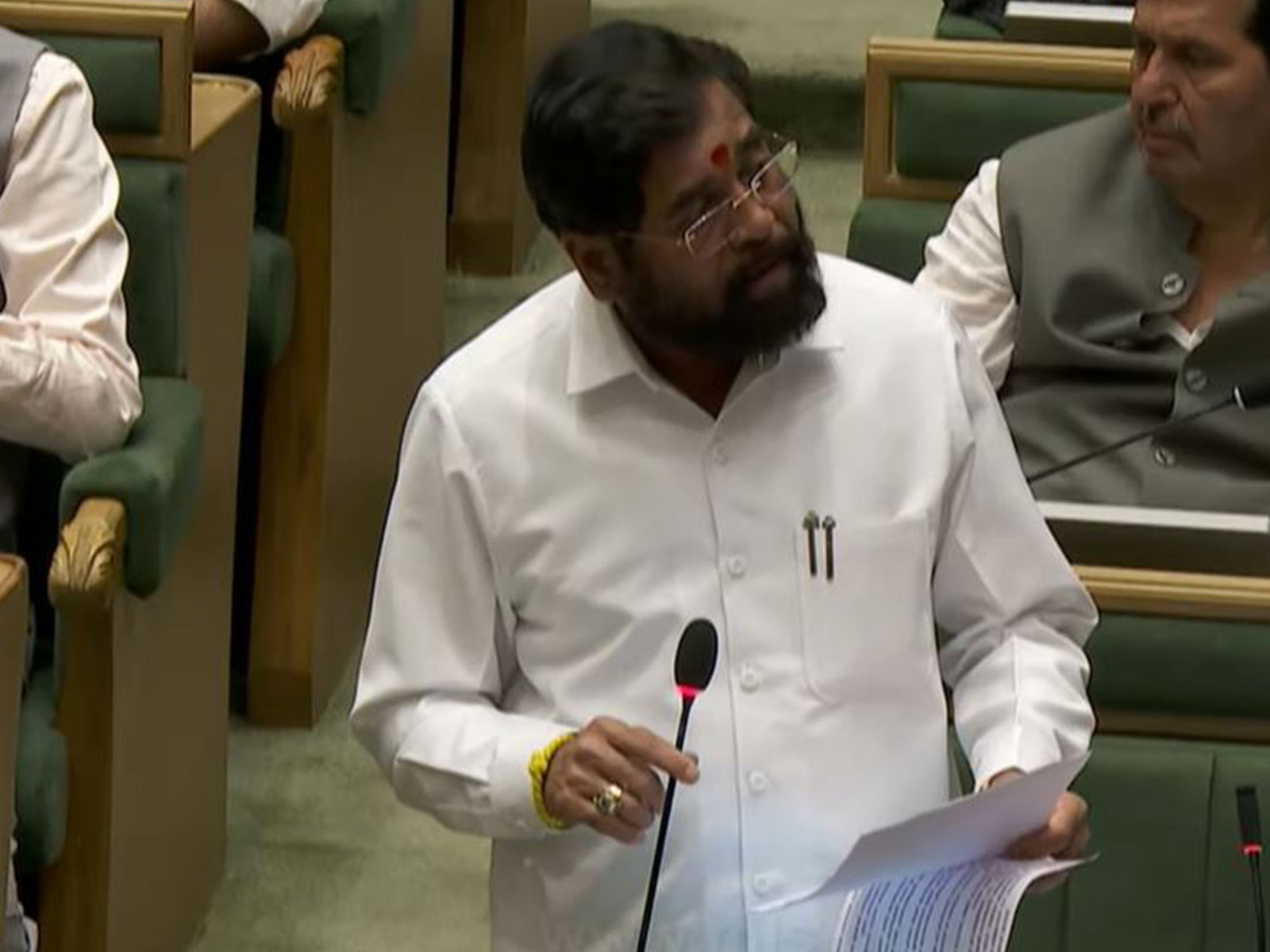
Nagpur (Maharashtra) [India], December 11 : Deputy Chief Minister Eknath Shinde on Thursday announced that a separate regulatory framework will be created to free Mumbai from the pagdi system in the Legislative Assembly and to ensure fair and proper redevelopment of pagdi buildings, a press release from the CM's Secretariat said.
Deputy CM Shinde also stated that the rights of both tenants and landlords will be protected.
Addressing the Assembly, he said that more than 19,000 cess buildings are known as pagdi buildings. These are pre-1960 buildings. Some of these buildings have already been redeveloped; some have deteriorated and collapsed; and more than 13,000 buildings are still awaiting redevelopment.
The tenants in these buildings are protected under the Maharashtra Rent Control Act. These buildings, the tenants, and their agreements are all legally valid.
The government has protected the tenants through the Rent Control Act in their interest. Landlords often complain that, due to tenants' rehabilitation rights, they do not receive fair compensation for their ownership interests.
Numerous disputes between tenants and landlords are pending in small-cause courts. As a result, the redevelopment of pagdi buildings receives very little response. Proper and fair redevelopment of pagdi buildings is necessary, the release added.
To that end, it is essential to protect the rights of both tenants and landlords. For economically weaker sections and low-income groups, granting FSI alone is not enough; provisions must also be made for the cost-free reconstruction of their homes. To that end, a separate regulatory framework will be established, he added.
Shinde stated that the new rules will include provisions such as granting FSI equivalent to the area occupied by tenants, granting the original FSI to landlords based on land ownership, and providing an incentive FSI to enable the cost-free reconstruction of homes for pagdi holders from economically weaker and low-income groups.
If, for any reason, such as height restrictions or other limitations, it is not possible to use all three types of FSI entirely, the remaining FSI will be made available in the form of TDR.
This regulatory framework will enable the redevelopment of old pagdi system buildings. It will prevent the collapse of dilapidated buildings, thereby avoiding loss of life and property. Existing redevelopment options, such as 33(7) and 33(9), will continue to remain available. For buildings that have not yet benefited from these schemes, this will serve as a new option.
Additionally, about 28,000 disputes between tenants and landlords in these buildings are currently pending. Many families have been stuck in litigation for decades. To accelerate redevelopment, these disputes must also be resolved.
With the High Court's prior approval, additional fast-track courts will be established to dispose of these cases, with the expectation that all cases will be resolved within the next three years. This scheme will provide ownership homes to lakhs of Mumbai residents living under the pagdi system, the press release stated.
Neither tenants nor landlords will face any injustice. Deputy Chief Minister Shinde assured that if any further difficulties arise in this process, the government is committed to resolving them.