Meteor explosion off Massachusetts coast triggers "loud boom": Report
May 31, 2026
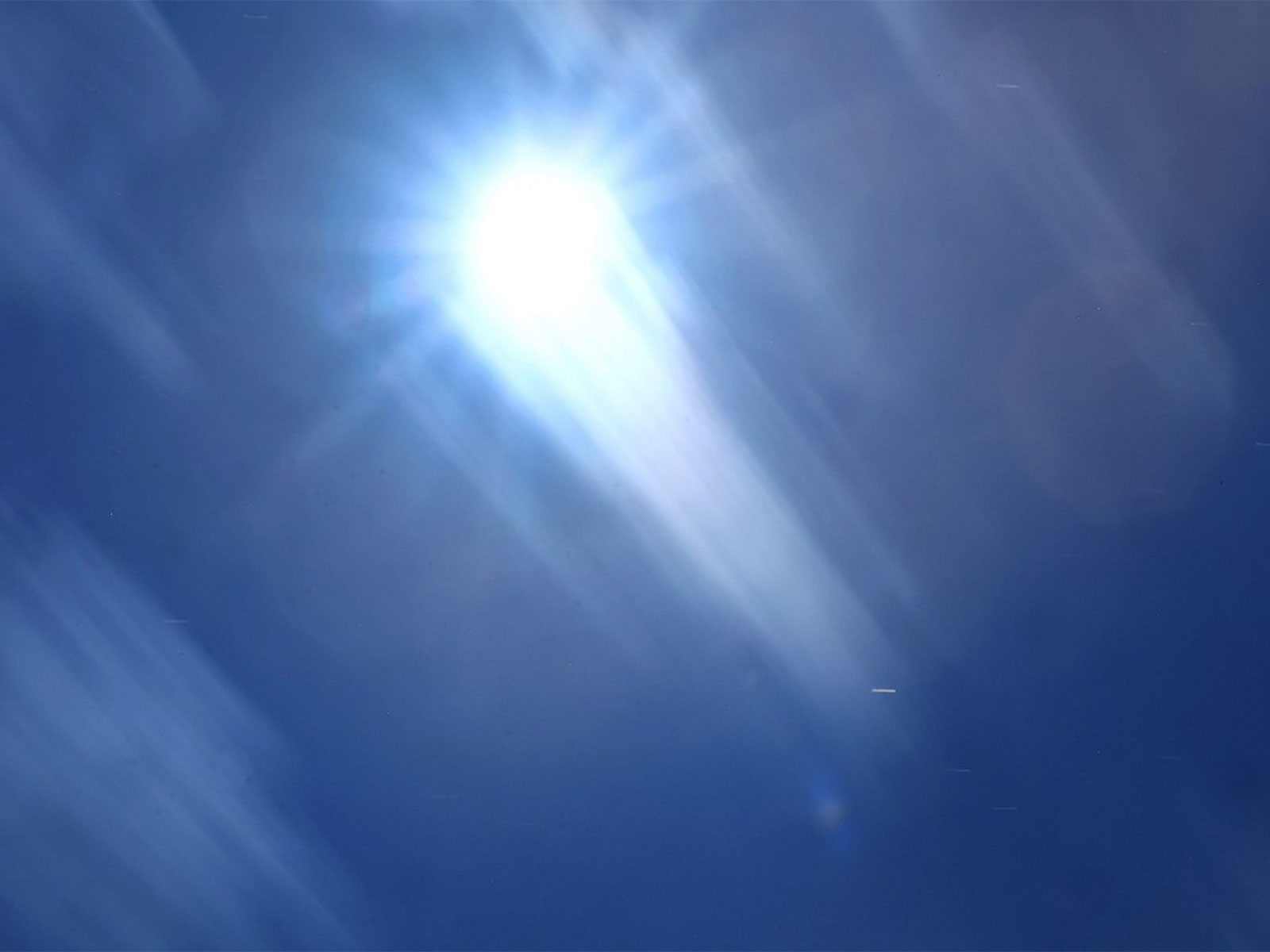
Massachusetts [US], May 31 : A meteor exploded high above the northeastern United States on Saturday afternoon (local time), producing a "loud boom" that was heard across much of Massachusetts and parts of neighbouring states, according to CBS News.
The explosion occurred around 2:11 pm Eastern Time, with numerous residents reporting a sudden "bang" that "rattled windows, startled pets, and even shook some homes." CBS Boston affiliate WBZ-TV received dozens of calls from viewers who heard the " loud explosion" from the Boston area to Ipswich, Massachusetts, and as far away as Johnston, Rhode Island.
According to NASA, the meteor fragmented at an altitude of approximately 40 miles (64 km) above northeastern Massachusetts and southeastern New Hampshire.
"The meteor appears to have fragmented at an altitude of 40 miles over northeast MA and southeast NH. The energy released at breakup is estimated to be equivalent to about 300 tons of TNT, which accounts for the loud noise," NASA said in a statement.
Preliminary reports submitted to the American Meteor Society indicated that dozens of observers across the Northeast witnessed a bright fireball around 2 pm Saturday (local time). Scientists are using those eyewitness accounts to help reconstruct the meteor's path through Earth's atmosphere.
Additional evidence came from satellite lightning data collected by the National Oceanic and Atmospheric Administration (NOAA), which detected a signature consistent with a meteor at roughly the same time the "boom" was reported. The data suggested the object entered the atmosphere over the South Shore region near Boston.
As CBS News reported, "Most meteors burn up harmlessly in the atmosphere, but larger objects can occasionally survive long enough to create the brilliant fireballs and booming shock waves that grab people's attention. "
Shauna Edson, an astronomy educator at the Smithsonian National Air and Space Museum, told WBZ-TV that if the meteor's remnants fell into the Atlantic Ocean, recovering any fragments would be unlikely.
"The vast majority of meteorites land in the ocean because Earth is mostly water," Edson said.
However, she noted that eyewitness reports and video footage remain valuable scientific tools even when no meteorite fragments are recovered.
"How bright it was, how fast it was moving, the angle it was coming from, and how long it stayed bright for, that gives us a lot of information," Edson said. "Maybe it's part of a broken-off piece of a lone asteroid. Maybe it's just one of these smaller space things that's been floating around that we don't associate with something we know the name of."
Edson emphasised that meteorites provide scientists with critical insights into the origins and evolution of the solar system.
"Meteors are the time capsules that carry information, so when we find pieces of them, each one is a treasure trove of information about the solar system," she said. "There are a few places on the moon where we have gotten moon rocks, but everything else kind of gets delivered to us by nature and we don't know where they come from."