Multi-alignment is active global engagement, fundamentally different from non-alignment: Sanjeev Sanyal
Dec 27, 2025
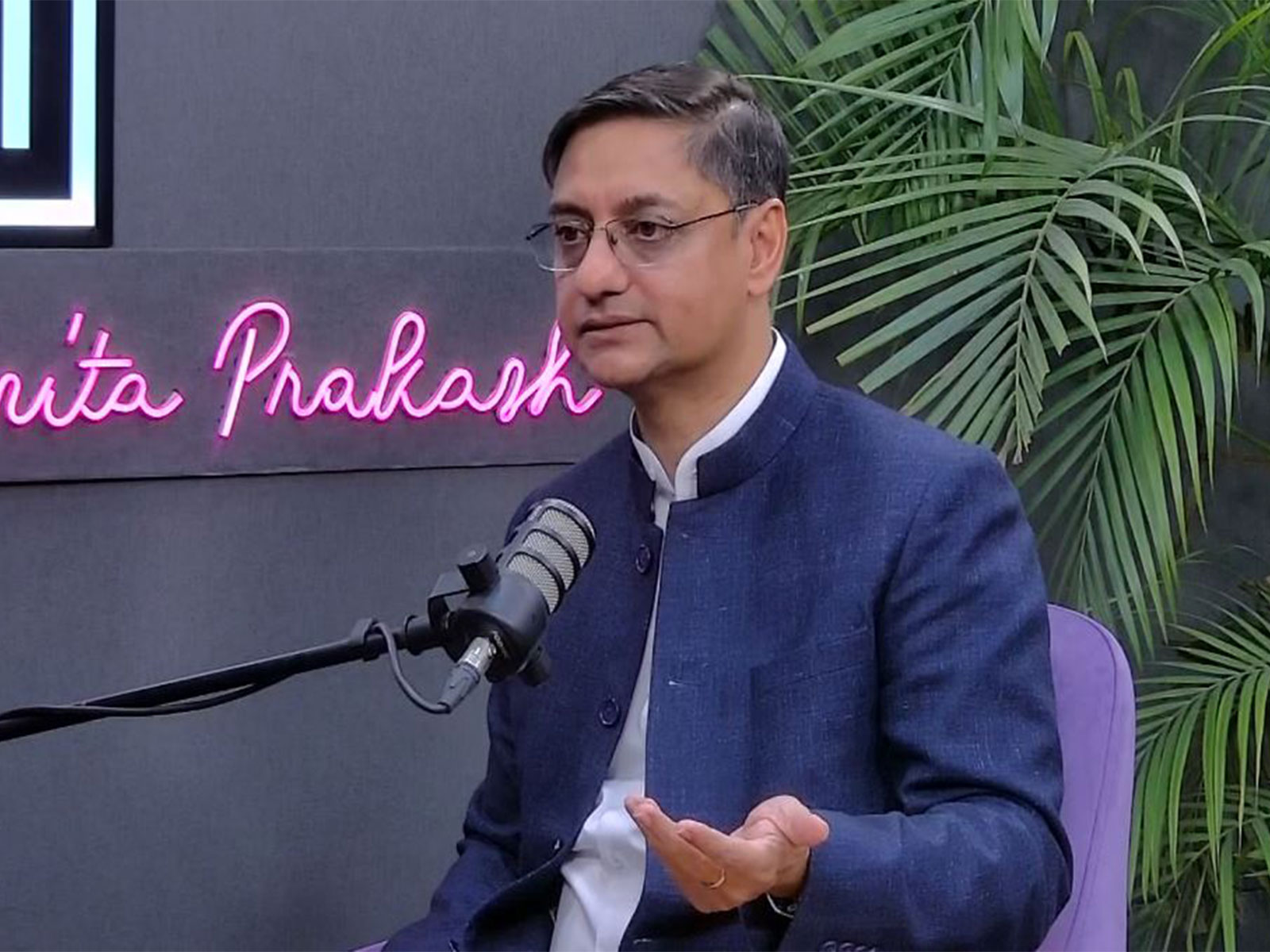
New Delhi [India], December 27 : Multi-alignment is fundamentally different from the idea of non-alignment, and it essentially means that the country is a key player in the world order, Sanjeev Sanyal, Member of the Economic Advisory Council to the Prime Minister, said in an interview with ANI, when asked about the position India occupies in the current fragmented global order.
"Pick your partners...What I'm repeatedly saying, multi-alignment is fundamentally different from the idea of non-alignment," he said, stressing the need for collaboration with various countries to secure the interests.
"Multi-alignment is that we are a player in the world (and) we matter," the economist said.
He set out India's position clearly, noting that it will align with its interests across different countries and contexts.
"Now that what works, we'll have to work for the partner country in that space as well. So if you have a free trade agreement with some country, it should work for us. But we should also be clear that it has to work for the other guy. Otherwise, why should they do it? So it is not a passive withdrawal. It is an active act of being a part of the world," he supplemented.
He also argued that the world should be seen as a mix of friends and enemies, often called frenemies, and to be in the game, one has to actively play.
"We should think of the world as a world of frenemies who will collaborate with us in certain areas and oppose us in other areas. Now, this is not to suggest that we should consequently sort of go back into some shell. No. If you want to play in the world, you have to play."
"And it's not just about the flex game. You have to collaborate with others. In order to be something useful, for them to be useful to you, you have to be useful to them," Sanjeev Sanyal added.
On economic collaboration with China and how the neighbouring country plays a key role in India's supply chains and key imports, he said India needs to be willing to engage China if it suits India's interests.
"Let's be very, very clear. For goods imports, China is our biggest supplier of all kinds of inputs. Even the success of our Apple phones would not work without inputs from China," he supplemented.
He suggested that if one has to be a part of the global supply chain, then one ought to be a part of the global supply chain.
"...if you want to be in the global game, you have to enter the arena," Sanyal said.
India, according to Sanyal, finds its place just next to the US and China.
"We live in a world of the Big Two. There are clearly two big economic and military powers in the world, which one is being the US and the other being China. And then there is a next layer. So I would say we are in that next layer, which includes, of course, Europe. It includes us and maybe Japan or whatever other countries we want to add to that layer," he explained.
He expressed optimism that, as India continues to grow faster, it will become the world's third-largest economy within the next 2-3 years.
"Our geostrategic position and military capabilities will -- depending on which space you look at-- we are in the next two, three countries to be cared about," he noted. "So if you're taking a military view of the world, then Russia will be in there. If you're taking an economic view, you may take the European Union in there. So it depends which space you're looking at. But we are an important player in most fields we would be in and a serious player in the next level."
On the matter of economists arguing that India's GDP estimates rely heavily on formal sector data, besides outdated metrics, and it does not reflect the exact economic trajectory, Sanyal defended the arguments asserting that India's GDP estimates are based on a "very well established system."
"This whole criticism is coming because of IMF, 'C'grade that it gave, but we are very careful about this because the IMF has basically, what has it said? It has said very clearly that we need to update our indices, which are already still stuck in 2011-12. By the way, I happen to agree with the IMF's criticism. Yes, when we upgrade them, ironically, the level of our GDP, not necessarily the growth rate, the level of our GDP is actually going to be higher," he said.
He assured that the government will update the indices in early 2026, thereby making various economic estimates more reflective of current reality.
"Those who are making a political point they awkwardly if and when this upgrade happens, which, by the way, will happen in February, March of 2026. Just a few months from now. And when that happens, there will be more complaints that this actually causes GDP level to be bigger," he responded.
India last updated its GDP series with 2011-12 as the base year. The new series is expected to be 2023-24. India did not revise the data series in 2021-22 due to COVID-19.
Recently, the IMF graded India at 'C' in national accounts, citing outdated data. IMF had understandably perceived the base of the data to be outdated.