NBEMS launches free online AI course in Medical Education, applications open
Dec 30, 2025
By By Shalini Bhardwaj
New Delhi [India], December 30 : In a drive towards a developed health India, the National Board of Examination in Medical Sciences (NBEMS) has launched a free six-month online course for doctors to boost Artificial Intelligence literacy in healthcare, with applications opening recently, aiming to equip doctors with essential AI skills for improved diagnostics and personalised treatment.
Artificial Intelligence is already part of medical practice--through radiology software, pathology algorithms, clinical risk scores, journal summaries, and hospital dashboards. Yet most doctors are currently exposed to AI without training, standards, or clarity on their responsibilities.
With the launch of this AI course, NBEMS aims to bridge that gap. This is the first time such a course has been launched on a large scale. This proposed 20-hour structured AI course for doctors is designed to fix exactly that problem. NBEMS is inviting applications for the online course, Artificial Intelligence in Medical Education - Viksit Arogya Bharat, from Tuesday.
The number of lectures/interactive sessions will be approximately 20. Upon course completion, a certificate will be issued to participants.
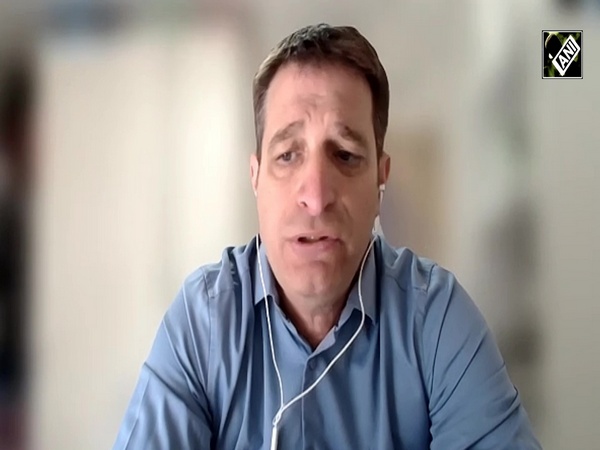
Speaking with ANI, Abhijat Sheth, President and Chairperson of NBEMS, said, "The purpose is simple: to help doctors understand, judge, and safely use AI--without turning them into programmers or replacing clinical thinking."
On benefits for Doctors and Teachers, he explained, "By training faculty and PG doctors, AI becomes part of clinical discussion, not an external add-on. Teaching becomes future-ready, evidence-based, and relevant. Faculty can guide students on when to trust AI and when not to. Institutions build internal expertise, not external dependence. This ensures AI knowledge multiplies organically within the system."
The initiative to integrate Artificial Intelligence (AI) education into medical training is being undertaken with a clear, phased vision, starting with postgraduate faculty and students, expanding to undergraduate (MBBS) education, and culminating in a long-term, secure local AI infrastructure for healthcare.
The initiative is led by NBEMS in collaboration with global experts, with the central belief that doctors must lead AI adoption--academically, ethically, and clinically.
In Phase 1: Immediate Focus - Training PG Faculty and Students. The first and most important goal is to train Postgraduate students, teaching faculty involved in PG education. This faculty-first approach ensures Uniform understanding across departments, Sustainable teaching capacity within institutions, and Long-term continuity beyond pilot programs.
Faculty and PG trainees are trained together, creating a shared language of AI literacy, clinical judgment, and ethical responsibility.
The emphasis is not on technology, but on clinical reasoning, patient safety, ethical and legal accountability and research integrity. The purpose is simple: to help doctors understand, judge, and safely use AI without turning them into programmers or replacing clinical thinking.
In Phase 2: Medium-Term Goal - Integration into MBBS Curriculum.
"Once faculty and PG programs are established, the natural next step is to: Introduce AI literacy into regular MBBS education. Align it with existing subjects like statistics, community medicine, and research methodology," said Sheth.
"For MBBS students, the goal is awareness, not complexity, clinical thinking, not coding, ethics and judgment from the beginning. This prepares young doctors early, ensuring AI understanding grows alongside clinical maturity," he added.
In Phase 3: Long-Term Vision - Local LLMs for Indian Healthcare. The proposal also outlines a future-focused vision for locally hosted large language models (LLMs) in medical institutions. This is not an immediate mandate, but a long-term strategic goal to be pursued after Adequate AI literacy among doctors. Faculty-led governance structures, clear ethical and legal frameworks."
Local LLMs aim to protect patient data, ensure data sovereignty, and enable safe institutional use of AI for education, research, and clinical support.
To ensure quality and global relevance, this initiative is being shaped through input and collaboration with international academic and medical institutions such as Harvard University, Mayo Clinic, Oxford University, Tufts University, National Institutions of Excellence, AIIMS, IITs, IIMs, etc.
The result is a generation of doctors who are clinically strong, ethically grounded, and AI-ready--prepared not just for today, but for the future of healthcare in India.
NBEMS will also be applying for a Guinness World Record for imparting online AI education to the largest number of doctors in a single session.