Netanyahu meets US Secretary of State Rubio at Mar-a-Lago ahead of Trump talks
Dec 29, 2025
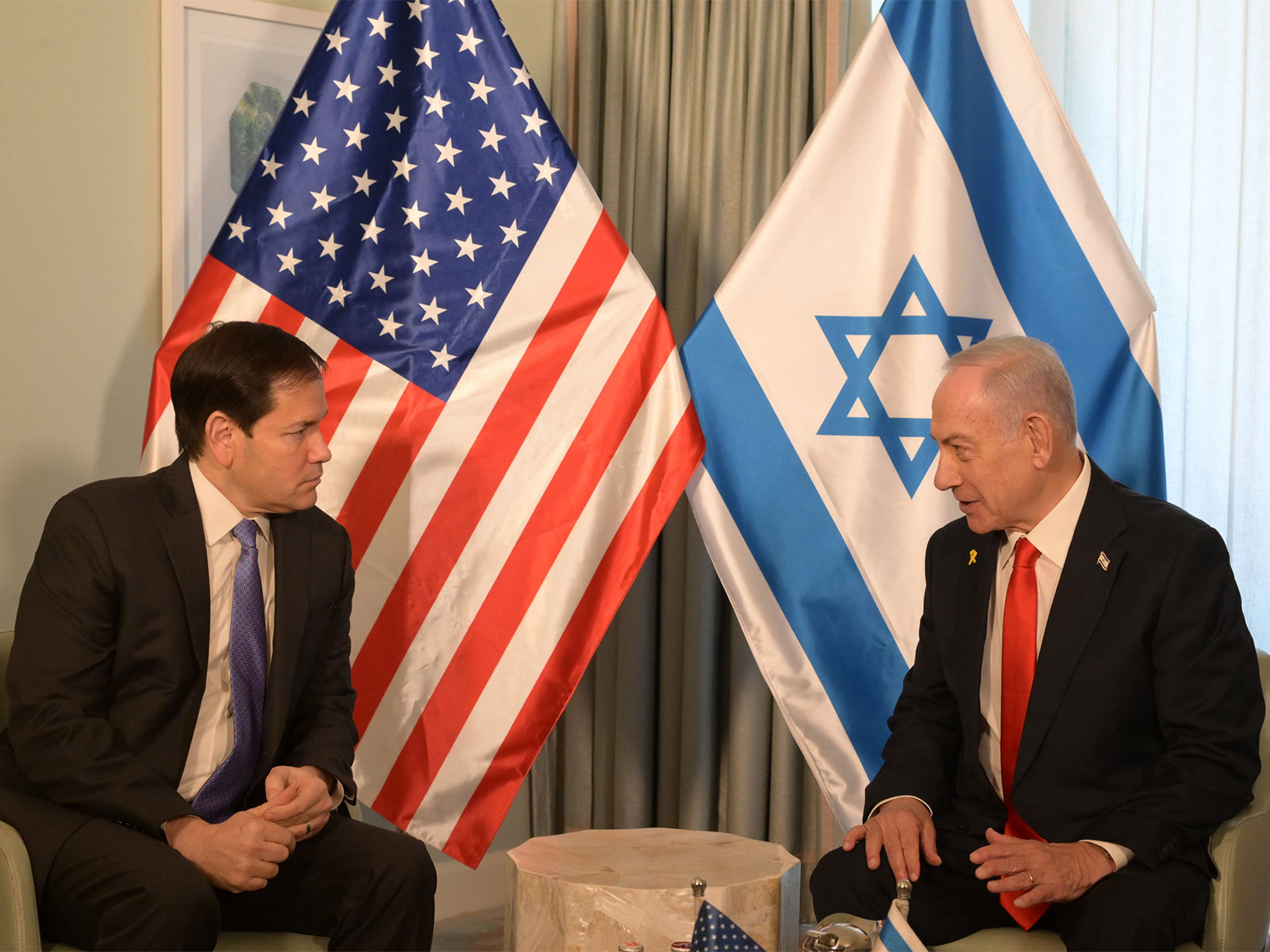
Florida [US], December 29 : Israeli Prime Minister Benjamin Netanyahu on Monday met US Secretary of State Marco Rubio at President Donald Trump's Mar-a-Lago estate in Florida, as part of his ongoing diplomatic engagements in the United States.
Following the meeting, Netanyahu shared a brief reaction on social media. "I had a great meeting," he wrote on X.
A video released by the Israeli Prime Minister's Office showed Netanyahu and Rubio greeting each other with a handshake before taking their seats, with the US and Israeli flags displayed in the background, underscoring the diplomatic nature of the engagement.
The meeting with Rubio comes ahead of Netanyahu's scheduled talks with US President Donald Trump at Mar-a-Lago around 1 pm ET. The discussions are expected to centre on recent developments linked to a peace plan introduced in October aimed at ending the conflict in Gaza.
Netanyahu's visit reflects his continued outreach to the US administration, as he seeks a tougher American stance on Hamas in Gaza while also raising concerns over Iran's advancing ballistic missile programme. Over the course of the year, he has made multiple visits to the US, publicly praising Trump as Israel's strongest ally while privately urging stronger action against what Israel views as its primary security threats, CNN reported.
However, the political backdrop to the meeting appears more complex than during previous engagements. Trump, who has repeatedly described himself as a president focused on peace, has grown cautious in recent months over certain Israeli military actions, including strikes in Syria. He has also remained sensitive to domestic US opinion, which has shown limited appetite for deeper American involvement in another Middle Eastern conflict.
At the same time, a fragile Gaza ceasefire finalised during Trump's October visit to the region is under strain, amid continued Israeli military operations and slow progress toward the agreement's second phase, CNN reported.
Despite repeated public displays of camaraderie -- including Trump's appeal for Israel's president to pardon Netanyahu amid corruption charges -- differences have surfaced between the two leaders over their approaches to regional diplomacy.
"I think both of these guys don't trust one another. I'm not even sure they like one another. But the reality is they need one another. Trump needs Netanyahu to avoid his much-touted 28-point plan in Gaza from cratering. And Netanyahu desperately needs the president of the United States, in order to manage growing calls for his resignation," said Aaron David Miller, a former Middle East negotiator now with the Carnegie Endowment for International Peace.
"Mutual need creates a certain amount of dependency," he said. "This may not be a great meeting, but it's not going to crater."
The Mar-a-Lago talks also mark the second consecutive day Trump has hosted a foreign leader during his holiday stay, following a visit by Ukrainian President Volodymyr Zelensky on Sunday. More than two months after Trump travelled to Egypt to sign the Gaza peace agreement, several key elements of the deal remain unresolved as Israel continues to consolidate military control over the enclave, according to CNN.
The second phase of the agreement includes Hamas' disarmament, reconstruction efforts and the establishment of post-war governance in Gaza. Central to the proposed framework is the creation of a "Board of Peace", expected to include Trump and other international leaders.
"It'll be one of the most legendary boards ever. Everybody wants to be on it," Trump said at the White House earlier this month.
While Washington is pushing for a swift transition to the next phase and greater clarity on Gaza's governance and a proposed international stabilisation force, Israel has resisted further troop withdrawals without Hamas first disarming. This has caused unease among some White House officials, who believe Netanyahu may be delaying progress, CNN reported.
"Israel has had no better friend in its history than President Trump," White House deputy press secretary Anna Kelly said ahead of the meeting.
"We continue to work closely with our ally Israel to successfully implement the President's 20 Point Plan for Peace and strengthen regional security in the Middle East," Kelly added.
Differences between the two sides extend beyond Gaza. Tensions emerged in September when Israel targeted Hamas leaders inside Qatar, a key US ally involved in mediation efforts. The strike was seen as jeopardising Trump's peace initiative, prompting him to demand that Netanyahu apologise to Qatari leaders during a subsequent Oval Office meeting.
Diverging approaches are also evident on Syria and Lebanon. Trump's outreach to Syrian President Ahmed al-Sharaa contrasts with Israel's insistence on maintaining a buffer zone, while Washington has favoured diplomacy in Lebanon amid Israeli doubts over Beirut's ability to restrain Hezbollah without renewed military action.
Iran remains a major concern despite the recent "12-day war", during which Trump authorised bunker-buster strikes on Iranian nuclear facilities. Israel continues to closely monitor Iran's nuclear enrichment activities and missile development.
"As he has repeatedly stated in his first and second terms, the President is committed to ensuring Iran never obtains a nuclear weapon," Kelly said.
Despite periodic strains, Trump and Netanyahu have rarely allowed disagreements to surface publicly. Trump has repeatedly criticised corruption investigations against Netanyahu, portraying them as distractions from wartime leadership.
When addressing Israel's Knesset in October, Trump directly appealed to Israeli President Isaac Herzog.
"Hey, I have an idea, Mr. President -- why don't you give him a pardon?" Trump said, dismissing the corruption allegations as minor issues involving "cigars and champagne."