No stones left unturned in preparations, says Interim Nepal PM ahead of elections
Feb 25, 2026
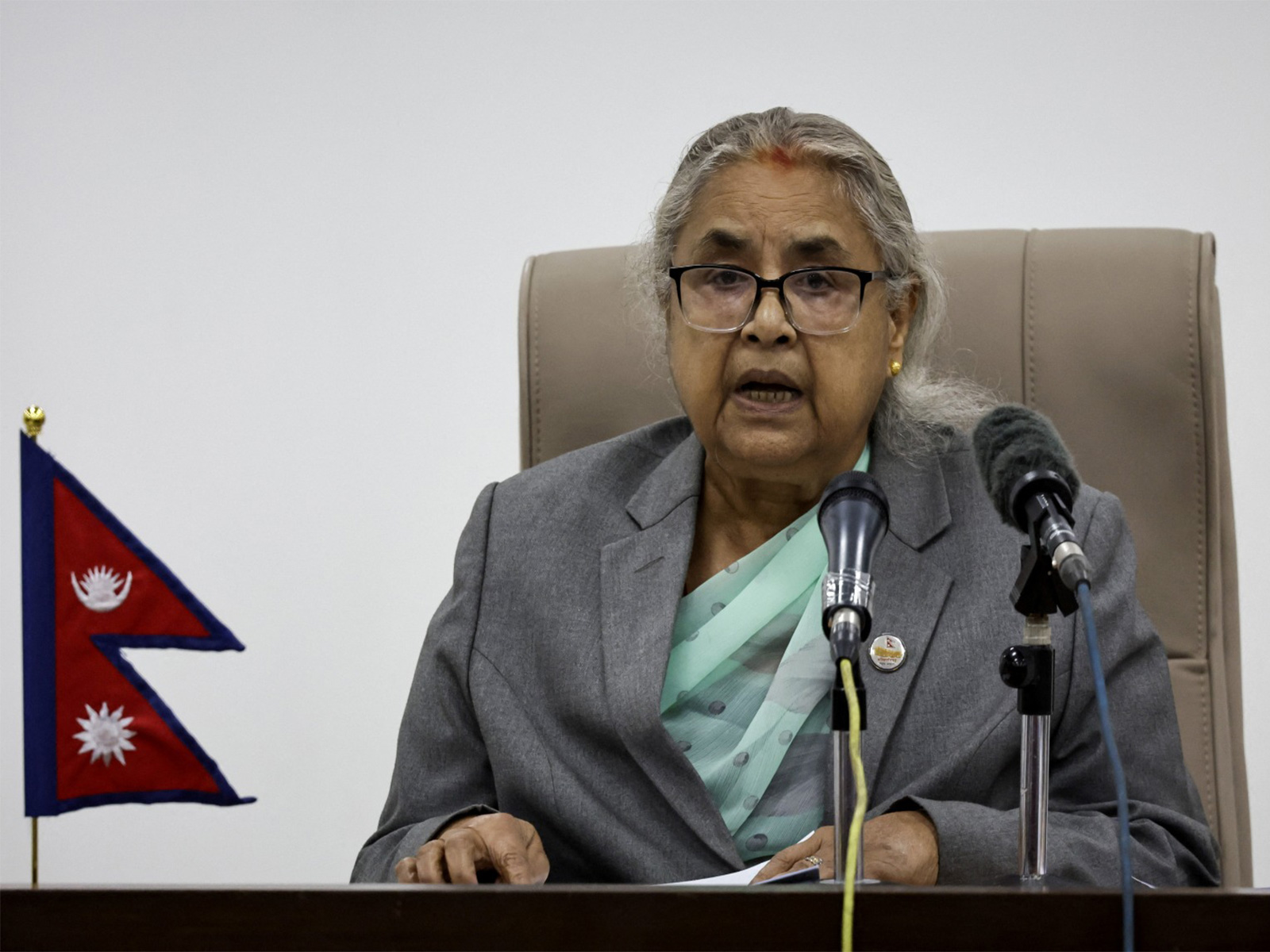
Kathmandu [Nepal], February 25 : Nepal's Interim Prime Minister Sushila Karki has called on voters to exercise their rights, claiming the government hasn't left any stone unturned for the smooth conduct of the election slated for next week.
After rounds of meetings with security agencies on Tuesday, the Interim leader of the Himalayan Nation took to Facebook to assure the voters about security arrangements.
"A detailed discussion and review of the election preparations and overall security situation was held with the heads of all security agencies in Baluwatar on Tuesday (local time)."
"There is no room for doubt in the security arrangements. All mechanisms are operational with necessary vigilance, strict monitoring and effective coordination, keeping in mind the potential challenges and risks," Karki announced.
"The government is leaving no stone unturned to ensure that the elections are held in a clean, fair, fearless and peaceful manner. I urge all citizens to exercise their right to vote with confidence and fearlessness," the interim leader further added.
With about a week left for the elections and violence in the southern plains of the nation, the government has been expediting security updates at the highest levels on a daily basis.
Interim leader Karki, on late Tuesday evening, also received a briefing from the chiefs of all security agencies regarding election preparations and the overall security situation.
In the briefing, Karki was briefed that security agencies have identified a dozen security challenges, including clashes between supporters of various political parties, communal disturbances, religious tension, activities of the monarchist factions, prisoners who escaped from jails during the Gen Z protests in September, and activities of various political parties that have boycotted the election, among others.
As per the video from the Prime Minister's Secretariat, Home Minister Om Prakash Aryal, Chief Secretary Suman Raj Aryal, Chief of Army Staff Ashok Raj Sigdel, Home Secretary Rajkumar Shrestha, Head of the Peace and Security Division of the Home Ministry Anand Kafle, Inspector General of Nepal Police Dan Bahadur Karki, Inspector General of Armed Police Force Raju Aryal, and Chief of the National Investigation Department Tekendra Karki were present in the briefing.
The polls, which come six months after the September Gen-Z uprising is being observed with caution. With hundreds of inmates on the loose and a higher number of polling stations deemed sensitive in comparison to the previous elections, security has been revamped all across the nation.
Earlier this month, the Nepal Army was deployed for security as the Himalayan nation heads for the parliamentary election, which is scheduled for March 5.
The Nepal Army alone has deployed a total of 79,727 personnel across the nation as support for the Nepal Police, Armed Police Force, and election police in holding the polls peacefully.
The deployment comes in line with the Integrated Election Security Plan and an earlier Cabinet decision. As per the Integrated Election Security Plan endorsed by the president in November, the army will replace police forces in airports, prisons, and other sensitive areas. Apart from guarding those sensitive areas, the army will provide security in the third layer while also patrolling as and when needed.
As many as 338,000 security personnel, including the election police, are being deployed in the election period. The authorities have classified 3,680 of the country's 10,967 polling stations as "highly sensitive."
According to the Nepal Police, among those polling stations, 2,845 have been placed in the "normal" category based on the level of security risk, while 4,442 have been designated as "sensitive" and 3,680 as "highly sensitive".
There are more highly sensitive stations than in the 2022 election, according to Nepal Police data.
In the previous election, 3,412 polling stations were classified as highly sensitive. This time, the number has risen to 3,680. In total, 268 more polling stations, compared to the last election, have been classified as highly sensitive stations.
In the previous election, there were a total of 10,892 polling stations. This time, the number has increased to 10,967.