"Not a typical war," says Trump; Mojtaba Khamenei orders "unrestricted geographical response" if Iran attacked amid attempts at negotiation
Oct 31, 2026
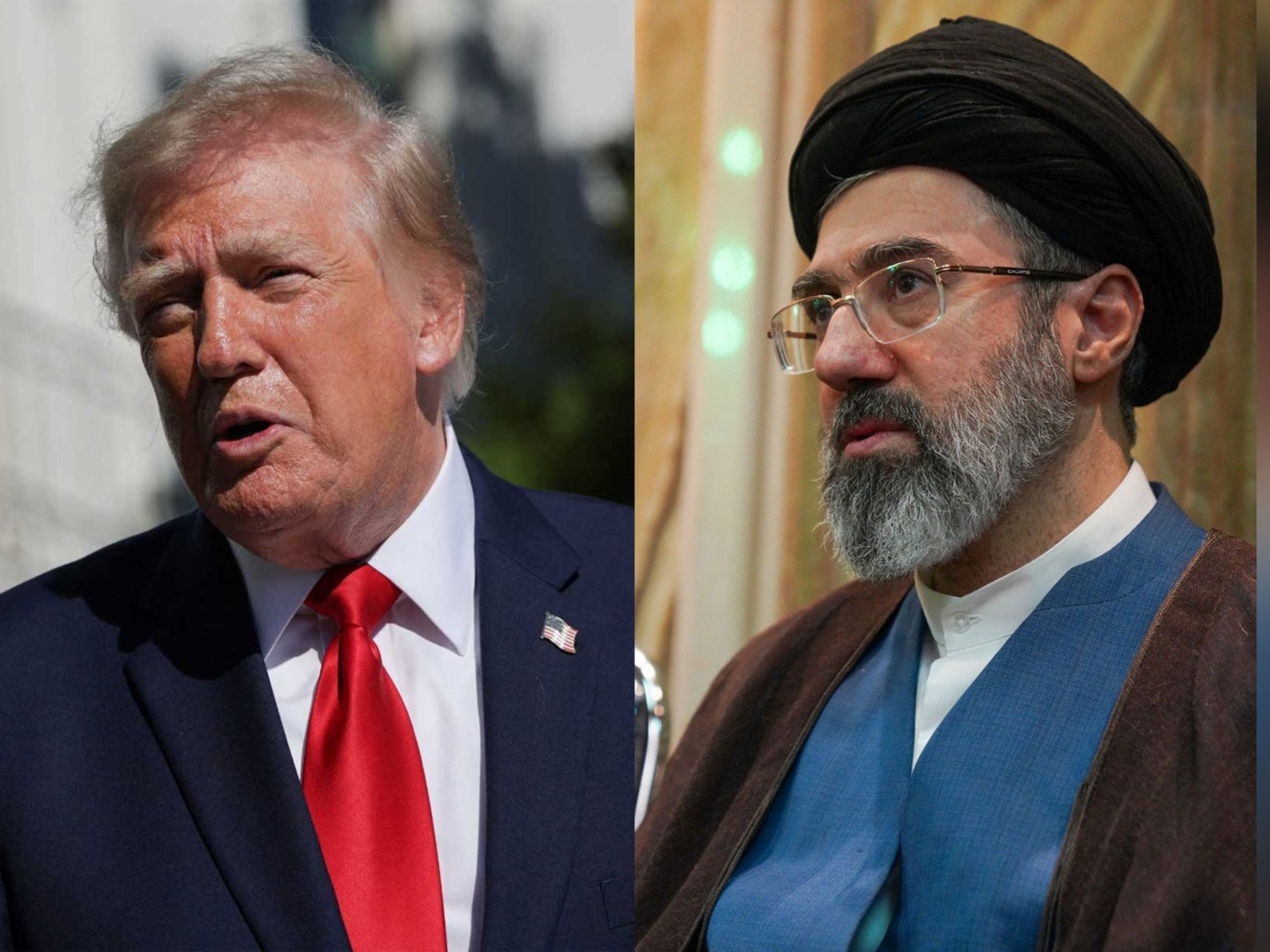
Washington DC [US], October 31 : As United States President Donald Trump stated that Washington is in no hurry to end its war with Iran, characterising the ongoing hostilities as "not a typical war," Iranian Supreme Leader Mojtaba Khamenei has ordered senior commanders to confront all the threats “with an immediate, effective, and unrestricted geographical response.”
Trump said, “There are talks. They want to talk. They keep talking.”
“But look, they're not paying their soldiers, they're not paying their police. They're in a lot of trouble. And we have time, frankly. It's a war, but it's not a typical war; we've been there for seven months,” he told reporters in the Oval Office.
Amid the possibility of fresh escalations between the US and Iran, Mojtaba Khamenei met with senior commanders of the armed forces against the backdrop of possibilities of fresh escalation between the United States and Iran.
“Every level and type of threat must be confronted with an immediate, effective, and unrestricted geographical response,” a statement on X read.
In a strongly worded statement, he instructed the armed forces to retaliate in case the military attacks resume.
“If the enemies resume military or terrorist attacks, it is the armed forces of the Islamic Republic and the people of Iran who will determine the time and conditions for ending them,” he said.
He emphasised an “intelligent combat readiness to confront the enemies with force” as a requirement of “maximum deterrence”.
Khamenei also directed the forces to strengthen Iran’s defence technology.
Following the meeting, Iran’s armed forces chief of staff, Major-General Ali Abdollahi, as per Al Jazeera, has said that Iran will respond to any attack with “immense force.”
Iran’s Foreign Minister Abbas Araghchi on Saturday welcomed the peace talks with the United States as he received a letter from US Vice President JD Vance, while noting that Iran has not ruled out the possibility of an “outbreak of war.”
In an interview with Al Jazeera, Araghchi said, “The American side’s attempt to open the door to dialogue and understanding more broadly is a positive step.”
However, he added, “If Washington’s goal in sending this letter is to stir up discord, it would be yet another mistake to add to its previous ones.”
The Wall Street Journal reported on Wednesday that Vance had sent the letter to Iranian security chief Mohsen Rezaei on the instructions of US President Donald Trump, seeking to restart negotiations and prevent further US military strikes.
The Minister said, “We do not rule out any possibility regarding the outbreak of war, and we are prepared for all scenarios. We have upgraded our weaponry, addressed our vulnerabilities, and tested new arms; our forces are at the highest level of readiness.”
An American delegation is expected to join Iranian officials for talks in Doha; he said that Qatar has proposed to reduce the implementation period of Iran’s plan to open the strategic waterway, Strait of Hormuz, to two days as compared to five.
Araghchi told Al Jazeera, “The Qatari side proposed shortening the implementation period of the Iranian proposal to five days. We have reached a proposal at this stage that reduces the implementation period to two days.”
“Our conditions include lifting the sanctions imposed following the Islamabad memorandum and reducing US forces in the region. We demand the restoration of oil waivers and the release of all our frozen funds, including those held in Qatar. Reopening the Strait of Hormuz in accordance with our conditions paves the way for the resumption of negotiations with Washington regarding outstanding issues,” he added.
An American delegation is likely to join Iranian officials for direct talks in Doha following a reported breakthrough in indirect negotiations, The Times of Israel reported, citing the Qatari newspaper Al-Araby Al-Jadeed.
According to the report, citing sources close to mediation efforts, the two sides have reached an understanding on preliminary measures concerning Iran's nuclear programme, navigation through the Strait of Hormuz and financial incentives for Tehran. China and Russia are also reportedly expected to serve as guarantors of any agreement.
According to Al Arabiya English, which exclusively obtained the draft's key points, an independent verification mechanism would assess compliance before each phase of implementation, ensuring that neither side makes substantial concessions without corresponding, independently verifiable commitments.
The draft also proposes a dispute-resolution mechanism involving mediators and guarantor parties to address delays or violations and prevent renewed military escalation, according to the news platform.
Amid the exchange of words, the United States reportedly struck two fishing boats off Qeshm Island in the Strait of Hormuz, injuring two Iranian fishermen.
As reported by Iranian news agency IRNA, the two fishermen who went missing after the drone attack have been found, according to the CEO of the Qeshm Fishing Community. Both were sent back to Qeshm Island.
Meanwhile, one of the two injured fishermen was taken to a hospital, Al Jazeera reported, citing Fars news agency.
“This incident occurred around 11:30 am today involving two fishing boats within 18 miles of the village of Musan, affiliated with Qeshm County… Each boat had two occupants,” the deputy governor of Hormozgan Province for political, security, and social affairs told Tasnim news agency, as per Al Jazeera.