Nvidia CEO projects USD 1 trillion AI infrastructure demand by 2027
Mar 17, 2026
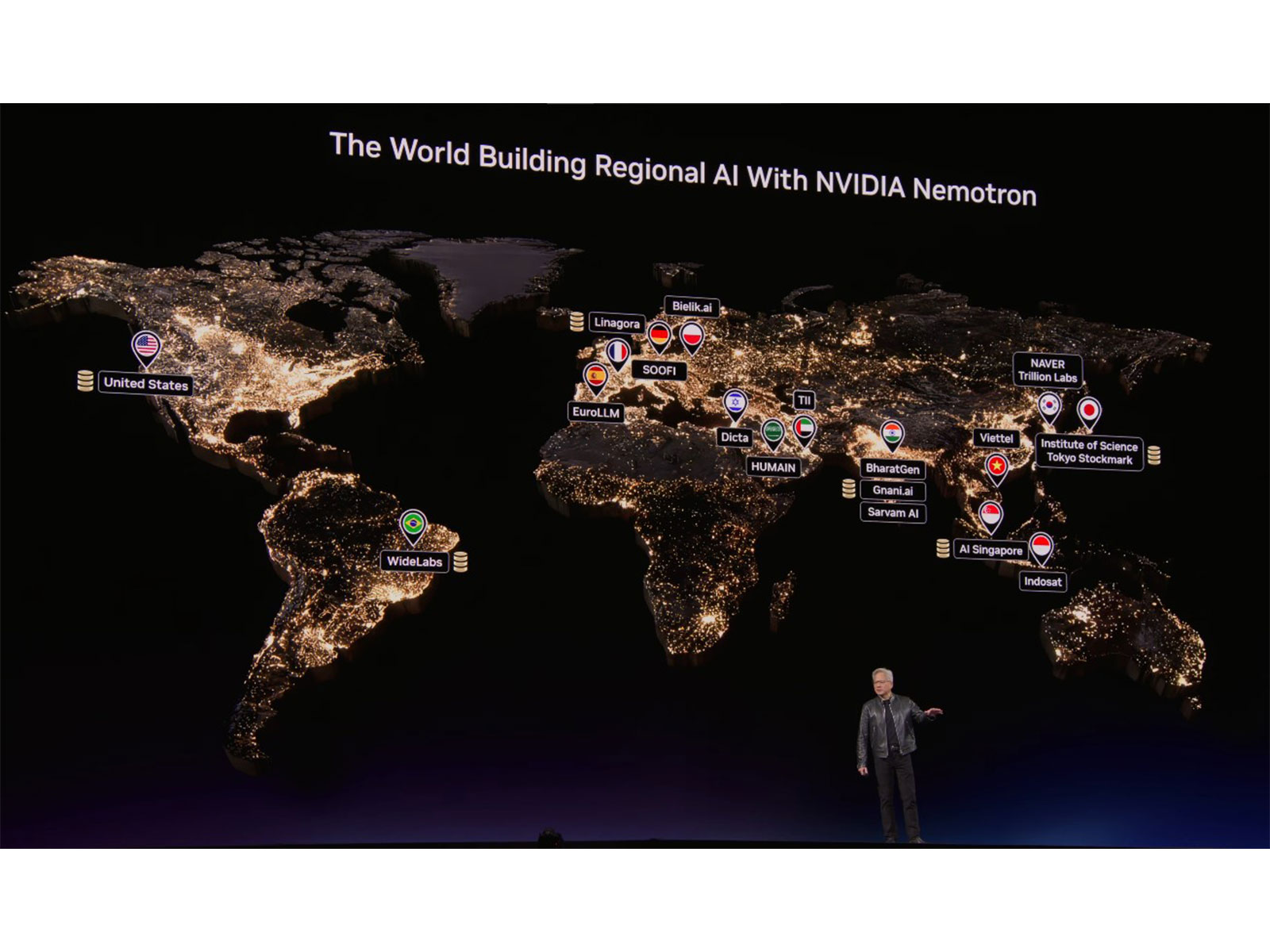
Taipei [Taiwan], March 17 : Nvidia CEO Jensen Huang projected that the demand for artificial intelligence infrastructure will reach at least USD 1 trillion by 2027, driven by a fundamental shift in global computing methods.
Speaking at Nvidia's annual GTC 2026 in San Jose, California, on Monday, Huang noted that the industry has reached a critical turning point. According to a report by Focus Taiwan, this new estimate more than doubles his previous forecast, which suggested that demand for the company's Blackwell and Vera Rubin systems would hit approximately USD 500 billion by 2026.
"The inference inflection point has arrived," Huang said during the presentation. He explained that the transition toward inference-driven computing is what will push infrastructure demand past the trillion-dollar mark in the coming years.
Huang described a complete transformation in how machines process information, moving away from traditional methods. "Computing used to be retrieval-based. Now it's generative," he said. He reiterated his view that Moore's Law has run out of steam, predicting a future where every software company becomes agentic and operates as a manufacturer of tokens.
The CEO identified Taiwan as a primary component of the supply chain required to deliver Nvidia's Vera Rubin architecture. Presentation slides identified more than 60 global partners for the platform, many of which are Taiwanese firms, including Foxconn, Asustek Computer Inc., Quanta Cloud Technology, Wistron Corp., and Wiwynn Corp.
Nvidia provided further technical details on the next-generation Vera Rubin platform, which is designed specifically for agentic AI workloads. The system utilizes 100 percent liquid cooling. Huang claimed this design significantly reduces deployment time, cutting installation requirements from two days down to just two hours.
Beyond its own hardware, Nvidia is collaborating with AI chip startup Groq Inc. to optimize inference performance. Huang confirmed that Samsung Electronics Co. will manufacture the Groq chips. Looking further into the company's roadmap, he introduced the Feynman architecture, which will incorporate new processing and networking technologies such as co-packaged optics.
On the software side, the CEO highlighted the emergence of "agentic AI," where software systems perform tasks and generate outputs autonomously. To support this, Nvidia announced its enterprise-focused NemoClaw system. Developed with enhanced security and privacy for corporate use, the system follows the rapid rise of the open-source platform OpenClaw.
The company is also looking toward space-based data centers. Huang revealed plans for the Vera Rubin Space-1 system, though he acknowledged the technical hurdles of cooling hardware in an environment where heat dissipation relies solely on radiation. "We have to figure out how to cool these systems out in space, but we've got lots of great engineers working on it," he said.