Op Sindoor demonstrated India's high-impact, short-duration operational capability: Rajnath Singh
Dec 18, 2025
New Delhi [India], December 18 : Defence Minister Rajnath Singh described the Indian Air Force (IAF) as a technologically advanced, operationally agile, strategically confident, and future-oriented force that is safeguarding national interests amid the constantly evolving global order.
Addressing the Air Force Commanders' Conclave in New Delhi, Singh said, "India's high-impact, short-duration operational capability was demonstrated by the Armed Forces during Operation Sindoor."
Defence Minister praised the courage, speed and precision with which the IAF destroyed the terror camps during the operation, and effectively handled the "irresponsible reaction" from Pakistan after the strikes, according to the release.
Highlighting the people's trust in the Armed Forces, especially the air defence capability, he said, "Usually, when the enemy attacks, people hide. But when the Pakistani forces tried to target Indian installations, the people of India remained calm and continued with their daily routines. This is the proof of the trust of every Indian in our operational preparedness".
Underscoring the importance of thoroughly understanding the enemy's offensive and defensive capabilities to maintain a decisive advantage, he urged the Commanders to learn from Operation Sindoor and remain vigilant and ready to address future challenges.
Reflecting on the changing nature of warfare, Rajnath Singh stated that the Russia-Ukraine conflict, Israel-Hamas war, Balakot air strikes and Operation Sindoor are proof that air power has emerged as a decisive force in today's times. He stressed that air power is not just a tactical asset, but a strategic instrument, and speed, surprise & shock effect are its inherent characteristics.
"Air power gives any leadership the capability to deliver a clear strategic message to the adversary that every step will be taken to uphold national interests. Through speed, reach, and precision, air power has become an effective tool for aligning the nation's objectives with military means," he added.
While the Defence Minister commended the performance of India's air defence system and other equipment used effectively during Operation Sindoor, he reiterated the Prime Minister Narendra Modi-led Government's commitment to further strengthening the country's security apparatus.
"21st-century warfare is not just a war of weapons. It is a war of ideas, technology, and adaptability. Cyber warfare, Artificial Intelligence, unmanned aerial vehicles, satellite-based surveillance, and space-enabled capabilities are fundamentally changing the future of warfare. Precision-guided weapons, real-time intelligence, and data-driven decision-making are no longer optional; they have become basic requirements for success in modern conflicts. Those nations which master the trinity of technology, strategic vision, and adaptability will move towards global leadership," he added.
Rajnath Singh expressed confidence that the Sudarshan Chakra, announced by PM Modi during his Independence Day speech this year, will play a crucial role in protecting national assets in the coming years. He added that the development of indigenous jet engines has become a national mission, and the Government is fully committed to achieving this objective.
He pointed out that the Government is working in collaboration with the private sector, including start-ups & MSMEs, to further the modernisation of the Armed Forces, inviting young minds into defence manufacturing through initiatives such as iDEX and ADITI. He informed that, as of November 2025, out of the 565 challenges given under iDEX, a total of 672 winners have emerged, including 96 winners from the 77 challenges related to the IAF. This achievement demonstrates that the interest of young people, especially from the private sector, is growing rapidly in the defence sector, he said.
Describing Operation Sindoor as a shining example of Tri-service synergy, Rajnath Singh underlined the importance of jointness in today's rapidly changing times.
"Jointness among the three Services is crucial as it would further strengthen our security system, and enable us to deal with our adversaries even more effectively," he said.
Singh lauded the IAF for their Humanitarian Assistance & Disaster Relief efforts, both domestically and internationally.
"Whether at home or abroad, IAF has consistently provided critical support during natural calamities. Many of the missions were executed in extremely challenging situations, which has increased the trust of the people in our air warriors," he said.
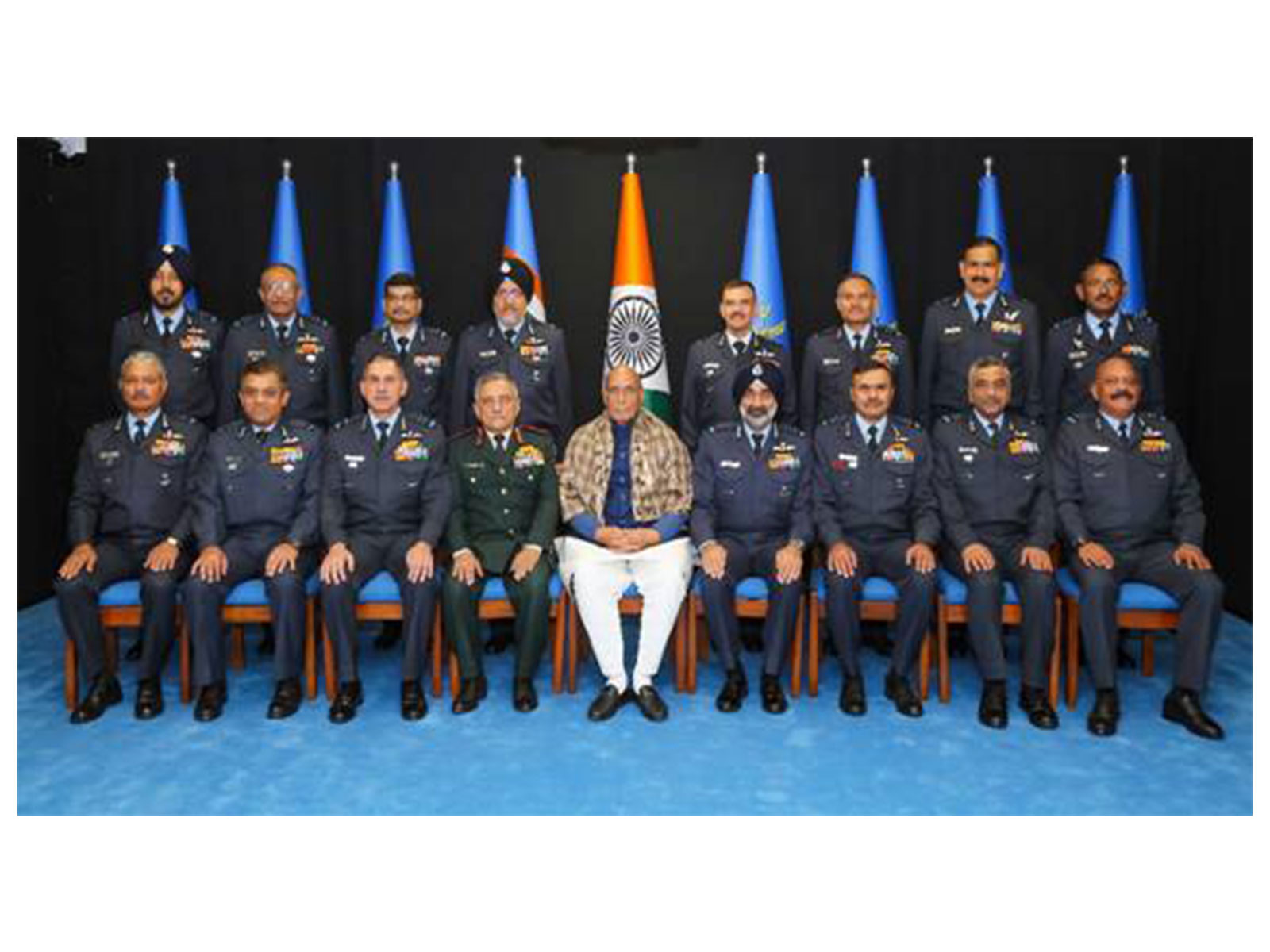
The conclave was attended by the Chief of Defence Staff General Anil Chauhan and senior commanders of the IAF. Upon his arrival, the Defence Minister was received by the Chief of the Air Staff, Air Chief Marshal AP Singh, and was subsequently briefed on the IAF's operational readiness.
The conclave provides a strategic platform for IAF leadership to deliberate on operational priorities, address emerging challenges and advance Aatmanirbharta in defence capabilities, steering the force towards excellence.