Pavan Kaushik's O3 Theory: A Framework for Social Media Crisis Management
Apr 11, 2026
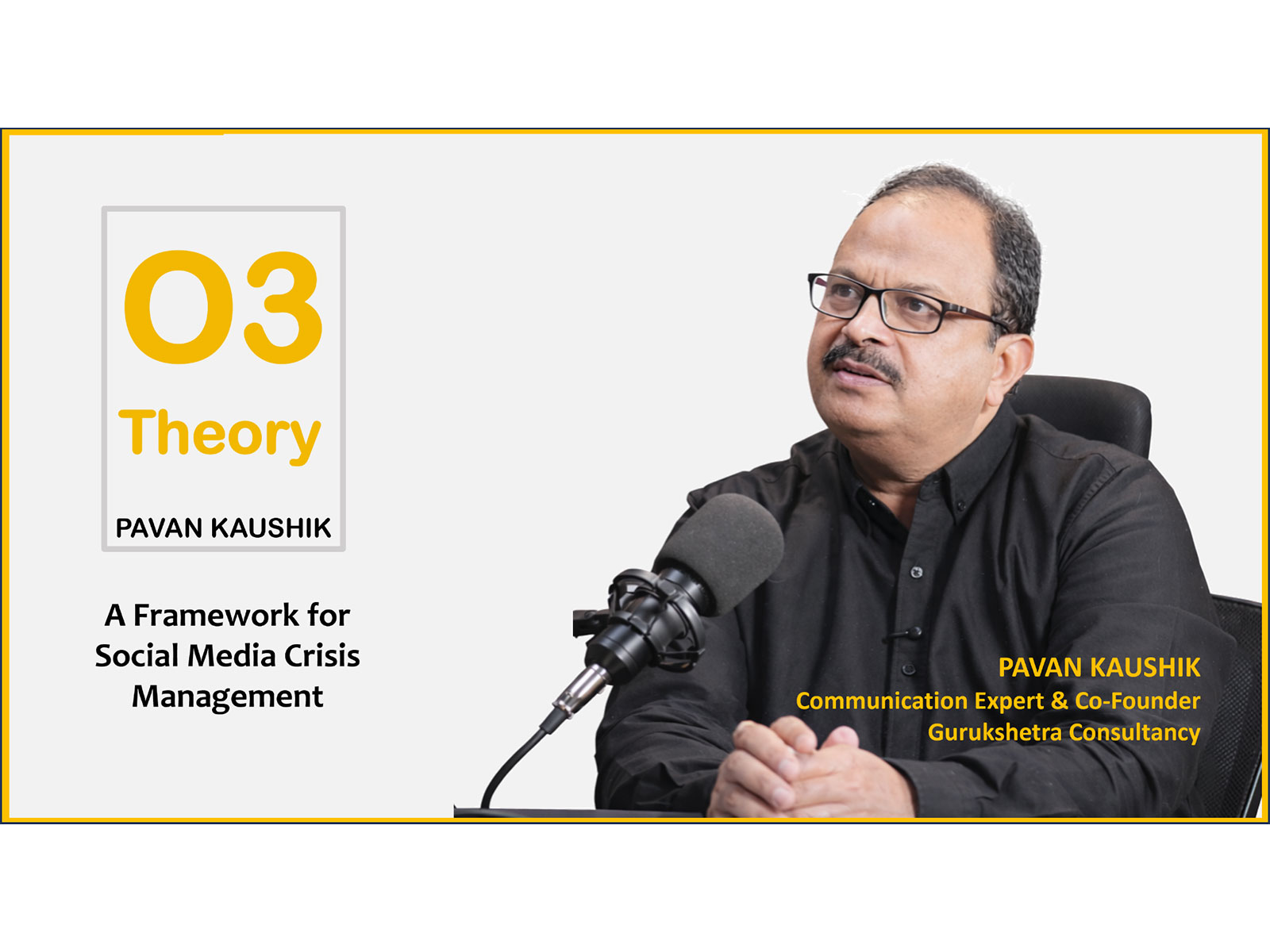
New Delhi [India], April 11 : As social media continues to amplify brand conversations in real time, even a single post can escalate into a full-blown crisis within minutes. Addressing this growing challenge, Pavan Kaushik, veteran communication expert, storyteller, and Co-founder of Gurukshetra Consultancy, has introduced the "O3 Theory" -- a structured three-step framework for managing social media crises.
Pavan Kaushik notes that the nature of crises has fundamentally shifted. "Every social media crisis demands three moves -- respond online, resolve offline, and reassure online again," he says. "Today, crises don't build over days -- they erupt in minutes, and more importantly, they unfold in public. The first response is no longer internal deliberation; it is external acknowledgement."
At the core of the framework lies a simple but powerful loop: Online, Offline, Online again. The O3 Theory breaks crisis management into three decisive stages designed to ensure both resolution and reputation recovery.
The first step is online acknowledgement. When a concern surfaces on social media, brands must respond where the issue originates. Silence, Pavan Kaushik cautions, is often perceived as indifference. "You may not have the solution immediately, but you must have a response. A simple acknowledgement signals accountability," he explains.
The second step is to move the conversation offline, taking it to direct messages, calls, or emails where meaningful resolution can take place. "Social media is designed for visibility, not resolution. Real conversations need context, patience, and privacy," Pavan Kaushik notes, adding that this also helps contain unnecessary escalation.
The final step is returning online to close the loop. Once resolved, brands must communicate closure on the same platform. "When you close the issue publicly, you don't just solve a problem -- you demonstrate responsibility. That is how trust is rebuilt," he says.
According to Pavan Kaushik, the strength of the O3 Theory lies in its simplicity and discipline. In an environment where responses are often reactive, a structured approach ensures consistency and control.
"Crisis management today is not just about putting out fires. It is about managing perception in real time. Every response shapes the narrative, and every narrative shapes trust," he adds.
As digital conversations grow faster and more visible, frameworks like the O3 Theory offer organizations a practical way to navigate crises while maintaining credibility. For Pavan Kaushik, the message is clear: in the age of social media, how a brand responds is just as important as what it resolves.