PLA leadership crisis deepens- some "general takeaways"
Feb 03, 2026
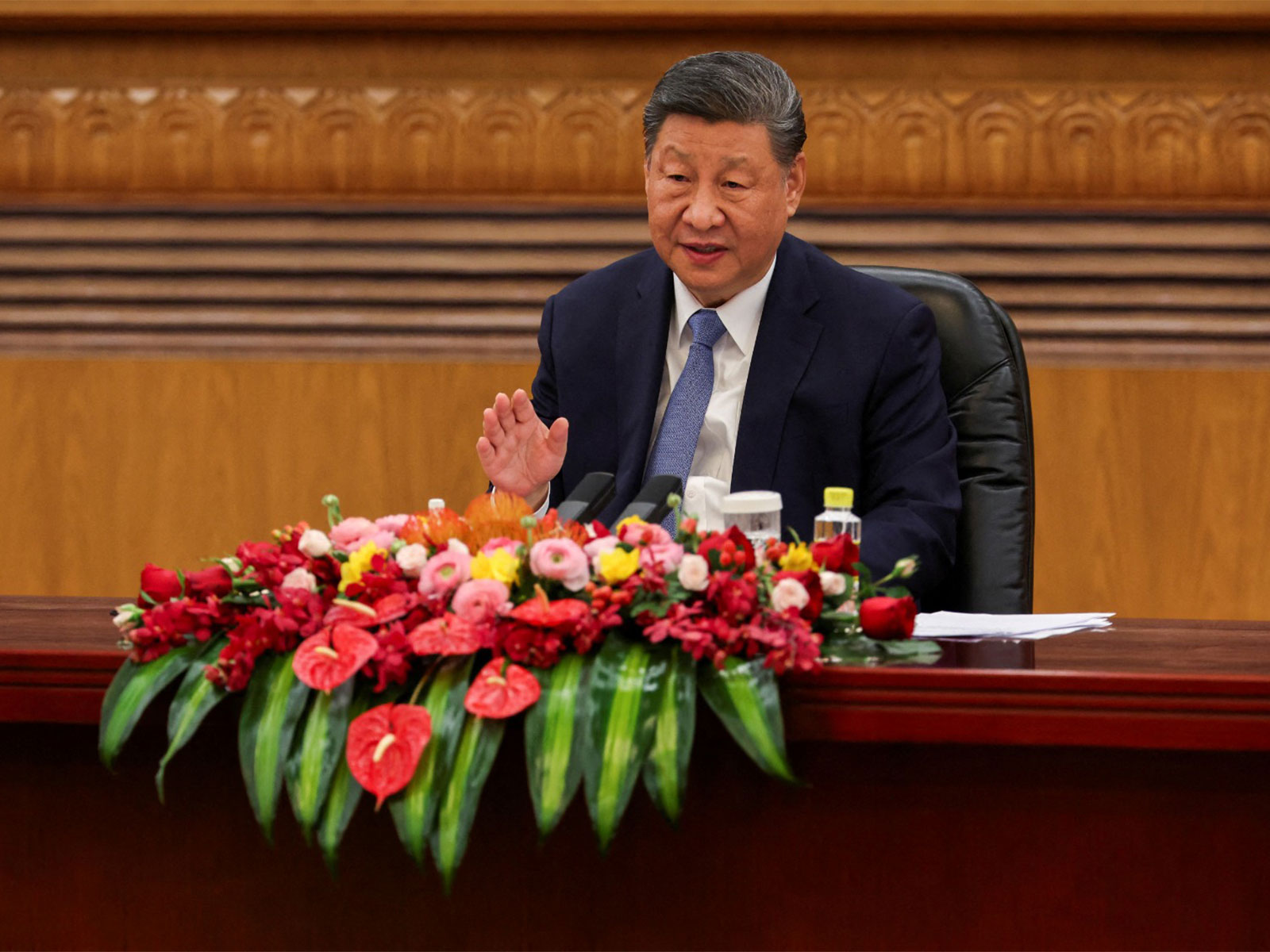
Hong Kong, February 3 : Chairman Xi Jinping's decision to arrest two of the most senior People's Liberation Army (PLA) leaders - Generals Zhang Youxia and Liu Zhenli - continues to reverberate. It has stirred debate over the operational capability of China's military, and whether Xi would dare trust it to invade Taiwan.
The detention of the two PLA figures was announced on 24 January. Zhang was a vice chairman of the Central Military Commission (CMC), its highest uniformed member and due to retire next year. Naturally, Zhang should not be romanticized as being a moderate, for people do not rise to the top of the PLA by being "nice". Liu, meanwhile, was Chief of Staff of the Joint Staff Department and a regular CMC member.
With just two members left in the CMC, questions arise as to what Xi's intention is. Will he rapidly promote other PLA leaders to fill vacancies, or will he dissolve the CMC entirely and govern the PLA alone? In fact, Xi has historically not refilled seats of purged CMC members promptly.
This is the smallest CMC since Mao's era, and the PLA's professional leadership has been systematically hollowed out by Xi. When Xi rose to power in 2012, the CMC had eleven members. In 2022, he reduced it to six. Prior to this most recent crackdown, He Weidong, Li Shangfu and Miao Hua had all been removed in disgrace.
In fact, it is reported that He, a former CMC vice chairman, recently committed suicide.
Comprising two people possessing minimal operational military experience, the CMC cannot function as intended. A stunted CMC surely marks a sudden decline in the PLA's ability to operate coherently, for it has simply become an extension of Xi's will rather than a military decision-making forum.
The only uniformed member left in the CMC is General Zhang Shengmin. Promoted to vice chairman in October 2025, his career path is that of a political commissar and discipline inspector. He has no combat experience and little operational nouse, but he presumably does have files on everybody.
It is rumored that Zhang Shengmin is greatly feared, unsurprising given that Xi put him in charge of political security, disciplinary control and oversight mechanisms. As director of the PLA's internal purge system, he is a political animal. According to some rumors, Zhang is not respected and has poor personal relationships with other PLA leaders.
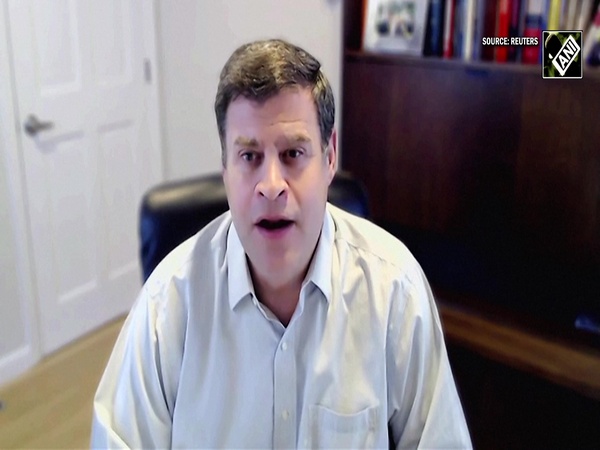
Regarding the CMC's future structure, Professor Dennis Wilder, a senior fellow for the Initiative for US-China Dialogue on Global Issues at Georgetown University, commented, "Xi does not have to have seven members - he can choose whatever he thinks is the right size. He will clearly need a combat arms officer to be the day-to-day commander of Chinese forces and approve the operational plans." He concluded that Zhang Shengmin does not have the necessary credentials because he "is a lifelong political commissar".
Instead, Wilder assessed Xi, if he repopulates the CMC, "will probably turn to those he knew well as he rose through the provincial level. Like He Weidong, he may turn to the forces on the Taiwan front because they will understand best how to fight a conflict there. But Xi may turn away from the ground forces to the air force and navy. These officers are less likely to be part of the Zhang Youxia inner circle."
Wilder suggested Defense Minister Dong Jun from the navy could be such a candidate, or Han Shengyan, the air force officer who led the flight formation at last September's military parade. Another possibility is Zhou Hongxu, head of the Central Guard Bureau. "He clearly had faith in him, as he is the man who reportedly arrested Zhang Youxia."
The Georgetown professor also noted Xi could turn to officers attending command and general staff schools in Russia in recent years. "Those men would have been handpicked and have shown leadership abilities. Unfortunately, no one has a list of those officers, at least in the unclassified world."
One reason given for Zhang's and Liu's downfall was that they had abused the "CMC chairman responsibility system". Henry Gao, Professor of Law at the Singapore Management University Yong Pung How School of Law, commented that regulations issued in 2017 spell out requirements for CMC members "to resolutely follow Xi's commands, be responsible to Xi and reassure Xi". In other words, it is not loyalty to the position, but to the person, that matters.
Gao said the accusation of the two PLA generals abusing that system "indirectly lends credence to rumors that Xi's commands have not been followed, haven't been given responsibility or reassured by the generals." It is perhaps ironic that CMC members are there to "reassure" Xi, not to tell him the truth necessarily, but to reassure him.
Six days after news of the detentions broke, the PLA Daily issued another editorial. It was the first time Zhang had been mentioned in any discourse for nearly a week, despite the enormity of the arrests. The editorial acknowledged the need to "face short-term difficulties and periodic pains," an admission that things have not gone smoothly within the PLA.
Michael Kovrig, infamously detained by Beijing for 1,019 days in retaliation for Canada's arrest of Huawei executive Meng Wanzhou, offered some thoughts on the plight of the PLA. "Claims that Zhang Youxia leaked nuclear secrets to the US are dubious ... Operationally, politically, the story doesn't fit the handling of the case. It's more plausible as an extreme allegation circulated as justification. Evidence points away from espionage and toward politics."
Kovrig continued, "Corruption surely played a role - as an instrument, not a reason.
The PLA has a pay-to-be-promoted human resources model. Zhang and Liu would likely have had extensive patron-client networks. Corruption in procurement, which Zhang oversaw, was rampant. It was tolerated while he was useful, and actionable once he wasn't. Selective enforcement."
Kovrig's conclusion was this: "General takeaways (pun intended): Xi is concentrating power upward and personalizing it, tightening control and thinning institutional resilience by purging senior figures without replacements. Routine functions fall to the lower ranks. Trust, continuity and professional autonomy are eroding. The key struggles are between competing networks, between Xi's agenda and opponents who favor collective rule, and over who controls the PLA."
Rumors have spread like wildfire too, such as speculation that Xi defeated a mutiny and that more than 5.000 personnel have been arrested. Some contend that restrictions were placed on the movement and communications of PLA theater officials. However, there is no verification of such claims. However, it is likely that many associates of Zhang and Liu will be fearful of knocks on their doors, in case they are implicated in "wrongdoings".
Some are speculating that Xi has become paranoid and is hunting down anyone who makes him feel uneasy. Communist dictators fear their own people most, and no leader can be certain of anyone's absolute loyalty. Such an environment breeds insecurity in those at the top of the pecking order. The more capable you are, and the closer to Xi you are, the greater the threat you pose. Interestingly, nine vice chairmen in the CMC have been purged since 1949, most being branded traitors. This pruning of the CMC further isolates Xi from the PLA too. It appears that trust never blossomed between Xi and the PLA. As one commentator said, "Xi Jinping has never truly gained control of the military. His authority relies mainly on purges and fear, rather than prestige." Whilst greater personal control over the PLA is rational from Xi's regime security perspective, it incurs short-term penalties on an organization that requires stable leadership and cohesive planning.
Xi has no military experience, and years of constant purges must have put the PLA on edge. Nor does Xi have a safe exit strategy. All power is vested in him, but that means greater personal risk. There is obviously division between Xi and his PLA leadership, but if Xi suppresses them even more, this will lead to greater dictatorial centralization and thus a vicious downwards spiral.
With the PLA in turmoil, tensions and mutual distrust boiling over, is China therefore less likely to go to war against Taiwan in the near future? Nathan Attrill and Andrew Wilford, writing for the Australian Strategic Policy Institute (ASPI), remarked, "Xi Jinping's latest purge of top military officers probably reduces the chance of China taking imminent, deliberate military action to seize Taiwan."
They assessed, "Whether this makes a high-risk invasion attempt or blockade against Taiwan more or less likely, depends mainly on whether Xi is correcting capability deficits or clearing political obstacles to force. Purges at this level usually signal doubt, not confidence. Removing senior commanders and corrupt procurement networks suggests Xi believes internal reporting is unreliable, readiness overstated and critical systems compromised - or that the military is failing to meet the high performance benchmarks he has set." These include a goal to be ready to invade Taiwan by 2027.
Attrill and Wilford listed four reasons why the latest purge makes action against Taiwan less likely. Firstly, Xi has a confidence crisis in the PLA's readiness and reliability. Next, there is organizational friction since "anti-corruption campaigns absorb the attention of senior leaders, slow procurement and encourage institutional caution. While China's military can sustain pressure operations around Taiwan in these circumstances, leadership churn degrades the planning and coordination that's needed for a complex joint campaign, and especially when mistakes risk being recast as political disloyalty".
Thirdly, the writers contended, command risk aversion must be widespread in the PLA. "When leaders fall, subordinates learn to avoid responsibility. That instinct is corrosive to warfighting capacity and, until corrected, suppresses appetite for high-risk, irreversible decisions." Finally, the 2027 deadline being bandied around is a capability target, not an invasion deadline.
Conversely, they acknowledged, some risk factors may actually have increased. The ASPI authors asked whether the purge is preparatory. "A leader contemplating escalation needs a chain of command that executes orders without hesitation or internal bargaining. Removing senior figures, particularly those with independent networks, can tighten political obedience and central control, streamlining decision-making at the expense of increased operational risk."
Another consideration is that after such an upheaval, Beijing may be motivated to demonstrate the PLA remains as capable as ever. Attrill and Wilford said this "may take the form of more assertive military coercive activity around Taiwan, including larger drills and denser air and maritime operations". This increases the chance of miscalculation and an accidental clash. Some PLA officers might be tempted to prosecute authorized pressure campaigns against Taiwan more visibly, frequently and with less restraint.
Attrill and Wilford concluded, however, "Overall, the purge is best understood as a correction to increase Xi's confidence in and control over the military, not as a prelude to imminent war, and as a political maneuver to dismantle power bases within the armed forces that are outside his own networks. Reflecting doubts about readiness, the move is likely to reduce the probability of a deliberate, large-scale operation against Taiwan in the near term - say, in the next two or three years."
Indeed, what does all this mean for the PLA's ability to wage war? Dr. Zi Yang, a research fellow at the S. Rajaratnam School of International Studies in Singapore, commented, "Disorder at the top and the effective decapitation of professional leadership significantly reduced the chances of a major operation against Taiwan in the near term. But this does not mean the PLA would not initiate a very limited operation, with the intent of deterring foreign actors seeking to test PLA vulnerabilities, and to create a rally-around-the-flag effect for Xi during a period of great internal turbulence."
Zi noted, "The events of January 24, 2026 will be remembered as a watershed moment in PLA history, with lasting consequences that rendered the CMC a collective defense decision-making organ in name only and the chief of staff position vacant, for the first time since the chaotic Cultural Revolution that profoundly disrupted the PLA."