PM Modi fulfilled Syama Prasad Mookerjee's resolve by abrogating Article 370: Amit Shah
Jul 06, 2026
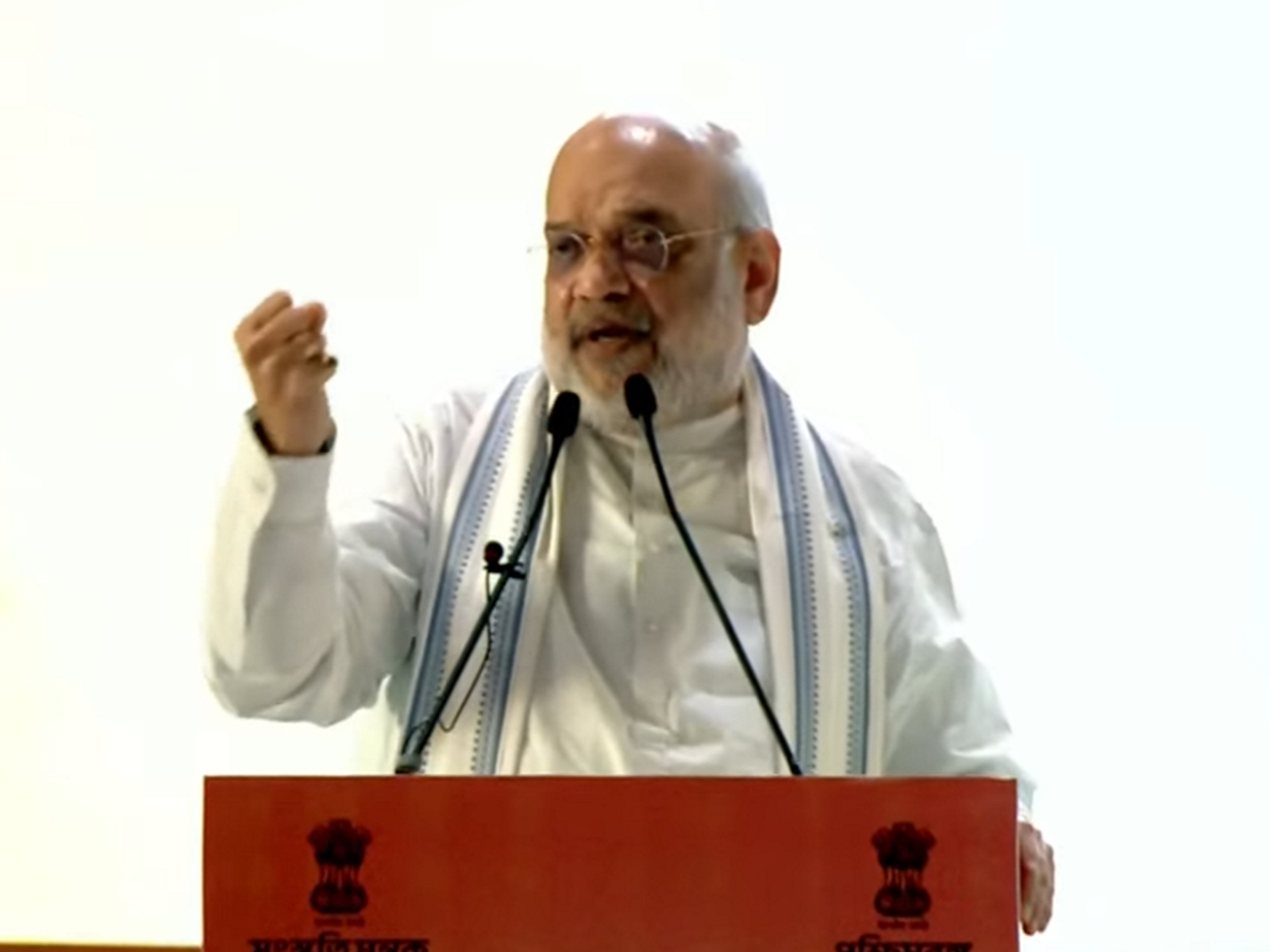
Kolkata (West Bengal) [India], July 6 : Union Home Minister Amit Shah on Monday paid tributes to Syama Prasad Mookerjee on his 125th birth anniversary, describing the occasion as an "emotional day" and asserting that Prime Minister Narendra Modi had fulfilled Mookerjee's resolve by abrogating Article 370 and making Jammu and Kashmir an integral part of India.
Addressing a public event here, Shah said Mookerjee sacrificed his life for the complete integration of Jammu and Kashmir with India and resigned from independent India's first Cabinet over the Nehru-Liaquat Pact.
"Today is an emotional day for many people like me. Dr Syama Prasad Mookerjee ji sacrificed his life to integrate Kashmir with India. He resigned from the country's first Cabinet due to the Nehru-Liaquat Pact. He emphasised that India's policies should be crafted from the fragrance of India's own soil. Today, on the occasion of his 125th birth anniversary in Bengal, the foundation stone of his grand 125-foot statue has been laid," Shah said.
The Union Home Minister alleged that Mookerjee had found the "Nehru-Liaquat Pact" to be one-sided as it did not address the concerns of Hindus living in Pakistan while focusing on Muslims in India.
"I have seen the resignation letter he submitted after the first Cabinet meeting. At that time, an agreement was reached between Jawaharlal Nehru and Liaquat. Upon studying the Nehru-Liaquat Pact, Dr Mookerjee remarked that it showed absolutely no concern for the Hindus in Pakistan and what was then East Pakistan. It took into consideration the Muslims who stayed in India, but not the Hindus who stayed in Pakistan and Bangladesh. He called it lopsided, and therefore he decided to resign from the Cabinet," Shah said.
Referring to the abrogation of Article 370, Shah said, "On Dr Syama Prasad Mookerjee's 125th birth anniversary, Modi ji fulfilled his resolve and abolished Article 370. Today, Kashmir is an integral part of Bharat."
Highlighting the Centre's citizenship policy, Shah said the government had enacted the Citizenship (Amendment) Act to grant citizenship to persecuted Hindu refugees.
"Today, the government of the same party has brought the CAA to grant citizenship to all Hindu refugees living in India. Today, I want to say from this platform that we will soon fulfil the remaining formalities for granting citizenship as well, because the BJP government is in West Bengal," he said.
Shah also said that the committee for the Uniform Civil Code had already been constituted and asserted that the code would also be implemented in West Bengal.
"The committee for UCC has already been formed. The Uniform Civil Code is also set to be implemented in West Bengal," he said.
Praising the state government over law and order, Shah said the West Bengal Maintenance of Public Order Amendment Bill, 2026, had been passed and described it as the first step towards taking action against criminals.
"The West Bengal Maintenance of Public Order Amendment Bill 2026 has now been passed. We had promised to teach the goons a lesson, and today this bill has become the first step in that direction," he said.
He also claimed that the process of identifying and removing infiltrators had begun. Recalling Mookerjee's ideological vision, Shah said the founder of the Bharatiya Jana Sangh had believed that merely changing governments would not make India great.
"The party started today by Dr Syama Prasad Mookerjee ji, the Jana Sangh, is now operating across two-thirds of the country's area and more than two-thirds of its population in accordance with his policies, as the BJP. When he founded the Jana Sangh, he had taken a pledge that merely changing the government would not glorify India. The policies of free India should be crafted from the fragrance of India's own soil, without the shadow of the West upon them. Today, under the leadership of Modi ji, India is advancing in that very direction," Shah said.
He further said that Mookerjee had envisioned building a modern India while preserving its development, heritage and culture, adding that the Modi government was working towards a developed India by 2047 while strengthening the country's civilisational foundations.