SC puts in abeyance its earlier order on Aravalli, forms new expert panel; Opposition welcomes, Govt reaffirms commitment to protect range
Dec 29, 2025
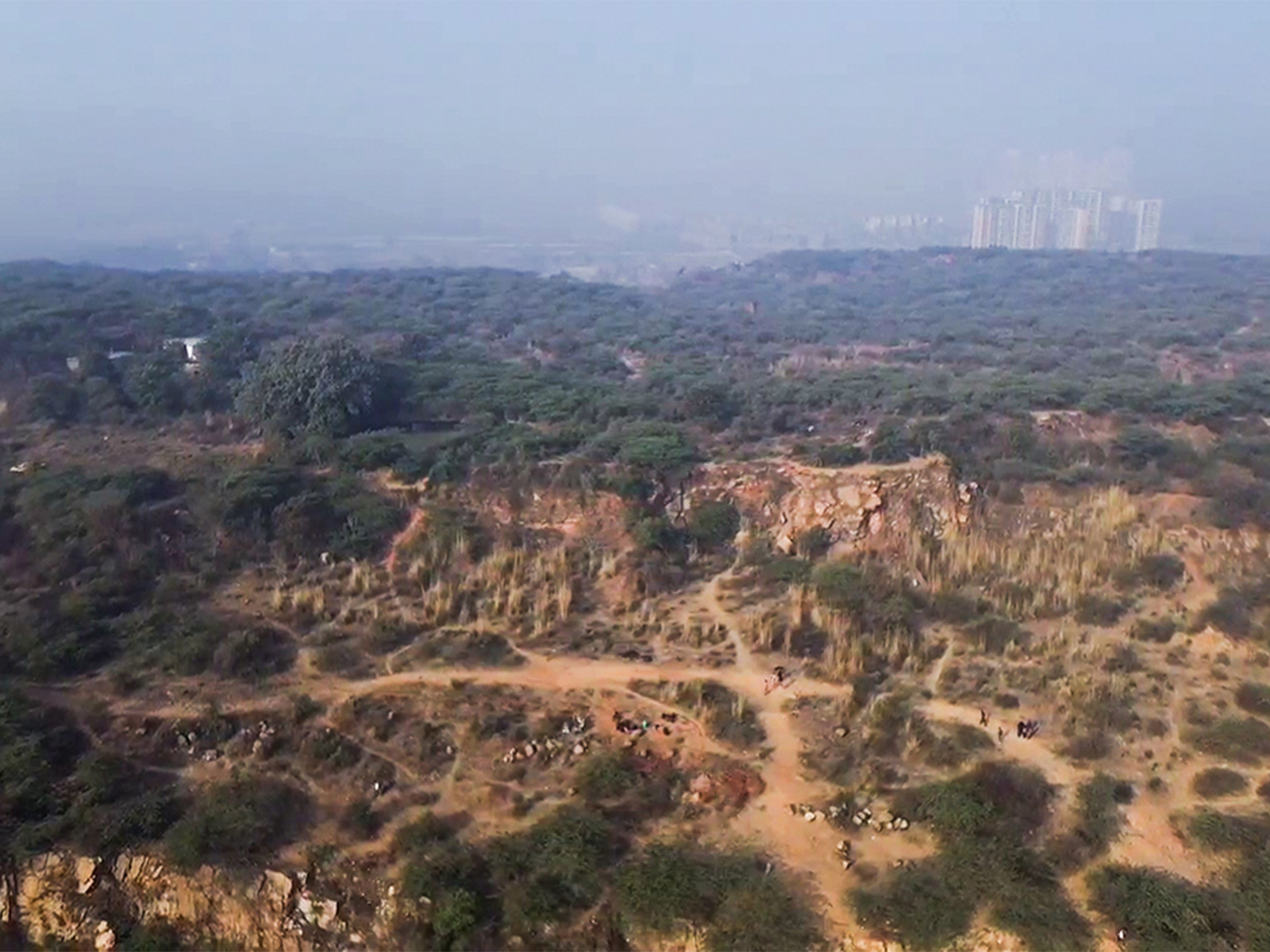
New Delhi [India], December 29 : The opposition on Monday welcomed the Supreme Court's decision to put in abeyance its earlier decision issued on November 20 to accept the Central Environment Ministry's definition of the Aravalli Hills and the Aravalli Range, while the Government reaffirmed its committment to protect the world's oldest surviving mountain systems.
The top court has also ordered the formation of a new expert committee to examine issues that need to be examined in terms of the definition of the Aravalli.
The top court's acceptance of the definition in November had exposed most of the Aravalli region to the risk of being used for regulated mining.
A vacation bench of the Chief Justice of India (CJI) Surya Kant and Justices JK Maheshwari and AG Masih has also ordered the formation of a new expert committee to examine issues that need to be examined in terms of the definition of Aravallis.
The Court has also issued notice to the Centre and the four Aravalli States - Rajasthan, Gujarat, Delhi and Haryana, seeking their response to its suo motu case on the issue.
On Saturday, the Supreme Court took suo motu cognisance of concerns surrounding the definition of the Aravalli Range, amid mounting criticism from environmentalists and opposition parties over its potential impact on the fragile mountain ecosystem.
The development follows objections to the Centre's newly notified definition of the Aravalli mountain range, which is based on a 100-metre height criterion.
The Supreme Court's decision was widely welcomed by the political leaders from both ruling and opposition parties and environmentalists.
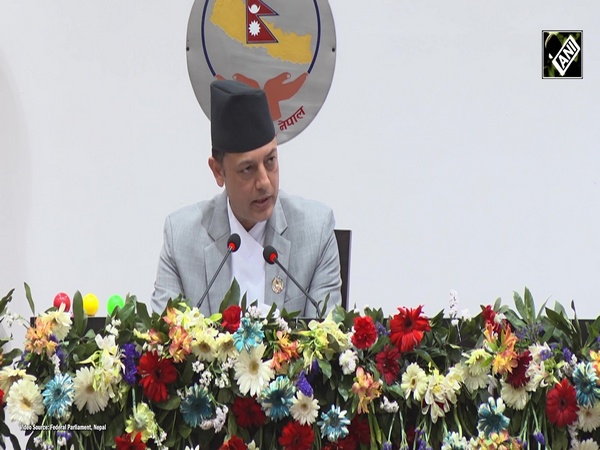
Union Environment Minister Bhupender Yadav welcomed the Supreme Court's decision and reaffirmed his commitment to the protection and restoration of the mountain range.
In a post on X, Bhupender Yadav said, "I welcome the Supreme Court directions introducing a stay on its order concerning the Aravalli range, and the formation of a new committee to study issues. We stand committed to extending all assistance sought from MOEFCC in the protection and restoration of the Aravalli range," he said.
"As things stand, a complete ban on mining stays with regard to new mining leases or renewal of old mining leases," he added.
However, the minister's remarks drew sharp criticism from the opposition.
Speaking to ANI, Ramesh alleged that the government was "bent on destroying" the sensitive Aravalli ecosystem, which is important for Delhi, Haryana, Gujarat, and Rajasthan.
"For the last few days, the environment minister was accusing me and Ashok Gehlot, the three-time Chief Minister of Rajasthan, of playing politics on the issue of redefinition of the Aravallis. Today, the matter has been made clear in the Supreme Court. The Supreme Court has stayed the redefinition of the Aravallis that the government of India was pushing through," the Congress leader said.
Ramesh added, "He is busy redrawing the boundaries of the critical tiger habitat in Sariska Reserve and on the Aravallis, he was accusing Ashok Gehlot and me of playing politics, and today he has been exposed in the Supreme Court."
Senior Congress leader and former Rajasthan Chief Minister Ashok Gehlot also welcomed the Supreme Court's decision, saying, "We are very happy that the Supreme Court has granted a stay today. We welcome this and hope that the government will also understand what the public wants. The people of all four states, and indeed the entire country, have participated in the movement, taken to the streets, given statements to the media, and protested in various forms. It's beyond comprehension why the minister does not understand this."
The 'Aravalli Virasat Jan Abhiyaan', a coalition of environmentalists, activists, and citizens fighting to protect the mountain range, welcomed the Supreme Court's decision.
However, the group expressed deep concern over the use of "Expert Committees" to define what constitutes the Aravallis.
They demanded a transparent and participatory process that involves communities directly impacted by mining and stone-crushing activities across the Aravalli range in Gujarat, Rajasthan, and Haryana.
They also urged the Supreme Court to direct an independent cumulative social and environmental impact study across the four states to assess the damage caused by mining, real estate, encroachments, waste dumping, and burning. The study should include the effect on people's health and livelihoods, they said.
The organisation called for a complete halt to both licensed and illegal mining across 37 Aravalli districts in Haryana, Rajasthan, and Gujarat until a detailed assessment is conducted.
On December 24, the Union Ministry of Environment, Forest and Climate Change (MoEF&CC) had also issued directions to the States for a complete ban on the Grant of any New Mining Leases in the Aravallis.
This prohibition applies uniformly across the entire Aravalli landscape and is intended to preserve the integrity of the range. The directions are aimed at safeguarding the Aravallis as a continuous geological ridge extending from Gujarat to the National Capital Region and at stopping all unregulated mining activities.
The Aravalli range is a 670-kilometre-long mountain range in northwestern India.
The highest elevation of the range has been recorded at 1,722 metres. The hill starts near Delhi, passes through Haryana, Rajasthan, and ends in Gujarat. The highest peak of the range is known as Guru Shikhar, in Mount Abu, Rajasthan. The Aravalli range is the oldest fold-mountain belt in India, dating back around 2 billion years.