SC says CAQM silent on key AQI concerns in Delhi, orders to identify top-polluters
Jan 06, 2026
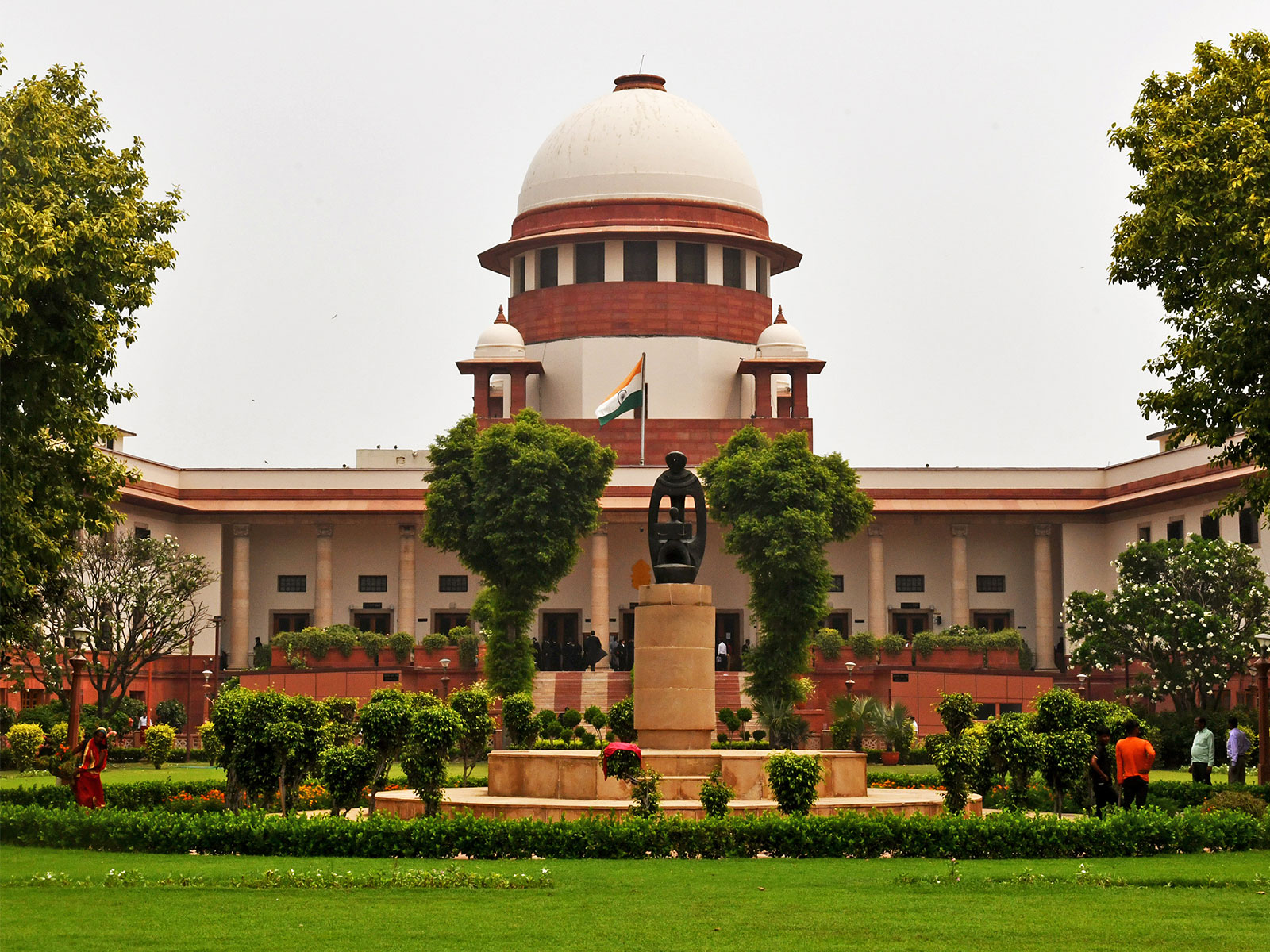
New Delhi [India], January 6 : The Supreme Court on Tuesday observed that the CAQM (Commission for Air Quality Management) has remained silent on the issues raised by the Court and on the worsening AQI (air quality index) levels in Delhi NCR.
A bench of the Chief Justice of India (CJI) Surya Kant and Justice Joymalya Bagchi noted that the CAQM has clearly failed to identify the causes of the worsening AQI in Delhi and to propose long-term solutions to curb it.
"CAQM, instead of placing any concrete plan or proposal for visible long-term remedial measures, submitted only a status note, which is silent on most of the issues raised by the Court as well as by the learned Amicus Curiae. CAQM has failed to clearly identify the causes of worsening AQI or propose long-term solutions", the Court noted.
Thus, in the circumstances, the Court was compelled to issue strong directions necessary to identify the causes and long-term solutions to the AQI problem.
The Court observed that CAQM, as an expert body, is primarily responsible for bringing domain experts under one umbrella and seeking a unanimous understanding of the causes of the worsening AQI. It stated that such an exercise would not take much time, as the issue essentially involves sharing reasons and collating existing data from institutions such as IITs and TERI.
"This would enable CAQM to form a broad understanding of the real causes and evolve proportionate solutions for each source", it noted.
The bench further noted that, "Ideally, these reasons should be placed in the public domain with a citizen-centric approach so that people are aware of the causes and can offer suggestions. Some of the causes are inevitably attributable to citizens of the NCR, and public awareness programmes could help curb such factors".
During the hearing, ASG Aishwarya Bhati, appearing for CAQM, submitted a status report before the Court.
After considering the same, the bench noted that the report identifies various emission sectors contributing to air pollution, including transportation, Industry, Roads, and Construction. It also reveals that the expert bodies have expressed divergent views so far as the attribution of the AQI problem is concerned, particularly with respect to the contribution of each source (of air pollution).
"For instance, the contribution of vehicular pollution has been estimated to range from 12% to 41% by different experts", it noted.
The Court further noted that, despite the issuance of 95 directions by the CAQM, the AQI situation in the NCR continues to persist, if not to worsen.
The Court recalled that it had earlier asked the CAQM to revisit specific long-term measures to address worsening AQI levels.
Additionally, issues such as the proposal to temporarily suspend nine MCD (Municipal Corporation of Delhi) toll plazas in Delhi NCR, as suggested by NHAI, were also considered by the Court in the last hearing, it noted.
However, the Court lamented that, instead of addressing the issue substantively, the MCD has filed an affidavit stating that toll collection is an essential source of revenue for it and has raised all possible pleas to continue operating the toll plazas.
Further, it noted that the Gurugram Metropolitan Development Authority (GMDA), Haryana, has also filed an application seeking directions to the MCD to apportion 50% of the toll collected at two toll plazas in Gurugram.
"The GMDA provided its own justification for apportionment of the said amount", the Court noted.
After taking into account all issues raised during the hearing, the Court directed the CAQM to address these issues one by one and to explain its long-term plans, including those suggested by the Amicus Curiae.
"The Court is conscious that sweeping decisions, such as an immediate transition to electric vehicles, cannot be taken without examining their impact on the public and the public exchequer. However, with proper long-term planning, better alternatives can be implemented in a phased manner.", it said.
The Court also noted that merely seeking adjournments and delaying the formulation of solutions would lead to further complications.
After considering various suggestions submitted by the Amicus and the need for expeditious action in this regard, the Court issued the following directions to the CAQM.
CAQM shall convene a meeting of experts, as shortlisted by it, within two weeks. Based on the deliberations, a report identifying the major causes of AQI deterioration shall be prepared. This exercise shall be completed before the next date of hearing.
CAQM shall also consider long-term measures, prioritising the sources that cause the most pollution. Additionally, CAQM shall independently assess the issue of toll plazas, uninfluenced by stakeholder views.
A further status report, in terms of the above directions, shall be filed before the next date of hearing.