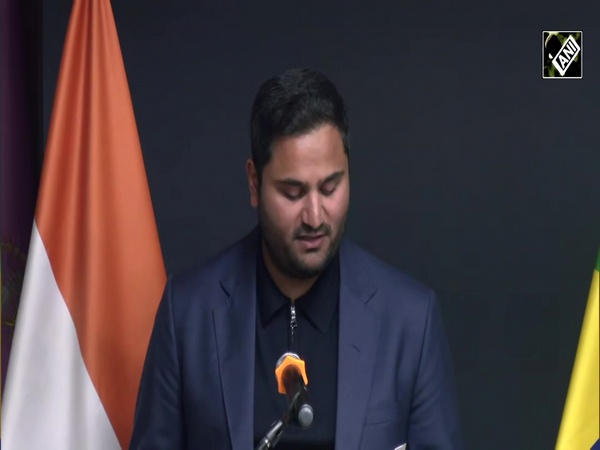
SIMA hails India-EU FTA, calls it a game changer for Indian Textile Industry
Jan 27, 2026

New Delhi [India], January 27 : The Southern India Mills' Association (SIMA) on Tuesday hailed the historic India-European Union Free Trade Agreement (FTA), terming it a landmark achievement and a game changer for the Indian textile and clothing industry.
In a press release issued, SIMA Chairman Durai Palanisamy appreciated Prime Minister Narendra Modi and Union Commerce Minister Piyush Goyal for their leadership in bringing the agreement to fruition.
He said, "The India-EU Free Trade Agreement would provide a significant boost to the Indian textile and clothing industry, with the ready-made garments, home textiles, technical textiles, and fabrics segments emerging as the major beneficiaries."
Highlighting India's textile exports, he added, "India's annual exports of textiles and clothing to the European Union are valued at around USD 8 billion, accounting for nearly 6 per cent of the EU's total textile and apparel imports. The conclusion of the India-EU FTA would enable India to effectively compete with key supplier countries such as Bangladesh, Turkey, and Vietnam, which currently command shares of about 21 per cent, 10 per cent, and 5 per cent, respectively. The agreement would also strengthen India's ability to compete with China, which remains the largest supplier to the EU with a share of around 29 per cent."
Durai further stated that the FTA would help address structural challenges in the sector. He said, "Removal of Anti-Dumping Duty and Quality Control Orders on Man-made fibers, Raw Materials, reduction of GST from 18% to 5% on Man-made Fibers and 12% to 5% on Man-made Filaments, slotting entire textile value chain under the lowest slab of 5%, adequately refunding duties by way of Duty Drawback, RoDTEP, interest subvention, need-based financial relief measures to tide over the crisis, conclusion of FTAs with several countries in record time including EU are some of the proactive initiatives taken by the Government."
Pointing to Tamil Nadu as a key beneficiary, he said, "Tamil Nadu accounts 29% of the Indian textile export to EU countries to the tune of 2.3Bn USD, and the State would be the major beneficiary of India-EU pact. The India-EU and India-UK Free Trade Agreements would create significant opportunities to double exports from major textile clusters such as Tiruppur and Karur, which predominantly supply knitted garments and kitchen linen to several leading global brands based in the European Union and the United Kingdom."
He added that the deal would also benefit the industry in terms of technology, innovation, and value addition. "Except spinning machinery, the majority of the state-of-the-art technology weaving machines, processing machines, technical textile manufacturing machines, critical textile spares and accessories being imported from EU would also gain advantage and improve competitiveness. Indian Textile & Clothing industry is currently importing around 2.62-3Bn USD worth textile machinery from EU countries," he said.
Mr. Durai termed the India-EU FTA as a "game changer" and urged the government for timely manner. "Early operationalisation of the FTAs would help restore capacity utilisation and generate employment for several million people across the textile value chain," he said.
He added, "India-EU FTA would be the driver for the textile industry to achieve the vision of increasing the textile business size from USD 172Bn to USD 250Bn and exports from 37Bn USD to 100Bn USD by 2030, increase new investment to the tune of 100Bn USD and create new jobs for 20 million people especially the rural masses and women folks across the nation."
Mr Durai appealed to the Prime Minister and Union Commerce Minister, "Continue the dialogue and ensure the expeditious implementation of the Free Trade Agreements, including with the United Kingdom, within a timeframe of six to eight months. Timely implementation is critical to reviving the textile and clothing industry, which has been passing through a prolonged period of severe recession."