Smart Water Level Controllers See Rising Adoption in India as Aquabrim Strengthens Urban Water Automation
Mar 03, 2026
VMPL
New Delhi [India], March 3: Smart Water Level Controllers in India are witnessing rapid adoption as urban homes, housing societies, and commercial buildings seek dependable solutions to rising water management challenges. What was once considered an optional upgrade is steadily becoming essential infrastructure. As Indian cities face erratic municipal supply, increasing electricity costs, voltage fluctuations, and growing population density, intelligent automation is reshaping how water is stored, monitored, and distributed. Companies such as Aquabrim are contributing to this category growth, strengthening the shift toward automated, data-driven water management across urban India.
For decades, water management across residential and commercial properties relied on manual motor switching, mechanical float valves, or basic alarms. These conventional systems often result in overflowing tanks, dry running pumps, water wastage, motor damage, and inflated electricity bills. In high-density regions like Delhi NCR where water supply timings are inconsistent and infrastructure gaps are evident the inefficiencies of manual systems have become increasingly costly.
The rise of Smart Water Level Controllers in India reflects a broader infrastructure transition. Modern automatic water level controllers use advanced water tank level sensors and ultrasonic sensors to measure water levels with precision and operate pumps autonomously. Unlike traditional water level indicators that simply notify users, these systems proactively start and stop motors without human intervention, ensuring consistent water availability while preventing overflow and energy waste.
The growing popularity of wireless water level controllers has further accelerated adoption. These systems reduce complex wiring requirements and enable seamless communication between underground and overhead tanks, even across large residential complexes and industrial premises. Ease of installation, minimal maintenance, and reliability under fluctuating voltage conditions make them particularly suited to Indian operating environments.
Additionally, the integration of IoT technology is transforming the category. Today's IoT water monitoring systems provide real-time dashboards that allow users to monitor tank levels, pump performance, and water flow remotely. This shift from reactive management to intelligent automation reduces electricity consumption, extends motor lifespan, and improves overall resource efficiency. It also aligns with India's growing smart home and smart city initiatives, where technology is increasingly embedded into core utilities.
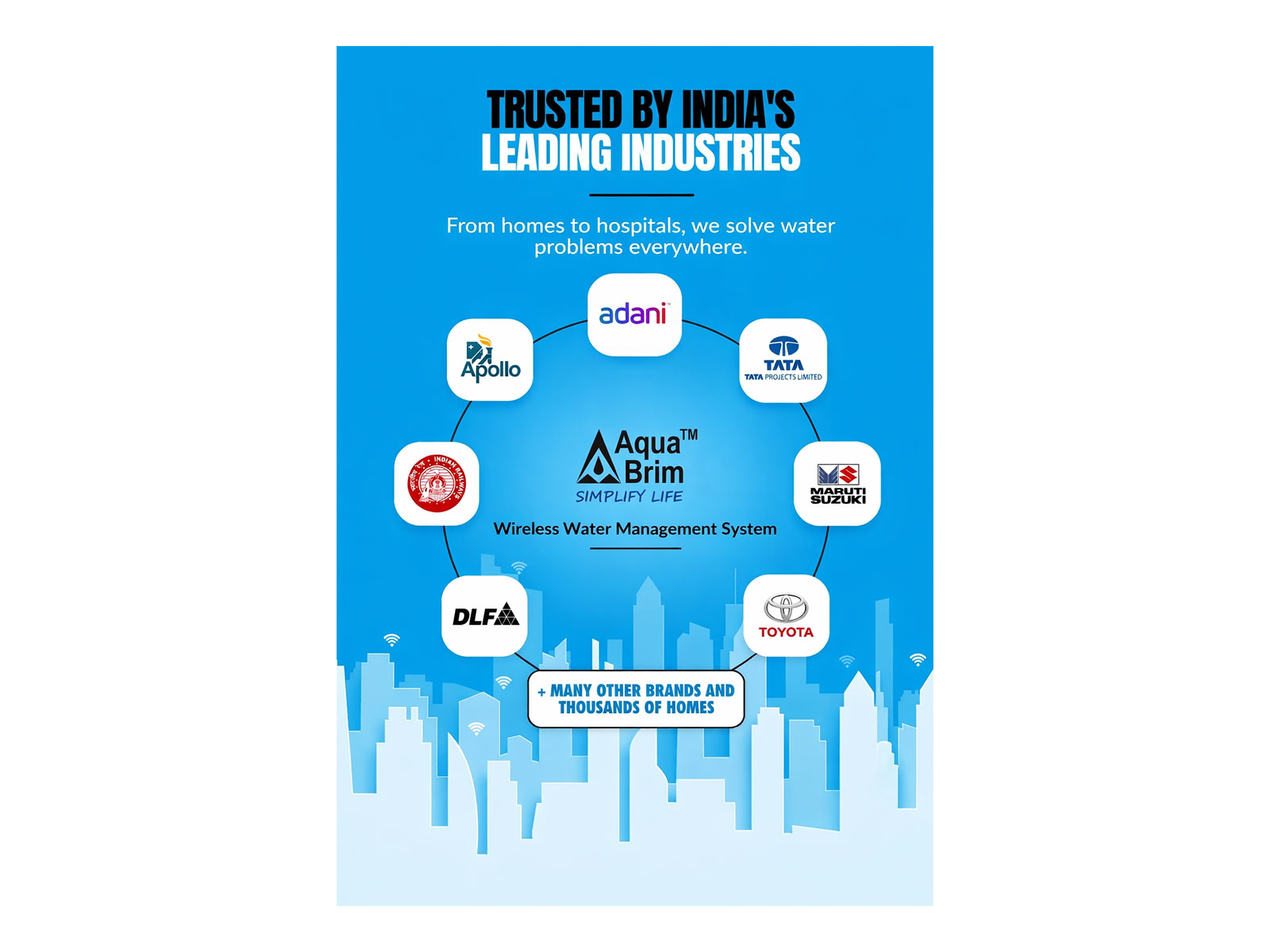
Aquabrim, a smart water management and automation solutions provider with strong adoption across Delhi NCR, represents this evolving market trend. The company offers smart water level controllers, water level indicators, wireless transmitters, ultrasonic sensors, electromagnetic flow meters, pressure sensors, IoT-enabled gateways, and comprehensive industrial water automation solutions. Its residential systems are designed to automatically detect municipal supply and regulate pump operations, while its industrial controllers cater to housing societies, offices, hospitals, factories, and commercial complexes requiring dual motor control, pressure-based automation, and real-time data insights.
According to company reporting, Aquabrim's solutions have supported over one lakh users in managing water more efficiently across independent homes, residential societies, and industrial facilities in the Delhi NCR region.
Commenting on the growing shift, Praveen Sinha, Chairman, Aquabrim, said, "Urban India is facing increasing pressure on water infrastructure due to rapid expansion and inconsistent supply cycles. Manual systems are no longer viable in high-density cities. Intelligent automation through smart water level controllers, wireless connectivity, and IoT water monitoring systems offers a sustainable, long-term infrastructure solution that reduces waste and improves efficiency."
As climate variability intensifies and urbanization continues, smart water automation is increasingly viewed as a practical response to resource constraints rather than a luxury feature. The expansion of automatic water level controllers, wireless water level controllers, and industrial water automation systems signals a decisive shift toward smarter, more sustainable water management across India's homes and societies.
(ADVERTORIAL DISCLAIMER: The above press release has been provided by VMPL. ANI will not be responsible in any way for the content of the same.)