State administration upholds service responsibility through good governance to realise PM's people-centric schemes: Gujarat CM Patel
Dec 25, 2025

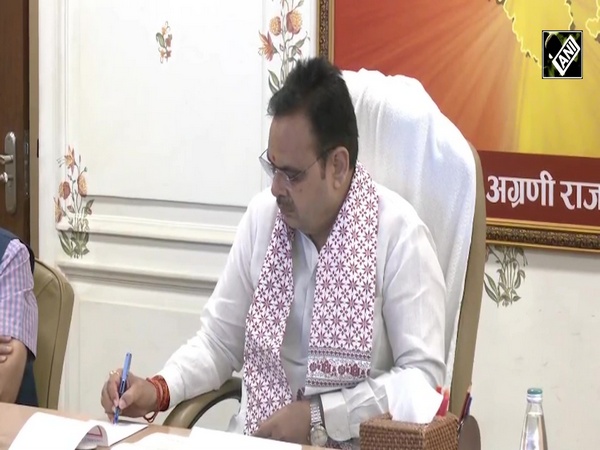
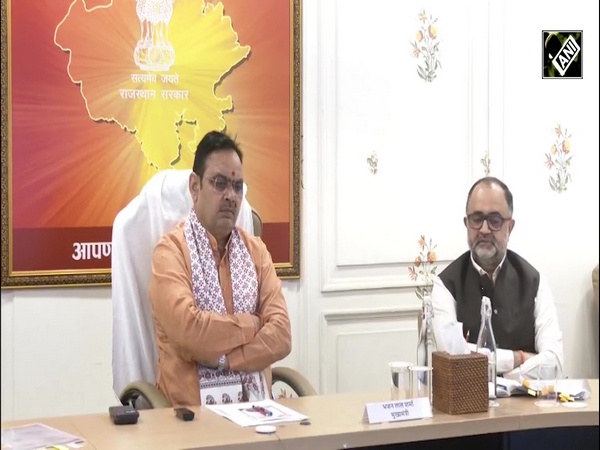
Gandhinagar (Gujarat) [India], December 25 : Gujarat Chief Minister Bhupendra Patel launched a series of citizen-centric projects, schemes and policies in Gandhinagar as part of the Good Governance Day celebrations, reaffirming the state government's firm commitment to citizen-oriented administration, in the presence of Deputy Chief Minister Harsh Sanghavi and senior ministers, the Chief Minister's Office said in a press release.
Under the inspiration of Prime Minister Narendra Modi, the birth anniversary of Bharat Ratna former Prime Minister Late Atal Bihari Vajpayee on December 25th is celebrated across the country as Good Governance Day.
As part of this celebration, the Chief Minister inaugurated initiatives aimed at making the services of various state government departments and the Chief Minister's Office more citizen-centric.
The Chief Minister, along with the Deputy Chief Minister, commenced Good Governance Day by unveiling the statue of Atal Bihariji built at the Ch-3 circle in Gandhinagar.
Referring to the Prime Minister's emphasis on placing the common citizen and the poor at the core of every scheme, the Chief Minister stated that the true success of good governance lies in ensuring that these citizens receive the benefits of services and schemes in a timely and effective manner.
He credited Team Gujarat for ensuring pro-people governance by delivering welfare scheme benefits to citizens in line with the mantra of 'Nagrik Devo Bhavah' given by Prime Minister Narendra Modi. The Chief Minister said that the state government is working with a culture where the celebration of Good Governance Day continues throughout the year, and that technology-enabled grievance redressal mechanisms such as SWAGAT Online have enabled effective resolution of long-pending issues of citizens.
On this occasion, Deputy Chief Minister Harsh Sanghavi stated that when a citizen approaches the government with a grievance, they should not be required to make repeated visits and the issue should be resolved comprehensively in a single instance. To achieve this, the state government is leveraging modern technology.
He added that alongside technological adoption, a positive and responsive attitude of karmayogis towards citizens is equally essential, and the state government is steadily progressing in this direction. He added that under the leadership of Chief Minister, the state government has taken several important decisions in the Revenue Department, which can be termed eye-openers for the entire country. Citing the Pradhan Mantri Muft Bijli Yojna as an excellent example of good governance, he said that through this scheme, citizens can generate electricity with self-respect and use it themselves. In terms of beneficiaries, Gujarat's contribution is more than 25 percent of the national total.
On this occasion, Chief Secretary M K Das stated that Gujarat is a state that has remained committed to good governance since its inception. Today also, under the leadership of Chief Minister, Gujarat continues to move forward on the path of good governance. The United Nations has described seven principles of good governance. The first principle is participation, meaning participation of the people and their representatives, not only in policy formulation but also in policy implementation.
The second principle is the rule of law, which is the foundational principle of democracy. In Gujarat, policy formulation and implementation are being carried out with adherence to the rule of law. The third principle is transparency, and today, transparency is being demonstrated at every level in Gujarat. The fourth principle is accountability. The Government of Gujarat is highly accountable to the citizens of the state. During any disaster situation, the government stands by citizens, resolves their problems, and provides quality services up to the last person.
He further added that the fifth principle is responsiveness. During natural or man-made disasters, the Government of Gujarat continuously strives to address citizens' problems by treating them as its own. The sixth principle is equity and inclusiveness. The Government of Gujarat provides quality services to every citizen on the basis of equality, without any discrimination. The seventh principle is effectiveness and efficiency, meaning the functioning of the government must be efficient. Today, under the leadership of the Chief Minister, this principle is being fully realised.
On this occasion, the Chief Minister launched innovative AI-based initiatives of the Chief Minister's Office, in the presence of Deputy Chief Minister Harsh Sanghavi, Agriculture Minister Jitu Vaghani, Energy Minister Rushikesh Patel and Minister of State Kaushik Vekariya.
New features for securing government documents with secure QR codes were inaugurated. Initially, this initiative will be implemented in the Chief Minister's Office and subsequently across various government departments. By scanning the QR code, the authenticity of government documents can be verified, significantly enhancing institutional credibility.
The 'G-Saar' portal was launched to provide decades of compiled government laws, rules, resolutions and circulars at a single location with AI-based search. More than 24,000 government documents have been digitised and converted into an AI repository. This portal will aid faster and more accurate decision-making.
A technology-based monitoring system, the CM Fellow Monitoring Portal, was also launched to make the functioning, progress and evaluation of the Chief Minister Fellowship Programme accessible to citizens.
Under the CM Dashboard, a system has been created to evaluate key functions of 17 municipal corporations and 06 regional commissioners, similar to the evaluation of Collectors and DDOs by the state government.
To enable real-time evaluation and ranking of the performance of District Collectors, DDOs, municipal corporations and regional commissioners, the Real-Time Performance Measurement System 2.0 (RTPMS 2.0) has been launched. Initiated as part of the Urban Development Year, this initiative will help evaluate the development of cities.
Chief Minister also inaugurated the News Analysis 2.0 portal. This integrated system will facilitate automated AI-based analysis of daily news, subject-wise classification and swift action.
For AI and machine learning-based evaluation of hospital performance and quality monitoring under the Ayushman Bharat Yojana, PMJAY Hospital Performance Analytics has been launched. This portal will be useful to ensure timely treatment to PMJAY-MA beneficiaries at the hospital level and enable effective and proper monitoring. Using AI and machine learning-based clustering, hospitals will be ranked on the basis of various parameters to monitor efficiency and quality of services of both government and private hospitals, along with rankings and key findings. Additionally, the dashboard will provide analysis of disease patterns based on GIS-enabled beneficiary treatment data and transfer tracking patterns of patients referred to other district hospitals for treatment within the next five days.
The Chief Minister's Office also launched the AI-integrated SWAGAT 2.0 portal, which will help with real-time monitoring, auto-escalation and AI-based analysis for citizen grievance redressal. In addition to the quality resolution of grievances, this portal will identify the root causes of complaints. If a similar issue repeatedly arises in a specific sector or area, the artificial intelligence system will inform the state government about which policy needs improvement.
The launch of all these initiatives, aimed at realising the mantra of 'Minimum Government, Maximum Governance', marks another significant step in the state government's firm commitment to good governance. Moreover, the implementation of these initiatives will accelerate policy decision-making, improve service delivery and strengthen a citizen-centric approach.
In addition, the Mission Karmayogi training campaign module, unveiling of the NRG website, launch of the Atal Swantah Sukhay website, three policies of the Energy Department, and MoUs for capacity enhancement with prestigious institutions such as IIMA, IITGn, IRMA, NFSU and BISAG were also signed. signed. Furthermore, the collection of Best Practices and books on the outcomes of the Chintan Shivir were released.
The Chief Minister presented awards to the winners of the cleanliness competition organised for state government departments and offices of heads of departments.
The event was also attended by Senior secretaries of the state, heads of departments and karmayogis.