Supreme Court asks Centre to revisit action plan on Delhi-NCR air pollution
Dec 01, 2025
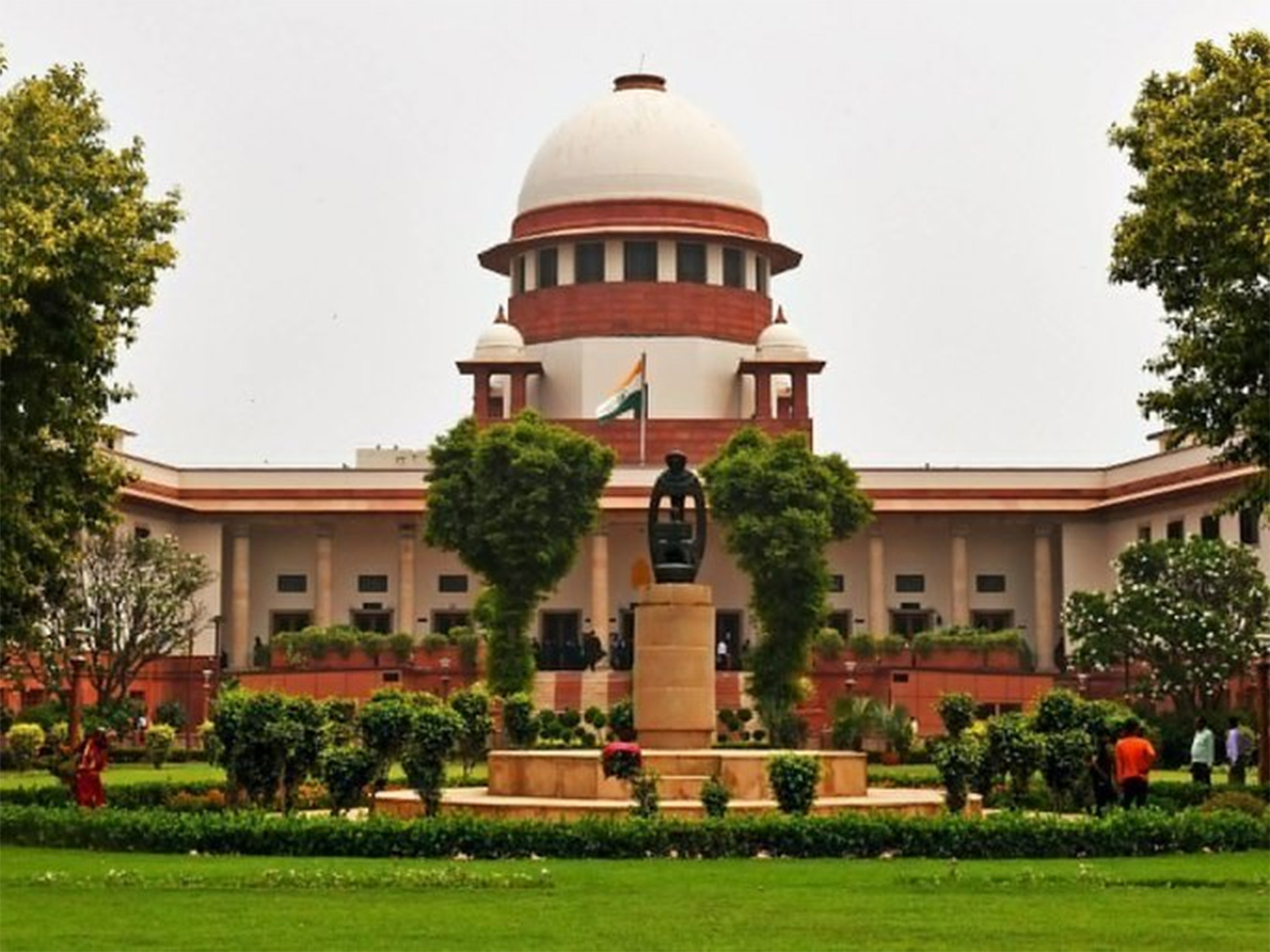
New Delhi [India], December 1 : The Supreme Court on Monday suggested that the Centre and concerned authorities revisit their action plan for reducing air-pollution levels in Delhi and the National Capital Region (NCR) to see whether it has brought any effective changes.
"Why don't you revisit your action plan to see for yourself whether you have brought any effective changes? And if you have, then are they less than what is needed? We think it's important to evaluate whether any of your action plans have proved to be effective, ineffective, or less effective. Despite your hesitance or confidence about whether you would be able to achieve effective change, is it not right to revisit the action plan? Evaluate the steps you have taken so far," CJI Kant said.
The Supreme Court asked Additional Solicitor General (ASG) Aishwarya Bhati, representing the CAQM, what factors apart from stubble burning contribute to the increase in air pollution.
The apex court said it is very easy to put the blame on the section (farmers) who remain unrepresented before the Court. Scientific analysis of other factors apart from stubble burning behind increasing air pollution also needs to be considered, the apex court added.
"Stubble-burning was happening as usual. Why could people see blue skies 4-5 years ago? Why couldn't they see them now?" the Supreme Court said.
The Supreme Court said that it will hear the air-pollution matter at least twice every month.
It acknowledged that the situation may pacify after the winter season, but in this regard, "history will repeat itself."
The Supreme Court posted the matter to December 10.
As the Court deliberated on systemic gaps in pollution control, Delhi's air quality continued to remain poor. The Air Quality Index (AQI) rose to 299 at 7 am on Monday, up from 279 at 4 pm on Sunday, according to Central Pollution Control Board (CPCB) data.
The national capital has recorded "poor" air quality for the past two days after showing improvement from the "very poor" category on Sunday, when the AQI dipped to 279 from 305 reported on Saturday.
According to CPCB, Nehru Nagar recorded the highest AQI in the city at 354 as of 7 am, placing it in the "very poor" category.
Other highly affected areas included Rohini (341), Bawana (339), RK Puram (336), Mundka (330), and Punjabi Bagh (328), all of which continued to experience hazardous air quality.
On the lower end of the spectrum, NSIT Dwarka registered the least AQI at 195, falling under the "moderate" category. This was followed by Mandir Marg at 207 and IGI Airport T3 at 248, which, while still unhealthy, reflected comparatively better air quality than most other monitoring stations across the city.
Several other key stations, including Anand Vihar (325), Jahangirpuri (321), Vivek Vihar (321), Shadipur (324), and Pusa (322), remained in the "very poor'' category, highlighting the widespread nature of pollution across Delhi.
Meanwhile, the air-quality scenario in Delhi-NCR has shown consistent improvement this year, with the region recording its lowest average AQI for the January-November period in the last eight years, excluding 2020 -- the COVID-19 lockdown year -- according to data shared on Sunday.
As per official figures, Delhi's average AQI between January and November 2025 stood at 187, an improvement over 201 in 2024, 190 in 2023, 199 in 2022, 197 in 2021, 203 in 2019, and 213 in 2018.
According to CPCB, the AQI, which ranges from 0 to 500, is divided into six categories, each reflecting the level of pollution and associated health risks.
An AQI between 0 and 50 is classified as "Good", indicating minimal or no health impact. Levels from 51 to 100 fall into the "Satisfactory" category, where air quality remains acceptable, though sensitive groups may experience slight discomfort.
The "Moderate" category, ranging from 101 to 200, signals increasing pollution levels that can trigger breathing difficulties among people with asthma, lung conditions, or heart diseases.
An AQI between 201 and 300 is considered "Poor", a range in which prolonged exposure can cause breathing discomfort to most people.
Levels between 301 and 400 are marked as "Very Poor", posing a risk of respiratory illnesses even to healthy individuals when exposure continues for long periods. The most hazardous category, "Severe", includes AQI values from 401 to 500, at which stage air quality becomes dangerous for everyone.