Task Forces "institutionalise" role of RSS in MP, Chhattisgarh; Odisha next, alleges Jairam Ramesh
Jun 02, 2026
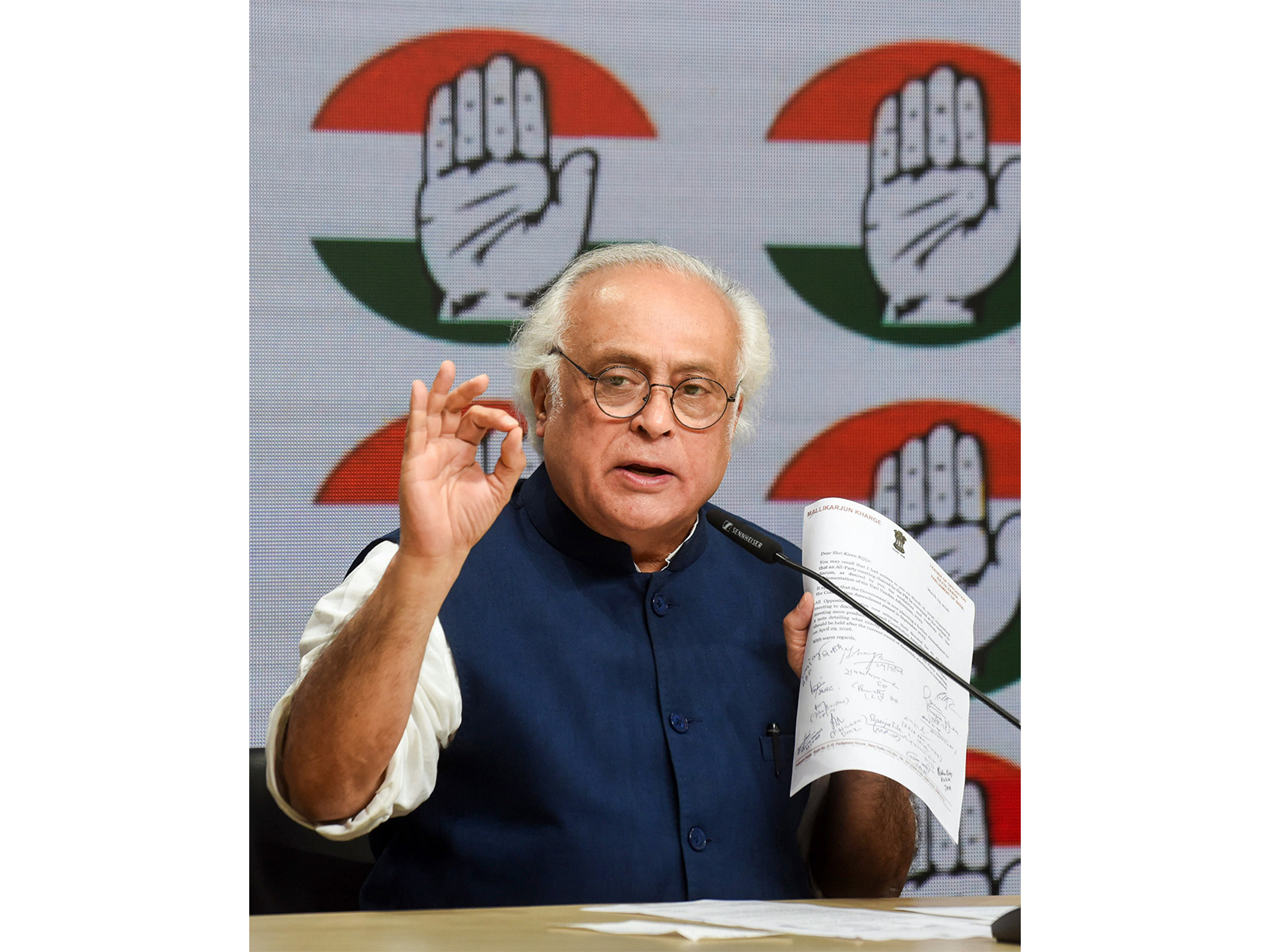
New Delhi [India], June 2 : Congress leader Jairam Ramesh on Tuesday launched a scathing attack on the BJP-ruled states of Madhya Pradesh and Chhattisgarh, accusing their governments of setting up specialised Task Forces to "institutionalise" the role of the Rashtriya Swayamsevak Sangh (RSS) in implementing key tribal welfare and forest rights laws.
Taking to the social media platform X, the Congress leader claimed that Odisha would soon follow suit as the third state to implement a similar structure, which he argued directly undermines democratic statutory bodies.
"The Madhya Pradesh and Chhattisgarh governments have constituted Task Forces to institutionalise the RSS role in the implementation of the Panchayat (Extension to Scheduled Areas) Act, 1996 and the Forest Rights Act, 2006. Odisha will soon be the third state to do so," Ramesh wrote.
Ramesh further alleged that the Akhil Bharatiya Vanvasi Kalyan Ashram, an RSS affiliate, is steering the initiative to hijack statutory provisions, particularly by diluting the decentralised powers originally granted to local village councils.
"These Task Forces subvert the basic democratic structure of implementation of these two laws passed by Parliament. The Akhil Bharatiya Vanvasi Kalyan Ashram, an RSS affiliate is the driving force behind this hijacking of statutory provisions especially those relating to the role of the Gram Sabha. Both PESA, 1996 and FRA, 2006 emerged out of people's movements. Their essential character in letter and spirit is being deliberately sabotaged by such Task Forces which have executive responsibilities as well," the Congress leader asserted.
Linking the administrative move to corporate interests, Ramesh further alleged that the move could facilitate the exploitation of natural resources in forested areas and claimed that mining interests could benefit from the changes, referring to what he termed the "Modani empire" in this context.
"It is not a coincidence that one impact of the Task Forces will be felt in the exploitation of rich natural resources with little regard to ecological considerations in forest areas by mining companies, of whom the most prominent will be the Modani empire," Ramesh added.
The move is seen as a direct challenge to the PESA Act (1996) and Forest Rights Act (2006), which are central laws designed to empower tribal communities by giving local Gram Sabhas (village councils) supreme authority to govern themselves and control their own land and natural resources.