"The UN Charter is not optional": UNGA president Annalena Baerbock on Venezuela crisis
Jan 04, 2026
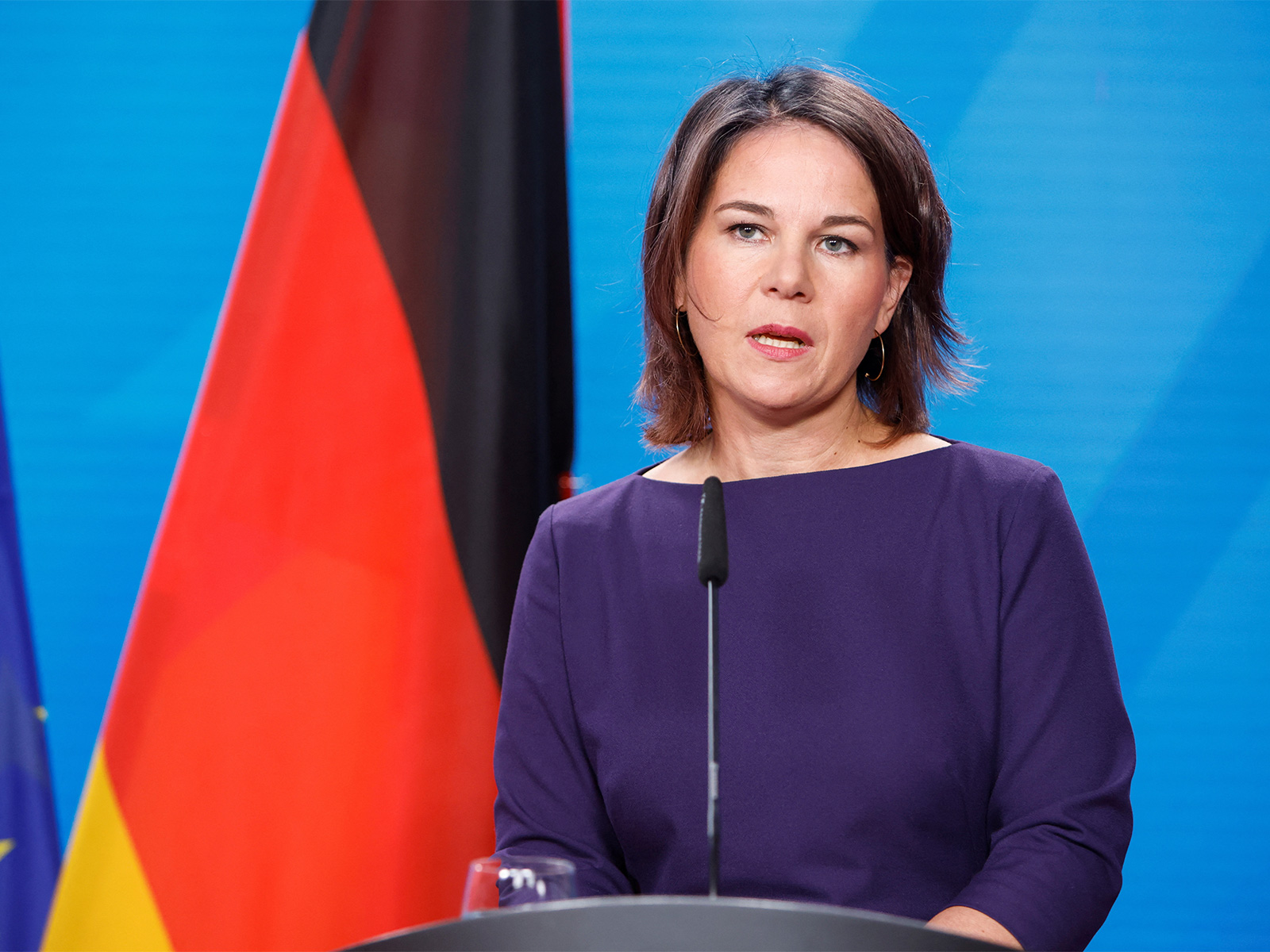
New York [US], January 4 : President of the United Nations General Assembly Annalena Baerbock on Sunday stressed that adherence to the UN Charter is mandatory and not optional, as international attention remains focused on Venezuela following United States military action.
In a post on X, Baerbock said the UN Charter must serve as the guiding framework for international conduct "in moments of calm and in times of crisis," specifically referring to the situation in Venezuela, which she said had culminated in US military action.
https://x.com/UN_PGA/status/2007521592163680695?s=20
"The UN Charter is not optional--it is our guiding framework, in moments of calm and in times of crisis, like in Venezuela today, culminating with the United States military action," Baerbock said.
She underlined that Article 2 of the UN Charter clearly stipulates that all UN member states must refrain from the threat or use of force against the territorial integrity or political independence of any state or act in any manner inconsistent with the purposes of the United Nations.
Emphasising the broader implications, Baerbock said respect for the UN Charter and international law forms the foundation of the international order and warned against a global system governed by power rather than law.
"A peaceful, safe and just world for everyone is only possible if the rule of law prevails instead of might makes right," she said.
She also highlighted the importance of human rights, including those of the Venezuelan people, stating that lasting peace depends on human rights prevailing over violations.
Baerbock's remarks come amid rapidly unfolding developments surrounding Venezuela's leadership.
Deposed dictator Nicolas Maduro was seen wishing reporters and Drug Enforcement Administration (DEA) agents a Happy New Year and Good Night during his perp walk, footage of which was later released by US authorities showing him in handcuffs as he was led into custody.
Following Maduro's removal, Venezuela's Supreme Court ordered Vice President Delcy Rodriguez to assume the powers and duties of acting president, CNN reported.
The order, announced late Saturday night local time, concluded that Maduro was in a "material and temporary impossibility to exercise his functions."
According to the ruling read by Justice Tania D'Amelio during a session broadcast on state television channel VTV, Rodriguez will "assume and exercise, as acting president, all the powers, duties, and faculties inherent to the office of president of the Bolivarian Republic of Venezuela, in order to guarantee administrative continuity and the comprehensive defense of the nation," CNN reported.
Venezuela's constitution states that when there is a temporary or absolute absence of the president, the vice president must replace them.
Providing background to the US actions, former US National Security Advisor John Bolton told CNN that a plan to remove Maduro had been presented to US President Donald Trump during his first term but failed to advance because administration officials were unable to keep the president "focused" on the issue.
Bolton said Trump was "very interested in the Venezuelan oil" at the time and that while his team managed to get him interested in the idea of removing Maduro, they "couldn't keep him focused on it."
He also said the Venezuelan opposition then believed that sustained economic pressure would be sufficient to split Maduro's regime.
According to CNN, the United States later launched what Trump described as a "large-scale strike against Venezuela" and captured Maduro to face charges, carrying out the regime change effort without congressional approval.