Transformation in Middle East relevant for India's relationship with Arab nations: EAM Jaishankar
Jan 31, 2026
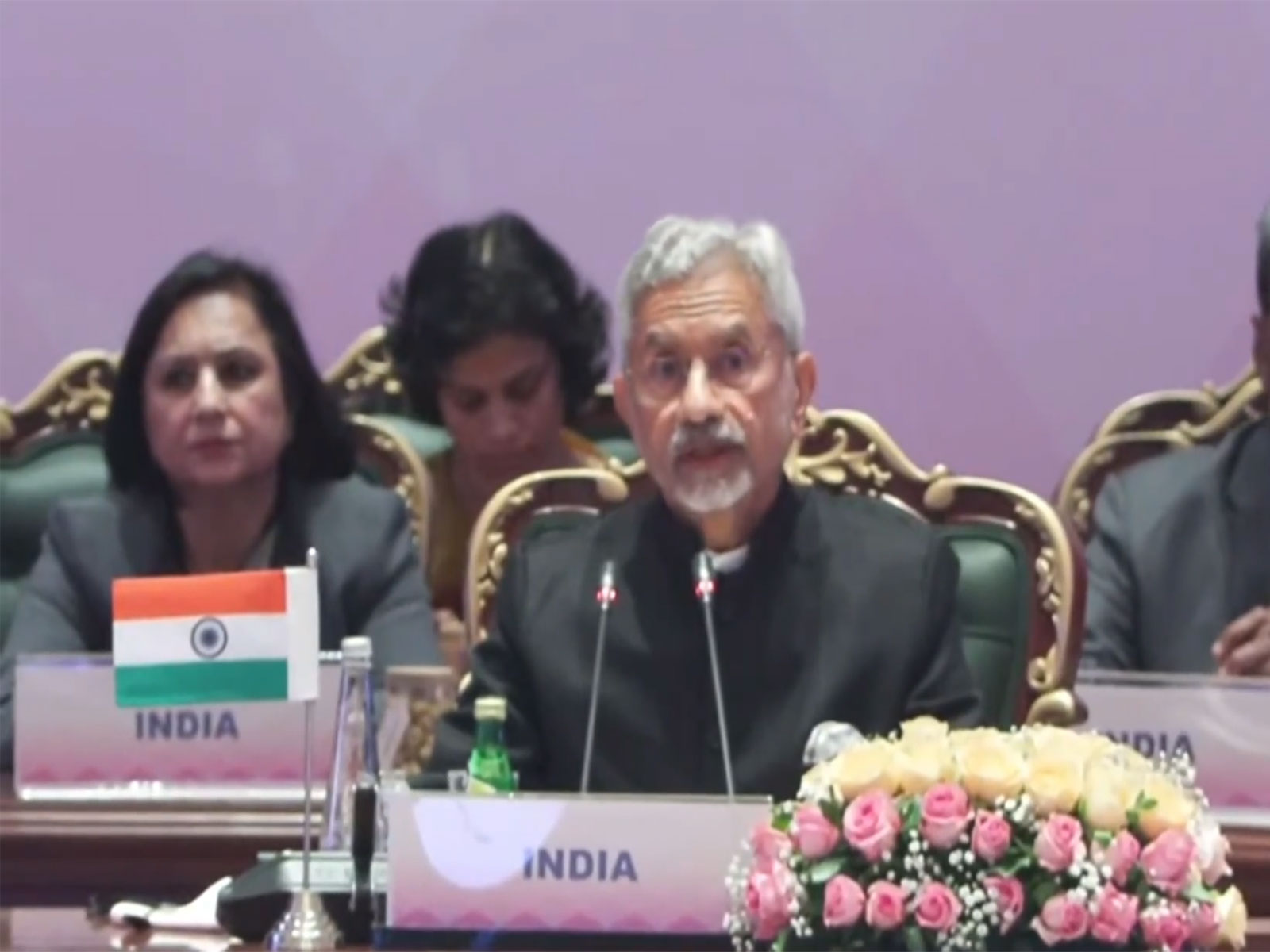
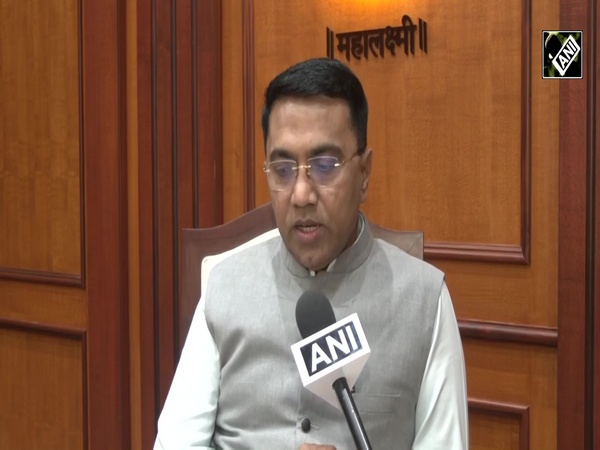
New Delhi [India], January 31 : External Affairs Minister S Jaishankar on Saturday said that the churn in global order is the most apparent in the Middle East.
Jaishankar, delivering opening remarks at the 2nd India-Arab Foreign Ministers' Meeting, said the impact of developments in the Middle East is felt in India as well.
https://x.com/DrSJaishankar/status/2017550970771935476?s=20
"Warm welcome to India for the second India-Arab Foreign Ministers' Meeting. We meet at an important juncture where the global order is undergoing transformation for a variety of reasons. Politics, economics, technology, and demography are all fully in play. Nowhere is this more apparent than in West Asia or the Middle East, where the landscape itself has undergone a dramatic change in the last year. This obviously impacts all of us and India as a proximate region. To a considerable degree, its implications are relevant for India's relationship with Arab nations as well," he said.
Jaishankar said that everything happening in the Middle East, including the Gaza situation, has been a focal point in world politics.
"Multiple developments, each of considerable consequence, have taken place in the Middle East and West Asia over the last few years. Many of them have reverberated well beyond the region. The situation in Gaza, in particular, has been the focus of the international community. Many of us were present at the Sharm el-Sheikh Peace Summit in October 2025," he said.
"This evolved into the UN Security Council Resolution 2803 of November 2025. Advancing the comprehensive plan to end the Gaza conflict is now a widely shared priority. Various countries have made policy declarations on the peace plan individually or collectively," he added.
Jaishankar said that Sudan is also afflicted by the conflict.
"This is the larger context in which we deliberate on the region's challenges and prospects. There are several other regions and situations in the region that also merit our collective attention. One is the conflict in Sudan that is exacting a deadly toll on its society," he said.
Jaishankar also pondered on the situation in Yemen, where Indian troops are present, and that in Libya.
"Another is that in Yemen, with the additional implication for the safety of maritime navigation. Then there is the concern about Lebanon, where India has troops committed to UNIFIL. In Libya, we all have an interest in advancing the national dialogue process. The direction of events in Syria is also critical for the well-being of the region," he said.
Jaishankar then added that the common threat between the Middle East and India is terrorism.
"Contemplating this multitude of challenges, our shared interests warrant strengthening forces of stability, of peace, and of prosperity. A common threat in both our regions is that of terrorism in all its forms and manifestations. Cross-border terrorism is particularly unacceptable because it violates the basic principles of international relations and diplomacy," he said.
"Societies targeted by terrorism have the right to defend themselves and will understandably exercise it. It is essential that we strengthen international cooperation to combat this global scourge. Zero tolerance for terrorism must be an uncompromising universal law," he added.
Jaishankar said that the historical collaboration with Middle Eastern countries has reached new heights, taking on a contemporary form.
"Excellencies, India has strong partnerships with all LAS nations, in many cases, maturing to a strategic level. Much of that is rooted in history, where we have long exchanged goods, people, and ideas. In the contemporary era, this collaboration has taken different forms with various partners," he said.
Jaishankar noted the strong people-to-people ties between the region and India, noting that the largest expatriate community lives there.
"The region has some of our largest expatriate communities, key energy sources, major trade relationships, and increasingly emerging technology and connectivity initiatives. We are crucial to each other in terms of food and health security. Today's deliberations, while collective in nature, will nevertheless have a significant impact on many bilateral ties. Colleagues, the India-Arab Cooperation Forum serves as a platform to give our positive sentiments a practical shape," he said.
Jaishankar further said that India is looking to increase cooperation in several fronts, including agriculture, education, etc.
"Our meeting will examine an agenda for such cooperation in 2026-28. It currently covers energy, environment, agriculture, tourism, human resource development, culture and education, amongst others. India looks forward to a more contemporary dimension of cooperation being included, such as digital, space, start-ups, innovation, etc," he said.
"We'll also be contemplating working together on counter-terrorism and parliamentary exchanges. I note that we have launched the India-Arab Chamber of Commerce, Industry and Agriculture yesterday. These activities and initiatives will parallel what is happening in the bilateral domain and reinforce the bonds between us," he added.
Jaishankar said that as India equipped itself in the technology sphere, both should share their experiences.
"Excellencies and colleagues, in the last decade, India has developed many more capacities and strengths that are in keeping with the times. Many of these are technology-related, and their application has been people-centric. We believe that sharing experiences and best practices in that regard will be to our mutual benefit," he said.
Jaishankar believed that their discussions would be outcome-oriented.
"I look forward to discussing that in detail, and I am confident that our deliberations today will be really productive and outcome-oriented. With those words, I would like to invite my co-chair, the representative from the League of uh Arab States today, His Excellency Khalifa bin Shaheen Al Marad, to make his opening remarks," he said.
Earlier in the day, Prime Minister Narendra Modi received a delegation of Foreign Ministers from Arab countries, the Secretary General of the League of Arab States, and Heads of Arab delegations, who are in India for the second India-Arab Foreign Ministers' Meeting, according to a statement from the Prime Minister's Office.