Trump's Iranian gambit boosts China's standing
Mar 18, 2026
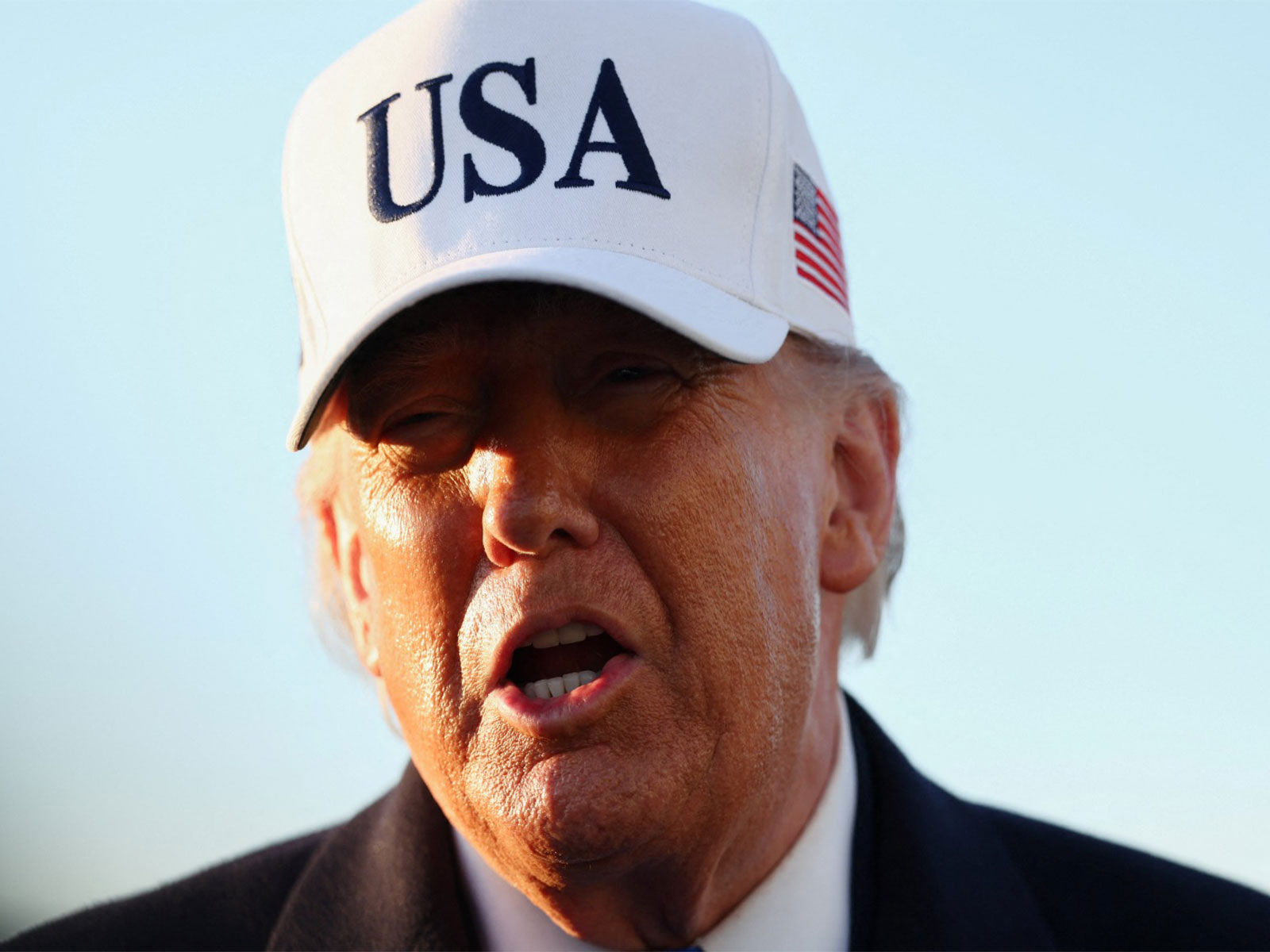
Hong Kong, March 18 : All sorts of conspiracy theories abound. For example, some say mastermind President Donald Trump seized Venezuela's leader and started bombing Iran in order to get back at China by disrupting oil deliveries to the communist country. However, such theories give Trump far too much credit for strategic foresight.
Instead, American hubris - particularly that of its president, Secretary of War and other top leaders - is creating a huge crisis for the rest of the world. Trump's attack on Iran alongside Israel seems to have little strategic endgame or goal in sight, and Iran is striking back the best way it knows how, by using asymmetric military capabilities to close the Hormuz Strait and throttle the world's flow of oil and gas.
The fact that Iran's move took Trump by surprise, and that the USA was so ill prepared to respond, is yet another failure in American planning. In fact, a full two weeks after the USA started this war, it decided to send the Japan-based 31st Marine Expeditionary Unit of the US Marine Corps to the Gulf region. The USA has relied only on airpower and sea power to bomb Iran into submission thus far, and it seems a failure to not have moved any marines into the region beforehand.
Similarly, two of three US Navy vessels in the Middle East capable of mine-hunting are in Malaysia right now, far from where they need to be. Instead, Trump is scrambling to get other countries to send warships to clear the Hormuz Strait and to escort tankers. This seems an appalling lack of planning by US political and military leadership.
What must China be thinking of all this? Certainly, it will be carefully observing how the USA is conducting this bombardment of Iran. The ability of the US to destroy Iranian air defenses and accurately degrade its military capabilities is impressive. Yet at the same time, there are chinks in the US armor and policy.
There are apparently failures in planning - perhaps stemming from overconfidence or Trump's meddling in the prosecution of the attack - and the weapon arsenal of the USA will be seriously degraded. This is all to China's advantage.
As Dr. Malcolm Davis, Senior Analyst at the Australian Strategic Policy Institute (ASPI), commented, "The Iran war is a learning laboratory for the PLA. Make no mistake, this is a valuable opportunity for China to gain more insight into the American way of war."
It is also extremely ironic that Trump has stood the National Security Strategy, a foundational document released in November 2025, on its head. It stated, "Conflict remains the Middle East's most troublesome dynamic, but there is today less to this problem than headlines might lead one to believe. Iran - the region's chief destabilizing force - has been greatly weakened by Israeli actions since October 7, 2023, and President Trump's June 2025 Operation Midnight Hammer, which significantly degraded Iran's nuclear program."
The strategy vowed that "America's historic reason for focusing on the Middle East will recede". It added that "the days in which the Middle East dominated American foreign policy in both long-term planning and day-to-day execution are thankfully over - not because the Middle East no longer matters, but because it is no longer the constant irritant, and potential source of imminent catastrophe, that it once was. It is rather emerging as a place of partnership, friendship and investment - a trend that should be welcomed and encouraged."
So much for that.
Trump admitted he attacked Iran because he "had a good feeling that the Iranian regime was going to strike" American assets. White House press secretary Karoline Leavitt clarified this was "a feeling based on facts". Given that these "feelings" relied mostly on Steve Witkoff, Pete Hegseth and son-in-law Jared Kushner - a real estate developer, television personality and investor - it is perhaps little wonder that Trump upended the National Security Strategy in just a couple of months.
Davis of ASPI added: "The Iran war is likely to continue for many weeks (best case) to several months (worst case), increasingly drawing on US military forces from other theaters to sustain operations. US weapon stocks are being drawn down, particularly in terms of missile defense and longer-range stand-off weapons. If US ground forces are committed, that will dramatically increase operational demands on the US military, running the risk that readiness in INDOPACOM [Indo-Pacific Command] and EUCOM [European Command] could be even further reduced."
On 15 March, Trump took to Truth Social to call on countries like China, France, Japan, South Korea and the UK to send warships to the Strait of Hormuz. His premise is that they depend on this waterway for energy supplies, and therefore they should share the responsibility for keeping it open. The USA started this war, but now seems incapable of finishing it. Trump lit the fire, but he now demands others - including the USA's greatest strategic rival, China - to help extinguish it.
Davis applauded Australia's decision not to send warships in response to Trump's plea. "Meanwhile, China watches these events," he explained, "and considers its options vis-a-vis Taiwan. If Beijing were to initiate aggression against Taiwan - or in the South China Sea - taking advantage of an opportunity as the US becomes increasingly diverted back to the Middle East, Australia would need all available Australian Defence Force units to protect its own interests."
In telephone calls with his counterparts in Bahrain, Kuwait, Pakistan and Qatar, Chinese Foreign Minister Wang Yi said: "This is a war that should not have happened - it is a war that does no one any good." He noted "the US and Israel attacked Iran in the process of the ongoing US-Iran negotiation, which clearly violates international law".
Wang laid out China's solution, which revolves around returning to the negotiating table, conducting dialog and promoting common security. Wang called on "major countries to act in the spirit of justice and righteousness, and contribute more positive energy to peace and development of the Middle East".
Perhaps emboldened by his success in Venezuela, Trump failed to heed the lesson that, while military force wins battles, it does not necessarily create trust and stability, especially in the Middle East. Trump started a war with vague goals, and naively thought there would be few repercussions. He has ended up further eroding the trust of allies, and his desperate gamble to lift sanctions on Russia indicates desperation.
Pleading for China's help is also embarrassing.
The Politico publication in the US conducted a survey of US allies Canada, Germany, France and the UK. Its report concluded, "Swaths of the public in have soured on the US, driven by President Donald Trump's foreign policy decisions, according to recent results from the Politico Poll." The survey found that respondents increasingly see China as a more dependable partner than the USA. This is driven not by stability in China, but by the disruption Trump is causing globally. He has ripped up the "rules-based order" that once reigned supreme in US foreign policy discourse.
Beijing is seizing the opportunity handed to it on a plate by Trump to cultivate better ties in Europe, Asia and elsewhere. Politico quoted Mark Lambert, former deputy assistant secretary of state for China and Taiwan in the Biden administration, "The administration has assisted the Chinese narrative by acting like a bully. Everyone still recognizes the challenges China poses - but now, Washington no longer works in partnership and is only focused on itself."
Canadian Prime Minister sealed a trade deal with China in January, the UK signed export deals soon thereafter, and the French and German leaders recently visited Beijing.
With many young people in the West gaining much of their news content from social media platforms, a number no longer believe China is the authoritarian bogeyman.
There is actually an underlying trend that says people in the West have been lied to about China's true nature. Of course, this narrative is underpinned by Chinese propaganda efforts as it floods platforms with pro-China messaging. Many in the West also believe America is in decline and that China is a rising superpower, another narrative that Beijing peddles.
The Brookings Institute think-tank in the USA recently published a report by academics about the likely trajectory of Sino-US relations, including Trump's mention of a "G2" comprising the USA and China as the world's two dominant powers. Most do not foresee a "grand bargain, but continued US-China strategic rivalry - albeit managed through leader-level engagement and transactional deal-making alongside enduring technological, economic and security competition," the report noted.
The summary continued: "For states across the Indo-Pacific, a loosely defined 'G2' presents both opportunity and risk. A tactical easing of US-China tensions may lower the near-term danger of escalation. Yet an international order increasingly centered around great powers could marginalize smaller states, reduce their agency to influence regional outcomes, entrench spheres of influence, and weaken multilateral norms. The region is not standing still. Governments are hedging, diversifying partnerships, strengthening their own defense capabilities and investing in areas critical to their national resilience."
So far, Trump seems to have paid little heed to the ideological rivalry between the two countries. He sees China as materially challenging the USA, but seems to care little about the authoritarian and human rights-abusing nature of the Chinese government.
John Lee, Senior Fellow at the Hudson Institute, pointed out, "Therefore, and on the basis that the US-China relationship is a competitive if not geopolitically rivalrous one, elements of coordination and cooperation will be tactical or pragmatic rather than strategic. The US will still seek deals and arrangements to secure relative gains vis-a-vis China, even if many aspects of the relationship will not be overtly hostile.
Militarily, the US is committed to a strategy of denial up to the First Island Chain, which includes Taiwan, Japan and the Philippines. While this is not the same as containing China, it still means the US will demand that allies accept a greater burden in contributing to this collective denial strategy and deterring China from using force against Taiwan or preventing the South China Sea from becoming a militarized 'Chinese lake'."
Countries like Japan are leery of Sino-US accommodation and deal-making. It has also encouraged Japanese Prime Minister Sanae Takaichi to boost its own military capabilities and alliances with others. She said, "We'll defend our own country with our own hands. No one will help a country that lacks that resolve."
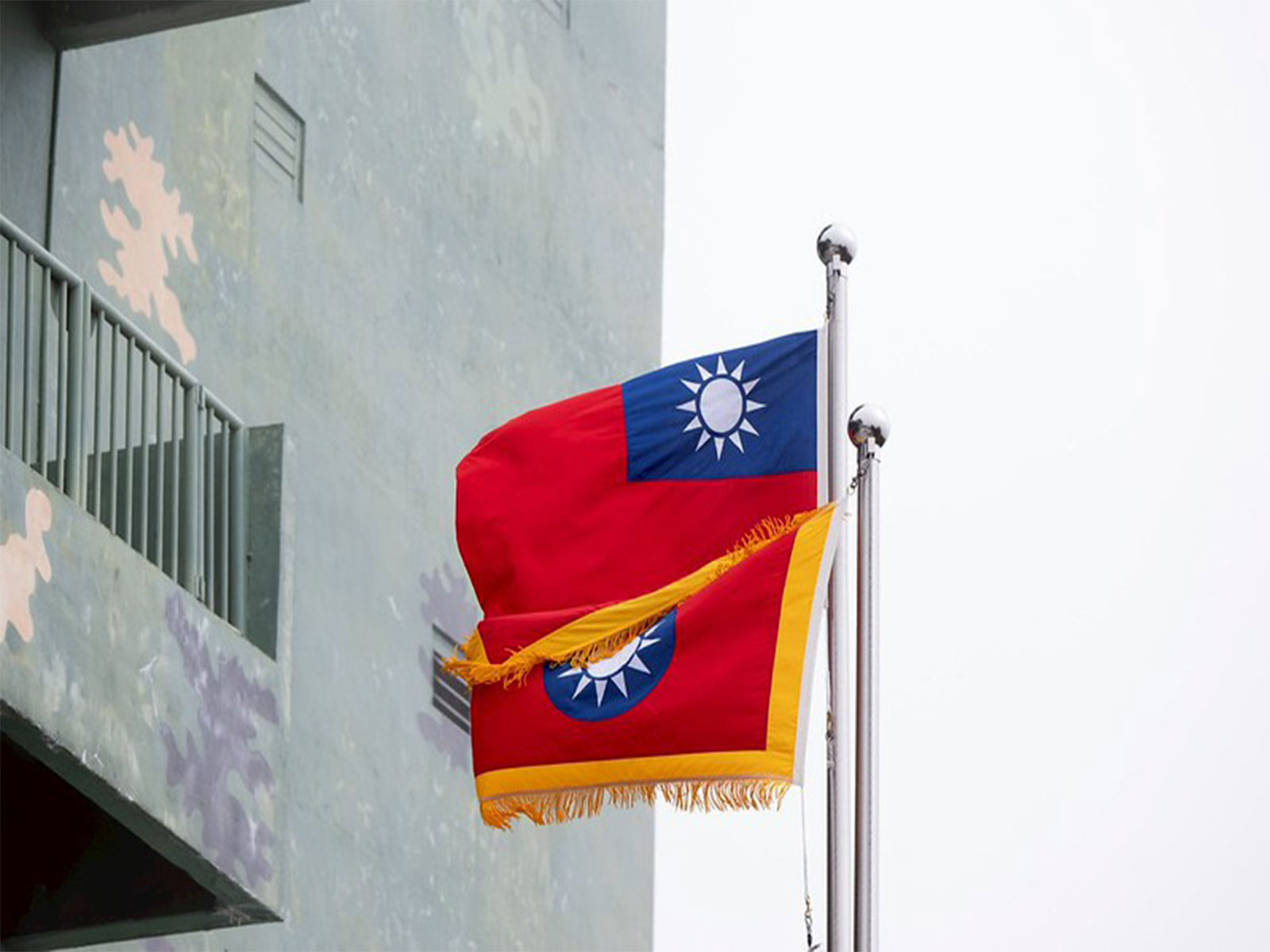
Nobody has more to lose than Taiwan. Yu-Jie Chen, Affiliated Scholar at the US-Asia Law Institute of the NYU School of Law, noted, "How should Taiwan interpret recent US policy toward China? Trump's invocation of a 'G2' framing for US-China relations, coupled with planned summit meetings with Xi in 2026, has raised questions about whether Washington's China strategy may be shifting. Some observers warn that accommodation - even appeasement - could follow. Others openly call for a 'new normalization' in US-China relations. In Taiwan, such speculation has revived a familiar concern: that Taiwan might once again be treated as a bargaining chip in Washington's broader dealings with Beijing."
China has not suspended the planned summit between Trump and Chairman Xi Jinping later this month. However, Trump hinted he might delay the meeting in an attempt to gain China's cooperation. However, Ryan Hass, Director of the John L. Thornton China Center at the Brookings Institute, pointed out: "If President Trump thinks he's building leverage with Beijing by threatening to postpone his visit, he's going to find disappointment."
Hass further noted, "Beijing seems to see Trump's upcoming visit as an opportunity to stabilize ties and fortify the ongoing US-PRC trade truce. This buys time and space for Beijing to advance its priority national project of building insulation against American pressure."
Beijing does want to stabilize relations with the USA, but it must be bewildered by the chopping, changing and unpredictability of Trump - just as the rest of the world is too.