Trust, governance, security are key challenges in AI era: Nikesh Arora, CEO, Palo Alto Networks
Feb 19, 2026
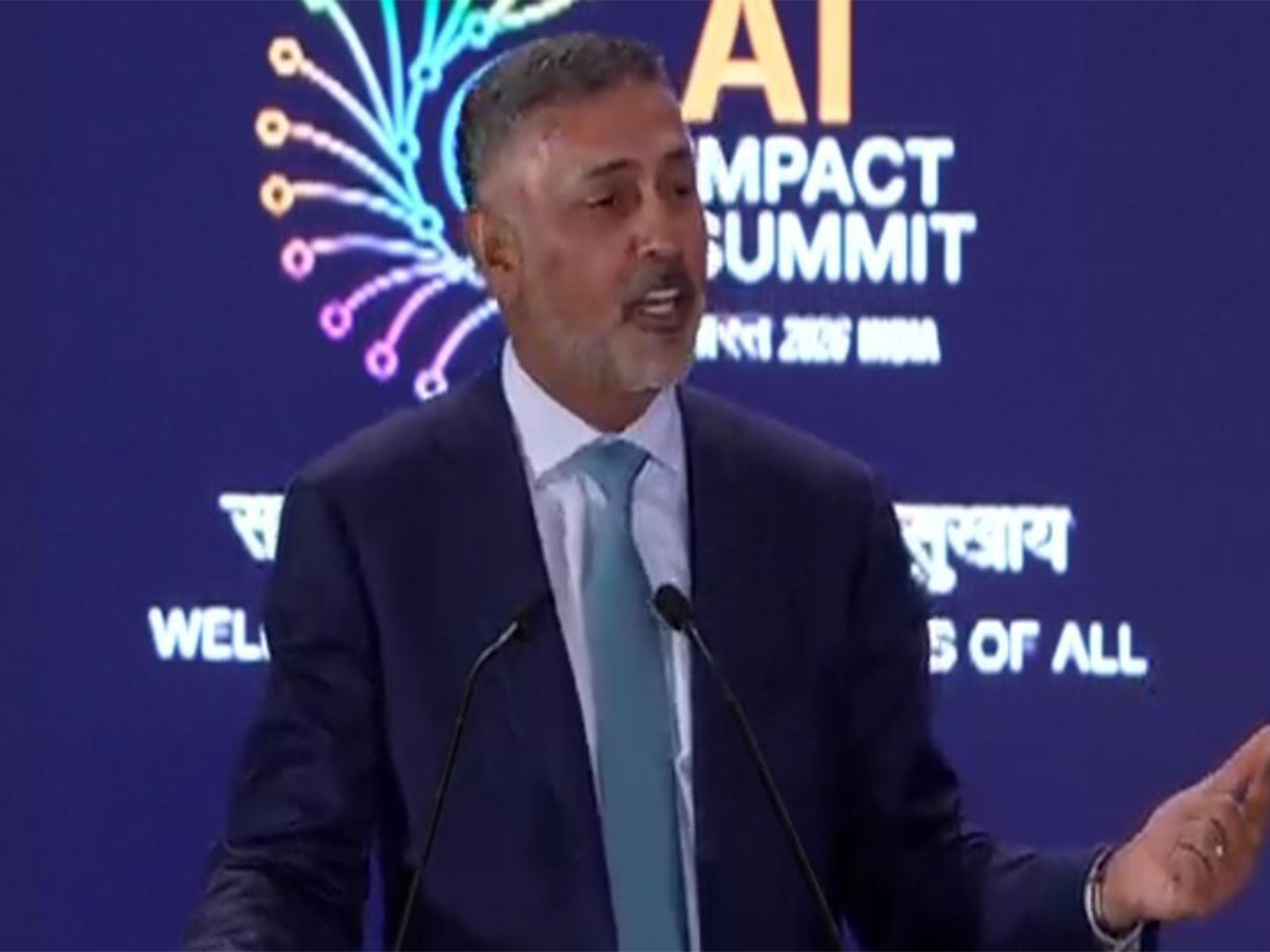
New Delhi [India], February 19 : Palo Alto Networks CEO Nikesh Arora on Thursday highlighted the unprecedented pace of Artificial Intelligence (AI) development, warning that technological acceleration is outstripping the evolution of institutions and governance frameworks.
Speaking at the India AI Impact Summit 2026, Arora said, "I have never seen anything that has moved so fast in the technological perspective. The moment when ChatGPT came out, it changed everything."
"AI's rapid progress has created a widening gap between innovation and regulatory preparedness. It is accelerating faster than our institutions and governance framework. This widening gap, if not handled right, is going to become a tangible threat," he said.
Clarifying his stance, Arora added that he was not pessimistic about AI's potential.
"I am not here to throw cold water on the idea that AI is going to solve problems. I am here to solve problems for inclusion, trust, and safety while we continue to make advances in AI," he said.
He observed that the current balance in the AI ecosystem is skewed toward speed.
"Every morning you wake up, something new has happened. While we are enjoying the AI capabilities, AI has moved on and is battling towards the agentic future," Arora said.
Discussing the concept of AI agents, Arora emphasized the importance of trust, and said, "We are talking about agents, but we need to build trustworthy agents that can take over tasks. It takes a long time to replace one job with an agent."
Addressing concerns about job displacement, he remarked, "Those who think AI is going to take your job away, it is going to take longer than you think. We are not going to trust agents that quickly. For that, we need to develop trust."
Arora outlined three major challenges associated with AI adoption, adding, "First is the challenge of governance and accountability. Second is the problem of human impact. AI is threatening to take away jobs. We need to manage that challenge. Last is the security problem. As lots of data is being used, we need to foresee and overcome the security problem."