Union Budget 2026-27: BJP praises growth, Opposition criticises exclusion
Feb 01, 2026
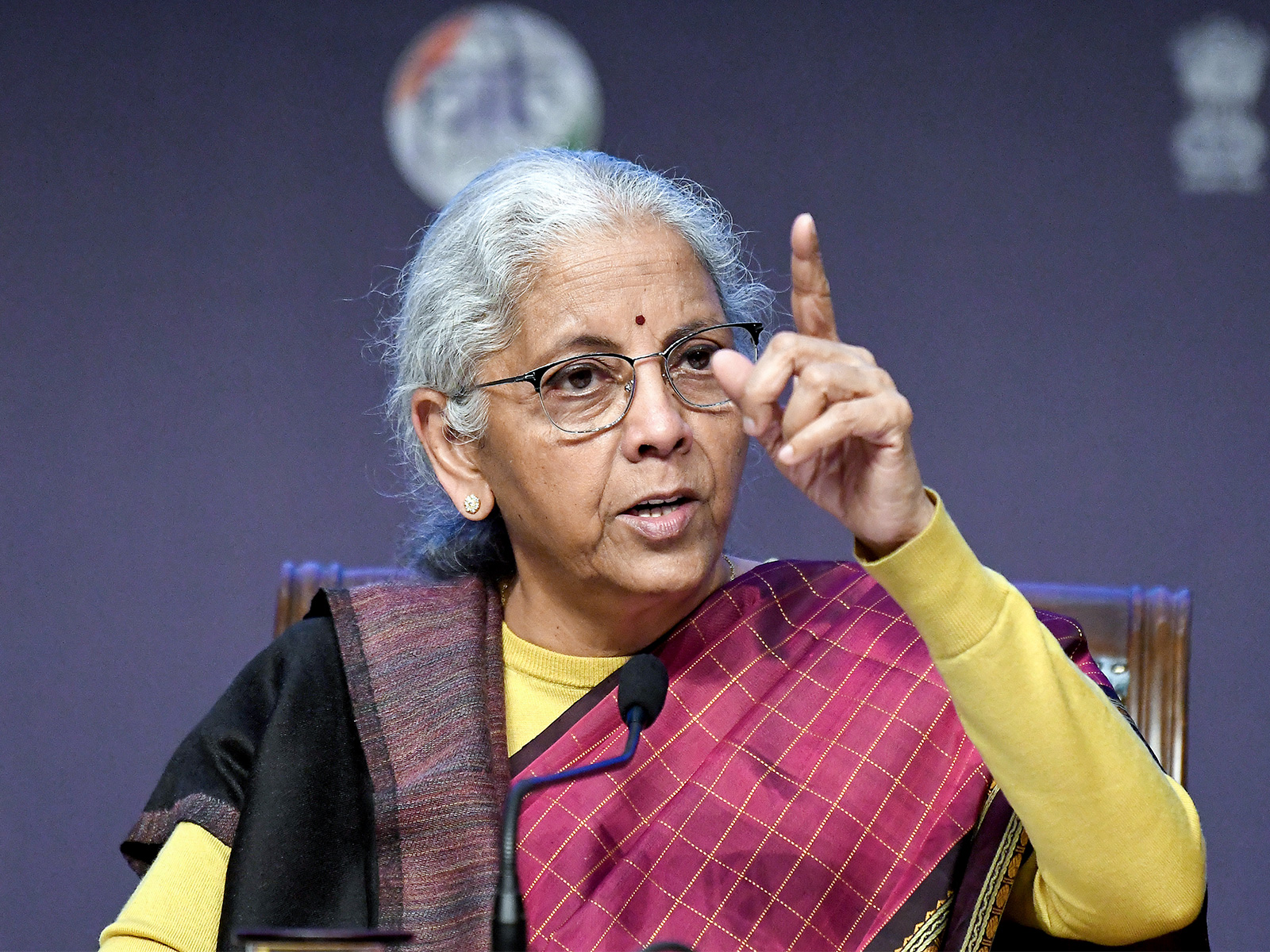
New Delhi [India], February 1 : The Union Budget 2026-27, unveiled on Sunday by Finance Minister Nirmala Sitharaman, was hailed by the Bharatiya Janata Party as a strong foundation for Viksit Bharat 2047. On the other hand, Opposition parties had called the budget as ignoring the needs of the people, saying that problems like inflation, unemployment, and the issues raised by differnet states were not properly addressed.
While Prime Minister Narendra Modi and senior BJP leaders hailed it as a bold blueprint for a "Viksit Bharat 2047," promising self-reliance, infrastructure growth, and new avenues for youth employment, the Opposition slammed it as a "missed opportunity," accusing the government of sidelining key states like Kerala, Tamil Nadu, and Odisha, and failing to tackle pressing issues such as inflation, unemployment, and deepening economic inequality.
Prime Minister Narendra Modi described the Budget as a "strong foundation for the flight to the vision of Viksit Bharat 2047," asserting it would provide "fresh energy and speed to the 'Reform Express' on which India is riding today."
Highlighting investments in citizens' capabilities, he said, "A country's greatest asset is its citizens. In recent years, our government has made unprecedented investments in enhancing the capabilities of our citizens."
He also emphasised the fiscal strategy, adding, "This is one such unique budget which has a focus on bringing down fiscal deficit, on bringing inflation under control and with this, the budget also has the combination of high CapEx and high growth."
PM Modi said, "This budget is one that will further empower the poor, the annadata, the youth power, and the women power. This is a budget to strengthen villages. This is a budget to increase farmers' income. This is a budget that will promote Atmanirbhar Bharat and Make in India."
Union Home Minister Amit Shah welcomed the Budget as a long-term blueprint for development, stating, "This budget not only presents a clear blueprint to empower every sector, every section of society, and every citizen, but also lays out a grounded vision to support and encourage them at every step."
He added, "From manufacturing to infrastructure, from healthcare to tourism, from rural development to AI, and from sports to pilgrimage centres, the #ViksitBharatBudget empowers the dreams of youth, women, and farmers in every village, every town, and every city."
Defence Minister Rajnath Singh highlighted record allocations for the armed forces, saying, "In this budget, an allocation of ₹7.85 lakh crore has been made for the defence sector... ₹1.85 lakh crore has been provisioned for modernisation, approximately 24 per cent higher than the previous financial year. As a result of this increase, our military capabilities will be further empowered."
External Affairs Minister S Jaishankar emphasised reforms and investment in future industries: "Promoting industries of the future: Bio-pharma, AI & Data Centers and Carbon Capture; Encouraging advanced manufacturing: Semiconductor Mission 2.0, Rare Earth Corridors, Electronic Components and Chemical Parks; Boosting connectivity and logistics: High-Speed Rail lines, Dedicated Freight Corridors, coastal cargo movement, container manufacturing and inland waterways... Another step towards realising PM Narendra Modi ji's vision of Viksit Bharat."
Union Commerce and Industry Minister Piyush Goyal described the Budget as "visionary," highlighting investments in manufacturing, textiles, MSMEs, data centers, high-speed rail, inland waterways, and rare earth processing, all aimed at ensuring India's long-term self-reliance and global competitiveness.
Union Minister Ashwini Vaishnaw also highlighted data centres and high-speed rail corridors, stating, "In the time to come, data centres will emerge as a huge power for the country... 20 lakh new employment opportunities will be generated in the Orange Economy. For the railway, there are 7 new high-speed corridors, and a southern triangle of Chennai, Bengaluru, and Hyderabad will be formed."
Meanwhile, the Opposition highlighted glaring gaps in the Union Budget, pointing out that it failed to address the urgent concerns of ordinary citizens.
Leader of Opposition in Lok Sabha, Rahul Gandhi labelled the Budget "blind to India's real crises," alleging it ignored rising unemployment, declining manufacturing, capital outflows, falling household savings, and farmers' distress.
"Youth without jobs. Falling manufacturing. Investors pulling out capital. Household savings plummeting. Farmers in distress. Looming global shocks - all ignored. A Budget that refuses course correction, blind to India's real crises," he said.
Reacting to this, Finance Minister Nirmala Sitharaman responded, "I don't know what course correction he is referring to. The economy and its fundamentals are strong...Politically, you want to criticise, you're welcome, please do it. But if you want to give me the facts on which you're basing your argument, I'm willing to hear and willing to reply to that."
Congress president Mallikarjun Kharge criticised the lack of policy vision and support for farmers, SC/ST/OBC/EWS communities, and state governments under financial stress.
"Modi Govt has run out of ideas. #Budget2026 does not provide a single solution to India's many economic, social, and political challenges... Inequality has surpassed the levels seen under the British Raj," he said.
Congress General Secretary KC Venugopal called it a "listless, heartless budget from a clueless government," noting welfare cuts and neglect of Kerala.
"All in all, this is a budget for nobody except the Prime Minister's cronies, with the ordinary Indian left to struggle under the weight of higher prices, falling jobs, crumbling infrastructure and a bleak future," he said.
Kerala Chief Minister Pinarayi Vijayan condemned the Budget, saying it reflected "continued neglect and discrimination against the state." He highlighted exclusion from High-Speed Rail corridors, revenue deficit grants cuts, and threats to mineral and environmental policies.
"This budget... is a policy document designed to enrich corporates while pushing ordinary people into deeper poverty," he said.
Tamil Nadu Chief Minister MK Stalin stated that it has once again ignored the interests of Tamil Nadu and failed to address the needs of any section of society.
"The Union Government's Budget... has delivered an even greater disappointment than usual... no major schemes that would benefit any section of society, be it the poor, women, farmers, or marginalised communities."
Congress MP Shashi Tharoor called Kerala's exclusion from the new High-Speed Rail Corridors "indefensible," stating, "The Centre ignores us, and the State proposes paper projects it cannot afford. Our commuters are left with nothing. We need actual trains, not new acronyms."
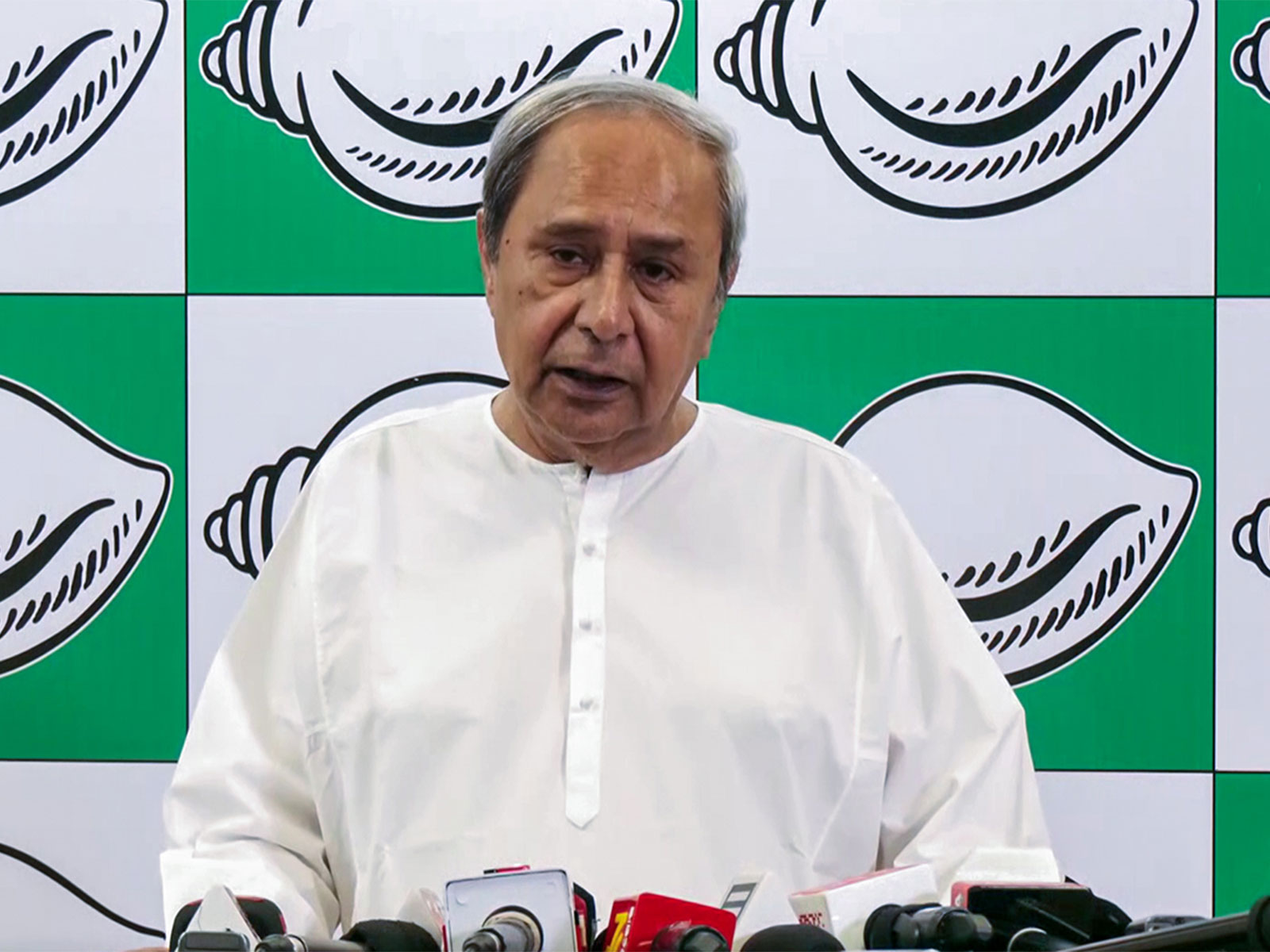
Biju Janata Dal president Naveen Patnaik and MP Sasmit Patra expressed strong disappointment over Odisha's exclusion from rail corridors and tourism projects.
"The budget has offered no noteworthy benefits to #Odisha and its people. The anticipation from the people of Odisha was that the double engine government would offer a growth momentum with focus on infrastructure, job creation and additional allocation which is due to the state. The state has received very little," Patnaik said.
"This budget has been very disappointing. People of Odisha had expected that they would be part of the rail corridor. The rail corridor has Mumbai, Pune, Hyderabad, Bengaluru, Chennai, Delhi, Varanasi and Siliguri. But it's very unfortunate that despite being in the Purvodaya states, Odisha does not find a mention," Sasmit Patra said.
Furthermore, AAP National Convener Arvind Kejriwal criticised the budget for ignoring Goa and for failing to address unemployment and inflation. "There is no concrete blueprint for creating jobs, and this budget will only increase inflation," he said.
Bahujan Samaj Party president Mayawati urged the government to focus on implementation rather than rhetoric. "In reality, what truly matters more than GDP is the multifaceted development eagerly anticipated in people's lives and the qualitative transformation long awaited by the masses... which must be assessed before we applaud the current budget," she said.
Congress leader Jairam Ramesh termed it "lacklustre," while Gaurav Gogoi called it unambitious compared to global economic peers like the US, EU, and China.
Earlier today, Finance Minister Nirmala Sitharaman presented the Union Budget 2026-27 in Lok Sabha, her ninth consecutive Union Budget.
Asserting that the Union Budget 2026-27 is driven by "Yuvashakti" and based on "three kartavyas," Union Finance Minister Nirmala Sitharaman on Sunday proposed seven high-speed rail corridors, new dedicated freight corridors, and the operationalisation of 20 national waterways over the next five years as part of the Union Budget.
The Union Budget has outlined a major push for environmentally sustainable passenger transport, proposing the development of seven high-speed rail corridors across key urban and economic centres. These corridors will act as growth connectors, cutting travel time, reducing emissions, and supporting regional development.
The proposed routes include Mumbai-Pune, Pune-Hyderabad, Hyderabad-Bengaluru, Hyderabad-Chennai, Chennai-Bengaluru, Delhi-Varanasi, and Varanasi-Siliguri. Together, they will link India's financial hubs, technology centres, manufacturing clusters, and emerging cities through faster, cleaner mobility.
The Budget also highlighted eco-tourism and nature-based travel. The Finance Minister said, "India has the potential and opportunity to offer world-class trekking and hiking experience." The government will develop sustainable mountain trails in Himachal Pradesh, Uttarakhand and Jammu and Kashmir, as well as in Araku Valley in the Eastern Ghats and Pudigai Malai in the Western Ghats.
![R|ELAN™[?]Circular Design Challenge in partnership with the UN in India Present CRCLE at Lakme Fashion Week x FDCI 2026 (Photo/Instagram/ @lakmefashionwk)](https://aniportalimages.s3.amazonaws.com/media/details/ANI-20260321140713.jpg)