Union Minister Hardeep Singh Puri highlights India's growth to 132 Compressed Bio Gas plants
Jan 03, 2026
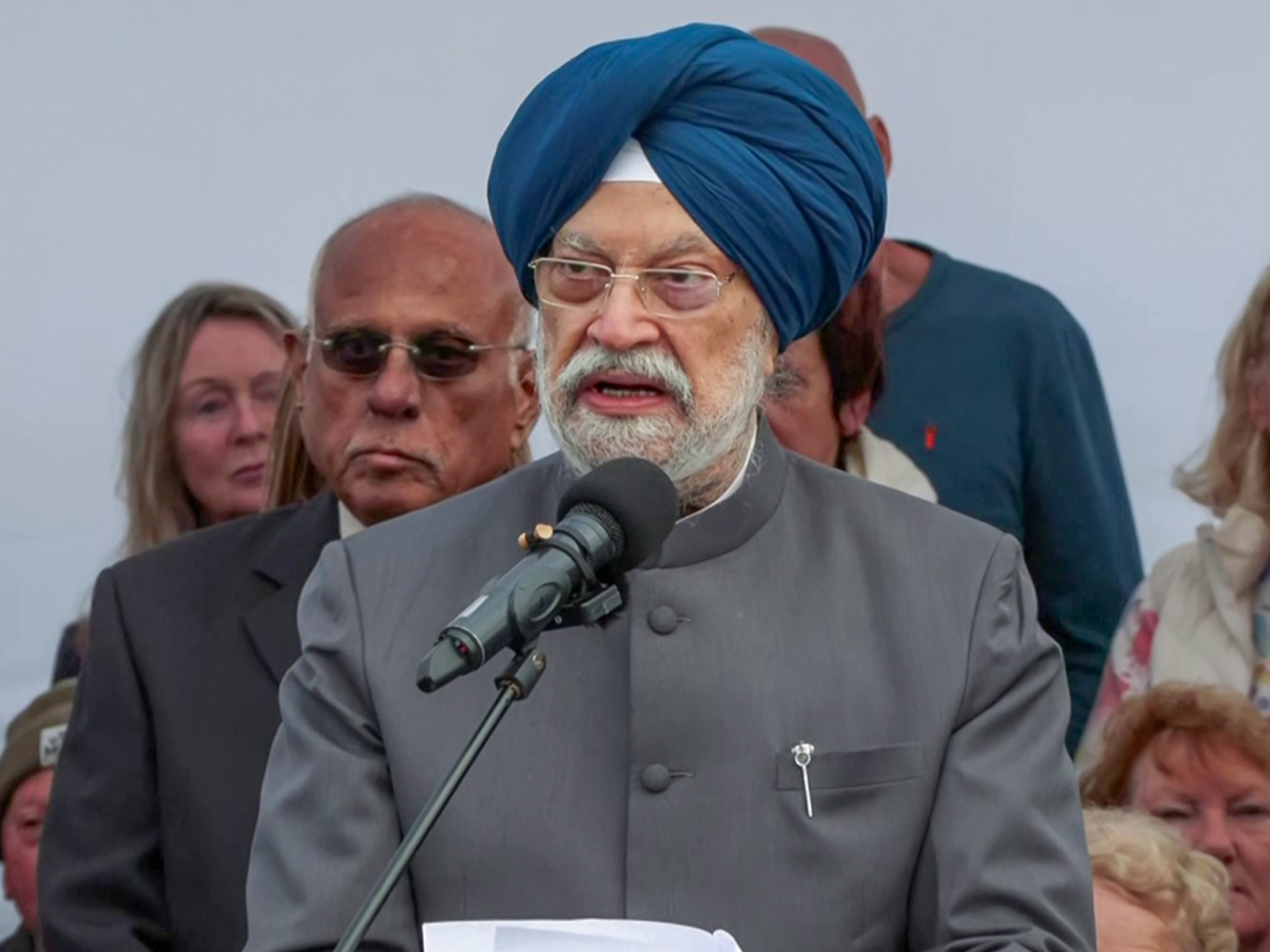
New Delhi [India], January 3 : India has established 132 Compressed Bio Gas (CBG) plants with a total production capacity of 920 tonnes per day (TPD) as part of its ongoing efforts to enhance renewable energy infrastructure, said Union Minister for Petroleum and Natural Gas, Hardeep Singh Puri on X. The government is currently expanding this capacity through the Sustainable Alternative Towards Affordable Transportation (SATAT) initiative.
"What was once waste is now powering progress. India has 132 Compressed Bio Gas plants producing 920 TPD today, with more capacity coming up under SATAT. Turning farm and organic waste into clean fuel, rural income and lower emissions under the leadership of PM @narendramodi ji," the Minister said.
SATAT was launched on 1st October 2018, aiming to establish an ecosystem for the production of CBG from various waste/biomass sources in the country. Under SATAT, Oil and Gas Marketing Companies, IOCL, BPCL, HPCL, GAIL and IGL have invited Expression of interest (EoI) to procure CBG from potential entrepreneurs for further marketing.
Earlier in December 2025, India marked another transformative milestone in its energy sector by offering 50 new exploration and production (E&P) blocks across oil, gas and coal bed methane (CBM) assets, signalling a renewed push to unlock domestic hydrocarbon potential and strengthen energy security, said Hardeep Singh Puri.
In a social media post on X, Minister Puri said the move reflected a "transformative milestone" under the leadership of Prime Minister Narendra Modi and underscores India's openness to global and domestic investors.
"We are offering 50 new E&P blocks across Open Acreage Licensing Policy (OALP-X): 25 blocks, Discovered Small Field (DSF-IV): 55 fields across 9 contract areas/blocks. Special CBM Bid Rounds 2025 and 2026: 3 blocks (2025) & 13 blocks (2026)," Petroleum Minister said in his post.
As per the information shared by him, under the Open Acreage Licensing Policy, 25 blocks covering about 1.83 lakh square kilometres are on offer, comprising six onland blocks, six in shallow water, one deepwater block and 12 ultra-deepwater blocks.
"Main features of these blocks are exploration rights retained throughout the contract duration; Revenue share at LRP for initial 5-7 years in Cat-I basins; No revenue sharing in Cat-II/III until windfall gains; Graded reduced royalty for offshore; Swapping of work programme allowed," he said.
"The quest to unlock the potential of India's sedimentary basins gains a new thrust and momentum."
In parallel, the Discovered Small Field (DSF) Bid Round-IV includes 55 discoveries spread across nine contract areas, aimed at accelerating the journey from discovery to production.
For DSF Bid Round-IV, additional incentives include zero royalty for the first seven years in deepwater areas, full marketing freedom on an arm's length basis, and relaxed eligibility norms prior experience in oil and gas is not mandatory.
Similar flexibility and incentives apply to the CBM rounds, with full pricing freedom, no overlap with coal blocks or mines, and in the 2026 round, government reimbursement of costs for mandated core-hole drilling.
The Minister further highlighted that India introduces a unified regulatory framework enabled by the historic Oilfields (Regulation and Development) Amendment Act, 2025, which delinks petroleum operations from mining, and the PNG Rules 2025.
This included Revenue Sharing Contract model - ease of doing business; Single license for conventional and unconventional hydrocarbons; Exploration allowed throughout contract duration; Graded reduced royalty rates; and Stabilization for changes in law.
Further highlighting the special CBM Bid Round, the minister said, "Special CBM Bid Round-2025 is LIVE, offering 3 onland blocks namely Raniganj Coalfield (West Bengal) comprising of 2 Blocks; Cambay Basin (Gujarat) with 1 Block."